Legal gambling age in GB: 18
Best Online Casinos - United Kingdom

The UK takes a relatively open but closely regulated approach to gambling. Rather than banning the activity broadly, its framework combines a commercial market with rules intended to protect consumers and reduce harm. Britain also belongs among the world’s major gambling markets. UK Gambling Commission Industry Statistics 2024/25 report puts the total gambling yield in Great Britain at £16.8 billion. This measures money retained after paying winnings, before business costs. A large market, however, does not automatically mean the highest spending per person: those are different comparisons. Participation varies by sex and age. In one of the gambling surveys, 51% of men and 44% of women reported gambling during the previous four weeks. Participation was highest among adults aged 45-64, although excluding lottery-only players shifted the highest rates to ages 25-44. These findings cover gambling generally, not just casinos. The survey does not provide a single average spending figure, so it cannot establish what a typical player spends. The UK’s industry connections extend beyond its domestic audience. London’s stock market hosts international gambling technology supplier Playtech, linking British financial markets with casino software used overseas. The Gambling Commission also works with international regulators, sharing information and approaches to tackling illegal gambling. These connections give Britain a role in both the commercial and regulatory sides of the global industry Beyond its international businesses and regulatory influence, Britain has a gambling culture rooted in everyday routines and social traditions:
- Football leads online sports betting. It accounts for roughly half of online betting revenue in the regulator’s annual figures, ahead of horse racing.
- Bingo retains an in-person audience. A UKGC study found that around 3.3% of adults played bingo at a venue during the previous four weeks, compared with 2.5% online. The research also highlights the social appeal of playing in person.
- Gambling also supports charitable causes. Large society lotteries, which raise money for non-commercial purposes, contributed more than £480 million to good causes over one reporting year, separately from the National Lottery.
- Bookmakers remain part of the high street. Regulatory figures record more than 5,000 betting shops across Great Britain, showing that physical venues remain part of gambling culture alongside websites and apps.
This article explains the framework behind the UK market, including licensing, offshore operators, payments, games and consumer protection. The aim is to help you, our readers, understand your rights, recognise the limits of regulatory protection and distinguish verified information from marketing.
Luxury Casino
Players residing in your country are accepted. English version is available. Click the icon to play.

 Read casino Review
-
100%
€ 150Welcome bonus. Click the icon to claim.
New Players Customer Offers, T&C’s Apply 18+, Please Gamble Responsibly - Downloadable Software: Microgaming
Instant-Play Software: Microgaming, Games Global
Casumo
Players residing in your country are accepted. English version is available. Click the icon to play.
 Read casino Review
-
100%
€ 500
+ 120 spinsWelcome bonus. Click the icon to claim.
18+. T&C’s Apply. Verantwortungsbewusstes Spielen. Geschäftsbedingungen gelten. gamblingtherapy.org
New Players Customer Offers, T&C’s Apply 18+, Please Gamble Responsibly - Instant-Play Sofware:
Net Entertainment, Playn GO, Red Tiger, Williams Interactive, Quickspin + 18 more providers
All British Casino
Your country is a targeted country. Click the icon to play.
 Read casino Review
-
100%
£ 100Welcome bonus. Click the icon to claim.
#AD New Customer Offer. T&C’s Apply. 18+. Min Deposit £20. Wagering requirements are 35xbonus. When playing with bonus funds max bet is £5. Welcome bonus excluded for deposit with skrill/neteller. PLUS 100 Casino Spins after your first deposit. Slots: Starburst, Aloha, or Pyramid. .Only players from Britain qualify for the welcome bonus offered by All British Casino, all players from other locations will not be awarded a bonus unless otherwise stated. Players using Skrill or Neteller for their initial deposit will be excluded from the welcome bonus. When receiving a bonus the maximum allowed bet is £5 per spin until the wagering requirements have been met.
New Players Customer Offers, T&C’s Apply 18+, Please Gamble Responsibly - Instant-Play Sofware:
Microgaming, Net Entertainment, Merkur Gaming, Amatic, Novomatic + 5 more providers
Blaze Spins Casino
Your country is a targeted country. Click the icon to play.
 Read casino Review
-
88%
$ 1000Welcome bonus. Click the icon to claim.
New Players Customer Offers, T&C’s Apply 18+, Please Gamble Responsibly - Instant-Play Sofware:
Turbo Games
Spin Dimension Casino
Your country is a targeted country. Click the icon to play.
 Read casino Review
-
500%
$ 500Welcome bonus. Click the icon to claim.
New Customer Offer. T&C’s Apply. 18+. Min deposit: $25. The maximum bet size permitted with an active welcome match offer is $10. Max Cashout: 10x Deposit. Claimable once.
New Players Customer Offers, T&C’s Apply 18+, Please Gamble Responsibly - Instant-Play Sofware:
BetSoft, Rival, Saucify, Qora Games, Vivo Gaming + 4 more providers
Videoslots Casino
Your country is a targeted country. Click the icon to play.
 Read casino Review
-
100%
€ 200Welcome bonus. Click the icon to claim.
New Customer Offer. T&C’s Apply. 18+. BeGambleAware #ad. Bonus money will be paid out in 10% increments. Videoslots will match your deposit up to £200 on your first deposit. £10 minimum deposit required. You are required to wager the bonus amount 35 times before you can withdraw the bonus funds. You can forfeit the bonus and take the winnings and paid out bonus funds. Only the remaining balance of the bonus which has not yet been released will be forfeited. Bonus will be paid out in 10% increments to your cash account. Jackpot games do not contribute to the conversion. Maximum bet per spin is either 50% of your deposit up to £20. You must be 18 or over to play and 21 in countries where that is the minimum age by law.
New Players Customer Offers, T&C’s Apply 18+, Please Gamble Responsibly - Instant-Play Sofware:
Microgaming, Net Entertainment, Playn GO, BetSoft, Rival + 73 more providers
CasinoCasino
Your country is a targeted country. Click the icon to play.
 Read casino Review
-
100%
kr 1000Welcome bonus. Click the icon to claim.
New Customer Offer. T&C’s Apply. 18+. Spela ansvarsfullt. www.stodlinjen.se. Regler & Villkor gäller
New Players Customer Offers, T&C’s Apply 18+, Please Gamble Responsibly - Instant-Play Sofware:
Merkur Gaming, Just for the Win, GECO Gaming
BoyleSports Casino
Your country is a targeted country. Click the icon to play.
 Read casino Review
- NO INFO
- Downloadable Software: Playtech
Instant-Play Software: Playtech, Net Entertainment, Microgaming, Realistic
Skol Casino
Your country is a targeted country. Click the icon to play.
 Read casino Review
-
100%
£ 300
+ 100 spinsWelcome bonus. Click the icon to claim.
New Customer Offer. T&C’s Apply. 18+. #ad.
New Players Customer Offers, T&C’s Apply 18+, Please Gamble Responsibly - Instant-Play Sofware:
Net Entertainment, Thunderkick, Yggdrasil Gaming, Playn GO, Microgaming + 20 more providers
UK Casino Club
Your country is a targeted country. Click the icon to play.
 Read casino Review
-
110%
€ 100Welcome bonus. Click the icon to claim.
New Players Customer Offers, T&C’s Apply 18+, Please Gamble Responsibly - Downloadable Software: Microgaming
Instant-Play Software: Microgaming, Games Global
Legal Status for British Players and Casinos
Gambling is legal in Great Britain, both at physical venues and online, when businesses hold the necessary permissions and follow the rules for their activities. Northern Ireland has a separate framework, so references to a single “UK gambling law” can be misleading. The Gambling Commission regulates commercial gambling in England, Scotland and Wales, alongside its UK-wide responsibility for the National Lottery.
Gambling makes a measurable contribution to the UK economy, but it is not among the country’s main economic drivers. Government estimates put its direct contribution at around £5 billion, equivalent to 0.2% of UK gross value added (GVA). GVA measures the value that an industry adds to the economy. By comparison, sectors such as tourism and the creative industries make substantially larger contributions.
Within the legal casino industry, physical venues generate around £934 million in annual gross gambling yield, compared with approximately £5 billion from online casino games. These figures represent money retained after winnings, before operating costs. Casino businesses support work in dealing, hospitality, security, customer service, software development and compliance, although online and physical operations have different staffing needs.
Tax treatment also differs. Land-based casinos pay Gaming Duty at bands ranging from 15% to 50%, while Remote Gaming Duty is 40% on the relevant online gaming profits. These are gambling-specific taxes, separate from other business and employment taxes. Across gambling as a whole, the Office for Budget Responsibility estimates annual betting and gaming duties at around £4 billion. That total includes lotteries and betting, not just casinos.
Comparing which forms of gambling neighbouring countries permit and how they protect players helps put UK regulation into an international context.
France permits licensed online sports betting, horse-race betting and poker, but prohibits online casinos. Britain allows a wider range of casino games within its licensing system. Belgium takes a stricter approach to access and visibility: the minimum age for gambling covered by its gambling legislation is 21, and gambling advertising is generally prohibited, with limited exceptions.
Britain’s casino age is 18. Belgium’s approach offers a comparison for reducing young adults’ exposure; France’s approach restricts which products can be offered at all.
The Netherlands permits licensed online casinos but requires personal contact with the operator before a new customer can set a monthly deposit limit above €350, or €150 for younger adults under 24. These are contact thresholds, not absolute spending caps.
Denmark also licenses online casinos and uses ROFUS, a self-exclusion register covering online gambling and physical casinos. Britain has established online protection through GAMSTOP, but separate schemes cover different land-based activities. Dutch limits and Denmark’s connected exclusions offer useful models for comparison, rather than proof that one country’s system is universally better.
Elsewhere in the EU, Germany normally applies a €1,000 monthly deposit limit across licensed online operators, with controlled exceptions. Malta places more emphasis on player-selected deposit or wagering limits. Britain is more prescriptive than Malta in some product rules, including its age-based online slot stakes.
These differences concern particular safeguards: neither an EU location nor an overseas licence gives a business automatic permission to serve British customers.
Is gambling legal in the United Kingdom?
Legal land-based gambling includes casino games, betting, bingo, lotteries and gaming machines. Each activity has its own conditions. A betting-shop licence, for example, does not turn the premises into a casino. Casino admission is restricted to people aged 18 and over.
An operating licence alone does not allow a company to open a casino anywhere it chooses. A casino business normally needs three layers of approval:
- An operating licence from the UK Gambling Commission covering its activities.
- A premises licence from the relevant local authority, subject to the restrictions on casino locations and licence availability.
- Personal licences for relevant managers and casino staff, depending on their responsibilities.
Applicants must disclose ownership, financial resources and relevant personal histories. The Commission assesses integrity, competence and criminality as well as funding. Supporting documents must show how the business will operate and meet its obligations.
The physical market is not equally dependent on each activity. An annual regulatory snapshot records National Lottery ticket sales of roughly £7.9 billion, with about £4.5 billion returned as prizes. Bingo premises generate approximately £650 million in gambling yield, but around £424 million comes from machines rather than bingo itself.
Physical casinos generate about £934 million. Horse-race betting crosses venue boundaries, taking place at tracks, in shops and online; remote horse-race betting alone accounts for around £767 million. These distinctions matter when interpreting claims about the size of each sector.
Some physical casino rules have become less restrictive. Eligible casinos in England and Wales can access increased machine allowances, subject to floor-space requirements, table ratios and licensing conditions. Certain converted casinos can offer up to 80 machines. These changes do not automatically apply to Scottish premises. This is targeted liberalisation within the licensing system, rather than unrestricted casino expansion.
Northern Ireland is different. Its main framework comes from the Betting, Gaming, Lotteries and Amusements Order 1985, as amended. It permits regulated activities such as bookmaking and bingo but does not provide the same commercial casino system as Great Britain. Assembly material explains that casinos were not permitted under that framework, reflecting the position taken when the legislation was developed.
Is online gambling legal in the United Kingdom?
Online gambling is legal in Great Britain through appropriately licensed operators. A remote casino licence covers games such as slots, roulette, blackjack and poker. Betting and bingo require the relevant permissions for those activities.
The modern framework developed through two important stages. The Gambling Act 2005, fully implemented in 2007, brought remote gambling into the regulatory system. The Gambling (Licensing and Advertising) Act 2014 then extended British licensing requirements to overseas operators serving the British market. Regulation became centred on the customer’s market, rather than simply where the company was based.
Foreign casino brands can therefore enter the market, but they must obtain the appropriate Gambling Commission licence. A licence from Malta, Curaçao or another jurisdiction is not a substitute. Equally, an overseas address does not automatically make a casino illegal: a foreign business can hold British authorisation. The distinction is between an overseas operator that meets British requirements and one that serves the market without permission.
Consumer safeguards have expanded alongside the market, including age and identity verification, financial vulnerability checks, self-exclusion and restrictions on certain online slot features.
GAMSTOP participation became compulsory for licensed online casino and betting operators, allowing one self-exclusion request to cover multiple businesses. Further changes prohibited slot autoplay, features that speed up slot play, and celebrations of returns that are no greater than the amount staked.
Enforcement against unlicensed websites includes removal requests, search-result referrals and cooperation with payment providers, technology companies and overseas regulators. A website remaining accessible does not establish that it is authorised. The Commission’s public register records licensed businesses and regulatory action, providing firmer evidence than a website’s own claims.
Northern Ireland’s position again needs separate treatment. Its main gambling legislation does not comprehensively regulate remote gambling. However, the advertising framework requires the appropriate Gambling Commission licence for online operators advertising to consumers there. It would therefore be inaccurate either to describe Northern Ireland as having Britain’s full online licensing system or to assume that all offshore activity is unrestricted.
| Name | Allowed Casinos | Friendly Casinos | Targeted Casinos | Land-based | Online operator | Online player | ISP Blocks | Bank Blocks | Notes | Sources | Score |
|---|---|---|---|---|---|---|---|---|---|---|---|
| United Kingdom | 335 | 334 | 85 | Legal | License required for all casinos | No penalty | Not blocked | Not Restricted | 0 |
-
Gambling websites which trade or advertise to customers in Great Britain must have a Gambling Commission licence.
|
560
Gambling Availability Score 560. Ranked 158 of 531 |
Banking in United Kingdom
Banking at Gambling Commission-licensed online casinos depends on the operator, the payment provider and the customer’s account restrictions. A British licence does not mean that every website offers identical currencies, transaction limits or withdrawal arrangements.
Currencies and Payment Methods
Pound sterling (GBP) is available at casinos serving British customers, while some operators also support currencies such as euros. Where the casino account and payment account use different currencies, conversion charges may apply.
Available payment methods can include debit cards, bank transfers, PayPal, Apple Pay and prepaid services such as Paysafecard. However, availability varies, and a method accepted for deposits may not support withdrawals.
Credit cards cannot be used to fund gambling at licensed online casinos. This restriction also covers credit-card payments routed through e-wallets and other payment services. Using a digital wallet does not remove the underlying restriction on credit funding.
Deposit and Withdrawal Limits
Operators must prompt customers to set a financial limit before their first deposit, make limits easy to review and change, and provide reminders to review account activity every six months. These customer-set limits are separate from the Gambling Commission's financial vulnerability checks.
Since 28 February 2025, remote gambling operators have been required to conduct a financial vulnerability check when a customer's net deposits exceed £150 in a rolling 30-day period. Net deposits are deposits minus withdrawals. The £150 threshold triggers a check; it is not a universal £150 gambling limit or an assessment that the customer can afford to spend that amount.
Withdrawal conditions must be fair and transparent. Customers must be able to withdraw their own deposit balance, including winnings from those funds, without first meeting a requirement to gamble that money. Necessary identity and financial-crime checks can still apply. Withdrawal fees must reflect direct processing costs, while restrictions must meet the regulator’s fairness requirements.
An operator must not postpone identity checks until withdrawal if it could reasonably have requested the information earlier. Further checks may nevertheless be required when new risks arise. A payment method’s advertised transfer speed therefore does not necessarily describe the full withdrawal process.
Are Gambling-Related Transactions Blocked by Banks?
There is no general ban on bank payments to licensed online casinos. However, many UK banks offer optional gambling blocks that decline card transactions identified as gambling. Some include a waiting period before the block can be removed.
These tools have limits. Coverage depends on the bank, payment route and how a transaction is categorised. A card-based block may not cover bank transfers or e-wallet payments. It is also separate from GAMSTOP, which restricts access to participating gambling accounts rather than operating through a bank card.
Do Players Pay Tax on Winnings?
For individuals, ordinary gambling winnings are generally not subject to UK Income Tax. HMRC does not normally treat betting and gambling itself as a trade, and gambling losses generally cannot be deducted from other taxable income. Operator gambling duties are separate from the player’s tax position. Interest subsequently earned by placing winnings in savings can be taxable under the usual savings rules.





Popular British Games
British-licensed online casinos offer a mixture of locally developed games and content from international suppliers. Their catalogues can include slots, roulette, blackjack, poker and live content. Foreign casino brands can serve British customers when appropriately licensed, but an international website’s full catalogue is not necessarily available in its British version.
Britain also produces casino games. Blueprint Gaming is a UK-based studio whose catalogue includes the Fishin’ Frenzy series and games based on Deal or No Deal. Reflex Gaming, based in Newark, develops both physical gambling machines and online slots. These businesses illustrate the connection between Britain’s established machine industry and its online market.
Slots dominate online casino revenue. Gambling Commission annual figures attribute approximately £4.2 billion of the sector’s £5 billion gross gambling yield to slots, equivalent to roughly 84%. This measures money retained after winnings, rather than the number of people choosing each game. It therefore establishes slots as the largest category by revenue, but does not mean that 84% of casino players prefer them.
Live casino games are available too. Unlike software-based table games, where a random number generator determines outcomes, live formats stream a dealer presenting play from a studio. International suppliers such as Evolution provide roulette, blackjack and other table games, alongside presenter-led game shows.
In American Roulette, there are 38 black and red slots that are numbered as 1-36, one zero, and a double zero, both of which are colored green
Vegas Party by NetEnt - A slot with the Sync Reels Feature: two or more reels may become synced, spinning the same identical symbols on both reels
New Online Casinos in United Kingdom
For readers researching new UK online casinos, launch announcements and early reviews often provide the first information about a website. But they do not always explain who operates it, what has been independently checked or how much experience customers have had with the service. Understanding these gaps helps put claims about new casinos into context.
A new casino website is not necessarily a new gambling business. It may be another brand from an established operator, a rebranded service or a website launched through a white-label partnership. Under a white-label arrangement, the company holding the licence remains responsible for the gambling service, even when another business supplies the branding. Understanding that relationship helps distinguish a new name from a genuinely new operation.
New websites also have limited track records. An early review can describe the interface and published terms, but it cannot establish how consistently the business will handle complaints or support customers over time. Few complaints may simply reflect a small customer base or a short operating history. Equally, a lack of reviews does not prove that something is wrong.
Early reviews provide a snapshot of a new casino rather than a complete picture of its service. Published terms and available features can be checked at launch, while consistent customer support and complaint handling take longer to assess. Clear coverage distinguishes what is already known from what requires more time and evidence.
Customer feedback adds another perspective, although a small number of comments may not reflect the wider experience. As a website develops, recurring issues, responses to complaints and changes to its service provide more context than isolated praise or criticism.
Ultimately, “new” describes a stage in a website’s history. It does not, by itself, establish better service, stronger protection, or a more reliable gambling experience. This is where our casino database can be handy, bringing together reviews, relevant news and updates, and helping you understand who is behind a new site and what has changed since its launch.
FREQUENTLY ASKED QUESTIONS
Licensing and Legality
What exactly is a license for an online casino, and why is it important for the player?
Licensing of online operators was created specifically to take care of players. The question of safety and reliability is probably very high up on your agenda when choosing a platform. Well, there is a non-formal rating of permits, seeing which you can decide immediately whether you can or cannot trust a brand.
For starters, the absence of a license is an immediate right flag. It means that if something goes wrong, you won’t have a third-party mediator to represent your interest and to hold a platform accountable.
The non-formal list of licensors has the United Kingdom Gambling Commission, the Malta Gaming Authority, the jurisdictions of Denmark, Sweden, Italy, and Belgium (among other European countries), as well as PAGCOR high on the list. Out of all these, it is the United Kingdom Gambling Commission that should concern the Brits.
What exactly is UKGC, and why is it such a big deal?
UKGC stands for the United Kingdom Gambling Commission. The reason why it is a big deal in the online gambling industry is the fact that it is one of the most prestigious licensors with a crystal-clear reputation, a set of strict rules, and high standards that it stands by.
Any decent online operator that wants to cater to the Brits will need to apply for a UKGC license. It is not cheap. It is not easy. And a UKGC permit can be revoked by the commission any time during the duration of this permit, should the licensor find out that the casino violated the T&C.
Just an illustration of how much UKGC influences the industry: investigations several years ago revealed that online operators were allowing vulnerable groups of players to spend huge amounts of cash on gambling without expressing concerns that such sums can cause significant damage to players. The UKGC followed up with a requirement for online operators to hold mandatory verification processes, to be sure the clients are of the appropriate age, and to ban credit cards as means of payment in online casinos.
When choosing a new online operator, scroll down to the footer of the selected website. If you see UKGC’s seal there, it is definitely a sign of quality. We have a dedicated list of UKGC-authorized places to bet and win.
What are some great UKGC-compliant online operators for the United Kingdom?
Our database has detailed reviews for more than 300 great UKGC-licensed places to wager with You will find lobbies focused solely on games, as well as multi-betting platforms. There will also be old and established brands as well as new and exciting platforms that are also reliable.
One of the websites that needs no additional introduction is Betway Casino. This is a location that exists online for more than a decade and offers 1,000s of games to its registered members. The collection covers slot machines, non-live table games, Sportsbook, exchange betting, Racebook, and more.
Another great casino that is also an award-winning one is 32Red Casino. Founded in 2002, it is powered by Microgaming and has all of the iconic slots machines, as well as a hefty welcome deal, lots of ongoing promotions, and a diverse loyalty program. The platform is instant and mobile-friendly.
Finally, before you let you explore the rest of the websites on the list, we can recommend William Hill Casino Online. A virtual lobby of an old and established land-based venue, William Hill operates online for decades now! It is powered by Playtech, and also has games from Microgaming, Inspired, Williams Interactive, and Net Entertainment.
Can I trust an online operator that states it accepts players from the United Kingdom but does not have a UKGC permit?
UKGC is always a preferred licensor when it comes to online casinos for the United Kingdom but it is definitely not the sole option. As a UK player, you will most likely be excluded from visiting lobbies licensed for other European countries (unless an operator has a set of licenses, with UKGC’s seal added, too). But there are international regulators, such as Curacao, Cyprus, and a few others that can accept the Brits.
Are these necessarily unreliable websites? No, we’ve seen lots of cases of international platforms with Curacao permits being in the industry for years, successfully catering to diverse demographics, and collecting positive reviews online. Plus, if you are in the UK but would like to use, let’s say, cryptocurrencies, you will need to look for anything but UKGC-compliant websites as these will not allow BTC or its variations in the cashiers.
So, when looking for websites other than the ones authorized by UKGC, do a careful background check. See the reviews from the gambling portals and registered players. Many portals, including our partner LCB, have dedicated gambling forums where you can look for help and advice from fellow gamblers.
What is a verification and why do I need to go through it?
Also known as the Know Your Customer procedure, KYC is imperative in a UKGC-regulated lobby. Under the terms of the KYC, the platform will ask you to submit several additional documents proving your age and residence. These can include a bank statement, a recent utility bill, and/or a copy of an ID.
While the procedure may seem intrusive and unnecessary, it also shows that an online operator does its part to comply with the requirements of its regulator and to provide the best services to its customers.
Why are some of the games available in international lobbies eliminated from UKGC-licensed online casinos?
UKGC licenses not only online lobbies but also software. Those developers that did not apply for UKGC, will not be allowed in a UKGC-licensed lobby unless it also has permits from other jurisdictions. But even if it does, it will not necessarily be available to the Brits.
Banking and Payments
Why can’t I use a credit card in a UK-friendly online casino?
As of April 2020, the United Kingdom Gambling Commission prohibited credit cards as a payment method in online gaming lobbies. After conducting thorough research, the commissioners came to the conclusion that more than 22% of players that use credit cards can be classified as problem gamblers. And using credit cards for real money wagering puts them in a vulnerable position.
“We realize that this change will inconvenience those consumers who use credit cards responsibly but we are satisfied that reducing the risk of harm to other consumers means that action must be taken,” said Neil McArthur, Gambling Commission chief executive, in his official statement. The commissioner also added that while a ban goes into effect in 2020, the commission may re-evaluate the decision in the future. Much will depend on the unintended circumstances and several other factors.
What are the payment methods that I can use?
A UK-friendly online operator will always accept GBP and it will allow bank transfers for cashouts. As for the deposits, players from the UK will be able to use PayPal, as well as popular e-wallets like Skrill, ecoPayz, and MuchBetter. Plus, prepaid vouchers like Paysafecard are also often an option.
Can I use cryptocurrencies when playing in UK-friendly online casinos?
Much will depend on a level of friendliness, or in other words — on the website’s license. If the platform has a permit from UKGC, then the answer is definite: you will not be able to use any forms of cryptocurrencies.
If you are playing in an international lobby that has other permits and clearly states that it accepts players from the UK, then yes — you will be able to use crypto (given that a chosen cashier supports any of the digital currencies).
How safe is it to use cryptocurrencies?
When it comes to players from the UK looking for the most reliable online gambling experience, the key question is not in the cryptocurrency itself but in a reputation of a select platform. If it checks all the safety boxes then using a digital currency is as safe as using any type of fiat cash. The only difference is crypto is more volatile.
If you are new to BTC or other digital currencies but would like to gamble, we have a detailed guide for beginners.
Does the UK currently have any no-registration platforms?
By the time we were ready to roll out this review, there were no free-of-registration legit casinos that we could have recommended. We know that such an option exists for certain European countries where players have access to Pay n Play. In the UK, however, there are currently no operators collaborating with similar payment methods that would allow players to instantly deposit and play (mind you that we are talking only about the legit and licensed providers).
Promotions and Bonuses
Why aren’t there any free spins in UK-friendly online casinos?
There are, in fact, free spins in UK-friendly online operators but the UKGC obliges to call such promotions casino spins or bonus spins. That way, it won’t be misleading for newbies to gambling that can mistake free spins for wager-free promotions.
Can players from the UK count on welcome bonuses?
Yes, absolutely! There is a diverse range of sign-up deals for players from the UK. The list of options will include no-deposit cash and spins, as well as a cash match deal on one or more deposits. Plus, there are package deals that combine cash and spins. Keep in mind that regardless of which of these you will be offered, they will all come with the rollover requirements.
Many gamers from the UK enjoy a sign-up deal at Betsson Casino. The platform offers a multi-deposit package that includes cash and bonus spins. The deal can be rolled over only on slot machines. The playthrough terms are 35xB.
Will I be able to use promotional deals with live games?
Yes, there are platforms that have special deals for live games. You can adjust the search filters on the page of casino search to see what the current offers are. Keep in mind that in 99% of cases, bonuses that were designed for slots will not be compatible with live casino content.
What are the rollover requirements?
Also known as the wagering or playthough requirements, this is a number of times that you will need to wager bonus money or bonus+deposited money (depending on the terms) to withdraw wins from the bonus. The rollover requirements will also come with the T&C. These will limit bets to certain maximums, exclude particular releases from the rollover terms, and clarify other rules of using bonuses. We always recommend reading the T&C carefully prior to claiming the bonuses.
Games and Software
Which types of betting content will be available to players from the UK?
We’d say that pretty much all the known betting content is available to Brits. Game-wise, it is slot machines, table games, live dealer content, scratch cards, and arcades that are on offer. Plus, platforms will often combine this selection of content with Sportsbook, racebook, poker rooms, exchange betting, and more.
Which slot developers are compatible with UK-friendly lobbies?
If we are talking only about UKGC-supervised operators, you will see suppliers like Amatic, Microgaming, Net Entertainment, Stormcraft, Switch Studios, Williams Interactive, and Blueprint Gaming, to mention a few.
If you consider registering in international lobbies, you will find content from studios that will not make it to UKGC lobbies: Wazdan, Endorphina, SlotVision, Evoplay Entertainment, and more. The fact that these suppliers are not allowed in UKGC lobbies is not due to their poor quality of content but simply dues to the fact that they did not apply for the UKGC permit.
Which live dealer developers are available to Brits?
Evolution Gaming dominates the market, for sure. Its vast portfolios of live roulette, blackjack, baccarat, and table pokers, as well as game shows, will be listed on almost every website that you will visit.
Plus, Evolution Gaming’s content can be accompanied (or substituted) by live dealer portfolios of Playtech, Pragmatic Play, or Ezugi (the latter is compatible only with international lobbies).
Are Brits allowed to enjoy jackpot slots and table games?
Yes, plenty of the content catered to the UK players will be connected to progressive networks. If you are after big wins, look for online lobbies with unlimited weekly or monthly withdrawals. And even so, keep in mind that even the most liberal platforms can cap maximum cashouts to certain amounts and will pay jackpots in equal installments over a course of several months.
United Kingdom latest news
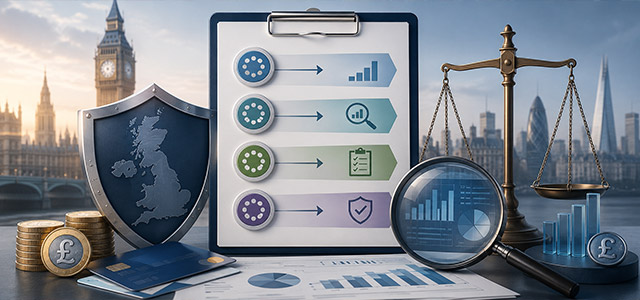
UKGC Outlines Phased Rollout for New Financial Risk Assessments
Olga LiThe UK Gambling Commission confirmed on 7 July 2026 that it will introduce data-driven financial risk assessments in a staged approach, marking a decisive shift away from traditional document checks that proved highly unpopular with many consumers. Following extensive consultation, stakeholder engagement, and piloting, the regulator opted for a phased rollout rather than a single implementation date to allow the industry's underlying data-sharing infrastructure sufficient time to stabilize.
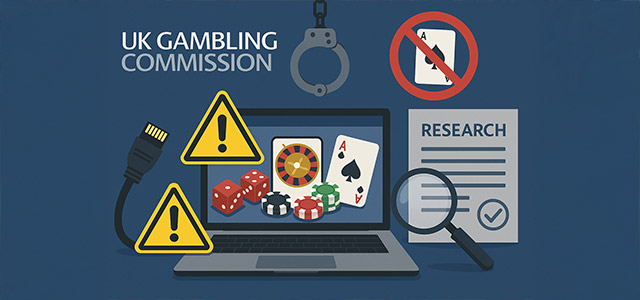
UK Gambling Commission wraps up its research series on illegal online ...
Olga Li#BettingLegislation #GambleLike_UK
The UK Gambling Commission has concluded its comprehensive four-part research series dedicated to understanding and disrupting illegal online gambling. The extensive project, initiated earlier this year, aimed to enhance clarity regarding consumer engagement with non-regulated sites, the associated risks, and the strategies necessary for effective disruption.
UKGC Mandates New Deposit Limits to Boost Player Control
Olga Li#BettingLegislation #GambleLike_UK
The UK Gambling Commission (UKGC) has announced a significant tightening of rules regarding financial controls, aiming to give customers greater power to manage their spending. These new regulations will focus on standardizing how financial limits are offered and communicated by online gambling operators, ensuring consistency and clarity for all users.