Why Countries Regulate Gambling So Differently
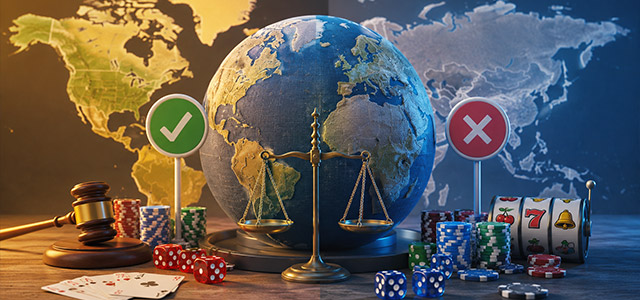
From buying a lottery ticket to spinning an online slot or betting on a football match, gambling is enjoyed in almost every corner of the world. Surprisingly, the rules governing these activities differ dramatically from one country to another.
In one nation, the activity might be fully legal and regulated by a government authority. Meanwhile, in another, only state-run lotteries are permitted. A neighbouring country may prohibit almost every form of gambling, while another welcomes international operators and even promotes casino tourism.
This raises an interesting question: why do countries regulate gambling so differently? If gambling exists in almost every society, why haven't governments adopted similar approaches?
The answer is more complex than many people realise. Gambling legislation is influenced by history, religion, culture, politics, economics, public health, and even geography.
Some governments see gambling as an important source of tax revenue and employment. Others view it primarily as a social risk that requires strict controls. Increasingly, countries are also trying to balance consumer freedom with stronger protection against fraud, money laundering, and gambling-related harm.
Over the past two decades, the internet has added another layer of complexity. Online gambling has made national borders less important, forcing regulators to rethink laws that were originally written for physical casinos and betting shops.
As a result, governments are no longer asking simply whether gambling should be legal. They are asking how it can be regulated effectively in a digital world.
Understanding these different priorities helps explain why gambling laws vary dramatically, and why there is no single model that every country follows.
Gambling Has Never Been Just About Gambling
Gambling affects many areas of public policy. It often falls under the simultaneous responsibility of finance ministries, tax authorities, consumer protection agencies, financial intelligence units, and public health organisations.
One of the biggest considerations is taxation. Licensed operators contribute through corporate taxes, licence fees, and gambling duties, generating billions of dollars for governments every year.
These funds are often used to support healthcare, education, sports programmes, infrastructure projects, or community initiatives. In countries where gambling is well established, tax revenue has become an important part of public finances.
Employment is another factor. A regulated gambling industry creates jobs far beyond casino floors. Software developers, cybersecurity specialists, payment providers, compliance officers, marketing agencies, customer support teams, and hospitality businesses all benefit from a growing gambling market. Tourism can also play a role, particularly in destinations where casinos form part of larger entertainment resorts.
Governments must also consider the risks. Problem gambling can affect mental health, family finances, workplace productivity, and social services.
Criminal organisations have historically attempted to use gambling businesses to launder money or conceal illegal financial activity. Online gambling has added new challenges, including identity fraud, underage gambling, and cross-border transactions.
These competing interests explain why gambling regulation is rarely straightforward. Policymakers are constantly trying to find the right balance between economic opportunity and public protection.
Four Ways Countries Regulate Gambling
Although every country has its own legal framework, most gambling systems fall into one of four broad regulatory models.
1. Prohibition
Some countries prohibit almost all forms of commercial gambling. This model is most common where religious beliefs strongly influence legislation or where governments consider gambling a significant social risk.
Countries such as Qatar, Kuwait, and Brunei prohibit commercial casinos, sports betting, and online gambling. Licences are generally not issued to private operators, and participating in illegal gambling can result in fines or criminal penalties.
Despite these restrictions, prohibition has not eliminated demand. According to industry estimates, the global offshore gambling market continues to generate tens of billions of dollars annually, demonstrating that many players simply move to international websites when domestic options are unavailable. This creates ongoing enforcement challenges, requiring governments to invest in website blocking, payment monitoring, and financial investigations rather than traditional licensing systems.
2. State Monopoly
Some governments allow gambling but retain exclusive control over the industry through state-owned operators.
Finland and Norway are among Europe's best-known examples. Rather than licensing dozens of private companies, governments grant exclusive operating rights to a single national provider.
In Finland, gambling revenue has historically generated hundreds of millions of euros every year for public-interest organisations supporting sports, science, youth programmes, culture, and social welfare. Norway follows a similar model through Norsk Tipping, where profits help finance community initiatives and national sporting organisations.
Supporters argue that monopolies allow governments to control advertising, introduce responsible gambling measures more quickly, and reduce excessive commercial competition. Critics point out that monopolies face growing pressure from international online operators, particularly as digital gambling becomes easier to access across borders.
3. Limited Licensing
Limited licensing has become one of the fastest-growing regulatory models over the past decade because it attempts to balance consumer choice with strict government oversight.
Germany, Sweden, and the Canadian province of Ontario all operate versions of this system. Operators must satisfy detailed requirements covering financial stability, cybersecurity, anti-money laundering compliance, responsible gambling, and technical standards before receiving a licence.
Germany's Joint Gambling Authority (GGL) has so far issued more than 50 licences for virtual slot operators, while Ontario's regulated market has attracted more than 80 licensed operators and over 170 gambling websites as of today, making it one of North America's largest competitive online gambling markets.
These jurisdictions also impose strict identity verification, advertising rules, deposit controls, and suspicious transaction monitoring. The objective is to encourage players to choose regulated operators while making illegal gambling less attractive.
4. Open Commercial Markets
Some countries encourage broad competition between licensed operators while maintaining regulatory oversight.
Georgia is one such example. Multiple domestic and international operators compete on game selection, software, promotions, and customer service, creating one of the region's most competitive gambling industries.
Gambling contributes hundreds of millions of US dollars annually to Georgia's economy through taxation, tourism, licensing fees, and employment. Before the recent advertising reforms, the industry accounted for approximately 7–8% of the country's GDP, illustrating how significant gambling had become within the wider economy.
Open markets often produce faster innovation because operators compete to offer better technology, larger game libraries, and improved customer experiences.
At the same time, governments must invest heavily in regulation. Licensing authorities oversee responsible gambling programmes, financial reporting, anti-money laundering compliance, cybersecurity, advertising standards, and consumer protection to ensure competition does not come at the expense of player safety.
Why Neighbouring Countries Often Have Opposite Laws
One of the most fascinating aspects of gambling regulation is that geography often matters less than history and culture.
Georgia has developed one of the region's largest gambling industries, attracting tourists and international investment. Just across the border, Turkey maintains strict controls over commercial gambling while allowing only limited forms of state-authorised betting.
Brazil recently introduced comprehensive online gambling regulation after years of debate, while neighbouring LatAm countries continue following different regulatory paths despite facing similar economic conditions.
Even within Europe, countries sharing open borders frequently adopt completely different gambling policies. Poland and the Czech Republic provide a good example. Although the two countries share a border and have similar cultural and economic backgrounds, their gambling policies differ considerably.
Poland maintains a state monopoly over online casino games, allowing private operators to offer sports betting under licence.
The Czech Republic, meanwhile, licenses private operators across online casinos, sports betting, poker, and lotteries. In recent years, the Czech gambling market generated the equivalent of more than €700 million in gross gaming revenue, while Poland's regulated sports betting sector alone handled billions of euros in annual wagers, even as many players continued using offshore casino sites.
These contrasting approaches illustrate how neighbouring countries often prioritise different regulatory goals despite facing similar market conditions.
Religion Continues to Influence Gambling Laws
In countries where Islamic law significantly shapes legislation, gambling is generally prohibited because it is viewed as inconsistent with religious teachings. Yet prohibition does not necessarily eliminate demand. Indonesia illustrates this challenge well.
Despite a nationwide ban, authorities reported shutting down more than 2 million illegal gambling websites recently, while government estimates suggested that more than 3 million Indonesians had participated in online gambling, with annual activity valued at nearly US$20 billion, or roughly 1.5% of GDP.
Religion has also shaped gambling laws in countries with predominantly Christian traditions. Throughout much of the twentieth century, many European governments viewed gambling as morally undesirable and permitted only tightly controlled products such as national lotteries or horse racing.
As technology evolved, these restrictive systems increasingly struggled to keep pace with consumer demand. Players were able to access offshore gambling websites that operated beyond national jurisdiction, creating large grey markets in several countries.
France provides a clear example. Although online sports betting, poker, and horse racing were legalised in 2010, online casino games remain prohibited today. Nevertheless, France's gambling regulator estimates that the illegal online casino market generated between €748 million and €1.5 billion in gross gaming revenue in 2022, representing roughly 27% to 42% of the country's total online casino activity.
Similar challenges prompted countries such as Italy, Spain, Denmark, and Sweden to gradually liberalise their gambling markets during the 2000s and 2010s, recognising that well-regulated legal markets often provide greater consumer protection than attempting to suppress demand entirely.
The Future Is About Safer Gambling, Not More Gambling
A decade ago, debates often centred on whether gambling should be legal at all. Today, many regulators accept that gambling will continue to exist regardless of legislation. The challenge is making it as safe, transparent, and accountable as possible.
This explains why modern gambling laws increasingly emphasise deposit limits, self-exclusion programmes, affordability assessments, identity verification, advertising standards, and financial monitoring. Regulators are also working more closely across borders to exchange information, combat illegal operators, and strengthen anti-money laundering efforts.
No single regulatory model has proven perfect. Every country continues adjusting its laws as technology, consumer behaviour, and financial systems evolve.
What remains constant is the need to strike a balance. Too little regulation can expose consumers to fraud and financial harm. Too much regulation may encourage players to seek alternatives outside the legal market. Finding the right balance remains the central challenge facing regulators around the world.