Legal gambling age in MC: 18
Best Online Casinos - Monaco
Monaco is globally associated with high-end gambling, exclusive venues, and a tightly controlled environment where reputation matters as much as regulation. While the topic of legality is nuanced and addressed later in this article, it is important to note right here and right now that gambling exists within a clearly defined framework in Monaco, shaped by history and strict laws. From an economic perspective, gambling has long played a symbolic and practical role in Monaco’s success. The sector contributes to the wider leisure and tourism economy, reinforcing the principality’s position as a destination for affluent visitors rather than mass-market entertainment. Revenue from gaming activities feeds into hospitality, events, and luxury services, supporting jobs and sustaining Monaco’s high standard of living. When it comes to popularity, gambling in Monaco is far more closely associated with visitors than with the local population. The principality has a small resident base, many of whom are long-term expatriates or high-net-worth individuals with diverse leisure options. Tourists, on the other hand, arrive with clear expectations shaped by Monaco’s global image. For them, gambling is part of the experience, whether as a primary attraction or a secondary form of entertainment alongside dining, events, and nightlife. This imbalance between local participation and tourist demand has a direct impact on how gambling culture is perceived and how online play fits into everyday life.
- Local citizens of Monaco have historically faced restrictions on accessing certain gambling venues, reinforcing the focus on foreign visitors.
- The country’s gaming reputation was deliberately cultivated in the 19th century as a way to stabilise public finances without taxing residents.
- High-stakes play is more common in Monaco than in most European destinations, driven by luxury tourism rather than local demand.
- Monaco’s image has influenced global gambling culture, shaping how elegance and exclusivity are marketed worldwide.
This article is designed to help readers understand how online gambling fits into this unique environment. Rather than focusing only on rules, it looks at real-world habits, economic context, and what players can realistically expect when engaging with international platforms connected to Monaco. By the end, you will have a clear picture of how gambling operates within the principality’s boundaries, how online options compare to traditional experiences, and what practical considerations matter most for players who value security, discretion, and informed choices.
Rocket Play Casino
Players residing in your country are accepted. Click the icon to play.

 Read casino Review
-
200%
€ 200Welcome bonus. Click the icon to claim.
- Instant-Play Sofware:
7Rings Gaming
Blaze Spins Casino
Players residing in your country are accepted. French version is available. Click the icon to play.
 Read casino Review
-
88%
$ 1000Welcome bonus. Click the icon to claim.
- Instant-Play Sofware:
Turbo Games
Limitless Casino
Players residing in your country are accepted. French version is available. Click the icon to play.
Check all owners
 Read casino Review
-
777%
UnlimWelcome bonus. Click the icon to claim.
- Instant-Play Sofware:
Realtime Gaming, SpinLogic Gaming
Spin Dimension Casino
Players residing in your country are accepted. French version is available. Click the icon to play.
 Read casino Review
-
500%
$ 500Welcome bonus. Click the icon to claim.
New Customer Offer. T&C’s Apply. 18+. Min deposit: $25. The maximum bet size permitted with an active welcome match offer is $10. Max Cashout: 10x Deposit. Claimable once. - Instant-Play Sofware:
BetSoft, Rival, Saucify, Qora Games, Vivo Gaming + 4 more providers
Tsars Casino
Players residing in your country are accepted. French version is available. Click the icon to play.
 Read casino Review
-
100%
€ 300Welcome bonus. Click the icon to claim.
- Instant-Play Sofware:
PearFiction Studios, Evolution Gaming
Casumo
Players residing in your country are accepted. French version is available. Click the icon to play.
 Read casino Review
-
100%
€ 500
+ 120 spinsWelcome bonus. Click the icon to claim.
18+. T&C’s Apply. Verantwortungsbewusstes Spielen. Geschäftsbedingungen gelten. gamblingtherapy.org - Instant-Play Sofware:
Net Entertainment, Playn GO, Red Tiger, Williams Interactive, Quickspin + 18 more providers
Lucky Emperor Casino
Players residing in your country are accepted. French version is available. Click the icon to play.
 Read casino Review
-
100%
€ 100Welcome bonus. Click the icon to claim.
- Downloadable Software: Microgaming
Instant-Play Software: Microgaming, Games Global
CasinoEuro
Players residing in your country are accepted. French version is available. Click the icon to play.
 Read casino Review
-
100%
€ 150Welcome bonus. Click the icon to claim.
New customers only. T&C’s Apply. 18+. BeGambleAware.18+. New GB Customers and first deposit only. Spins only available on Starburst. Deposit and play through £25 on selected games and get 25 spins OR; Deposit and play through £100 on selected games and get 100 spins OR; Deposit and play through £200 on selected games and get 200 spins. 3 day expiry of spins after they have been added. 14 days from registration to claim offer. You have a right to withdraw your cash deposit or any remaining cash deposit and any cash winnings from this deposit. If this is withdrawn, the spins and any winnings from the spins will be forfeited. All winnings from the spins will be paid out cash. Further eligibility and terms apply. - Instant-Play Sofware:
Net Entertainment, Microgaming, Playn GO, Blueprint Gaming, Williams Interactive + 16 more providers
CasinoCasino
Players residing in your country are accepted. French version is available. Click the icon to play.
 Read casino Review
-
100%
kr 1000Welcome bonus. Click the icon to claim.
New Customer Offer. T&C’s Apply. 18+. Spela ansvarsfullt. www.stodlinjen.se. Regler & Villkor gäller - Instant-Play Sofware:
Merkur Gaming, Just for the Win, GECO Gaming
Casoo Casino
Players residing in your country are accepted. French version is available. Click the icon to play.
 Read casino Review
-
100%
€ 300Welcome bonus. Click the icon to claim.
- Instant-Play Sofware:
Net Entertainment, Playn GO, iSoftBet, BetSoft, Wazdan + 23 more providers
Legal Status for Monacan Players and Casinos
Monaco’s relationship with gambling is the result of a deliberate economic strategy that dates back to the mid-19th century, when the principality faced severe financial pressure. At the time, Monaco was small, resource-poor, and politically fragile. Rather than introducing broad-based taxes on residents, the ruling Grimaldi family chose a different path: they positioned gambling as a state-backed revenue engine aimed almost entirely at outsiders.
The creation of luxury gaming facilities was designed to attract wealthy visitors from across Europe, allowing public finances to stabilise without placing a tax burden on the local population. This decision shaped Monaco’s identity in a way few countries have replicated so consistently.
That early choice still echoes today. Gambling in Monaco has never been about volume or accessibility; it has been about control and international appeal. Unlike many jurisdictions that later expanded gambling to raise tax income or respond to consumer demand, Monaco embedded it into a broader narrative of exclusivity and prestige. The activity became part of the principality’s brand, intertwined with luxury tourism, high society, and discretion. This heritage explains why gambling in Monaco is often discussed less as an industry and more as a cultural institution tied to state identity.
When compared with neighbouring European markets, Monaco stands apart in both philosophy and scale. In France, gambling developed along more democratic lines. French policy historically balanced state control with broad public access, resulting in national lotteries, regulated betting, and a clear separation between gambling revenue and national branding. Gambling in France is treated primarily as a regulated consumer activity, subject to public policy debates about social impact and player protection rather than prestige.
Italy offers another contrast. The country is one of Europe’s largest gambling markets by participation, where gambling has been normalised as a mainstream leisure activity. Regulation evolved to bring informal play into the open, with the goal of tax collection and oversight. While Italy has historic venues and traditions of its own, gambling there serves the mass market, not a carefully curated international elite.
In Spain, gambling reflects yet another model. Spain embraced liberalisation later than some peers, using regulation to modernise and standardise both land-based and digital play. The Spanish market focuses on balance: consumer access, competitive operators, and structured oversight. Branding exists, but it is not central to national identity in the way it is in Monaco.
Where Monaco truly trailblazes is not in regulatory innovation or market size, but in positioning. It remains one of the few European states where gambling is inseparable from the national image and is culturally embraced. A closer comparison can be made with the United Kingdom, particularly in how British brands once shaped global gambling culture. However, even there, gambling became commercialised and decentralised over time. Monaco resisted this path, preserving a tightly controlled, prestige-driven model long after other countries moved toward scale and accessibility.
This distinction matters when discussing legality. Monaco’s approach has never been reactive. Gambling laws evolved to protect reputation first, revenue second, and access last. The goal was not to create the biggest market, but the most recognisable one. That mindset continues to influence how gambling is framed today, especially when comparing Monaco to EU neighbours that prioritise consumer markets, tax yield, and competitive licensing.
Understanding this historical and regional context is essential before looking at modern rules or digital developments. Monaco’s gambling legality cannot be fully understood through a purely regulatory lens; it must be seen as part of a long-term economic strategy that values control, symbolism, and international perception above all else.
Is gambling legal in Monaco?
Offline gambling in Monaco is legal and has one of the longest continuous histories in Europe. In 1863, Prince Charles III granted exclusive rights to operate gambling activities to what would later become the Société des Bains de Mer (SBM). This concession was a state-backed mandate designed to control gambling under a single operator. The discussions leading up to this decision focused heavily on image management, exclusivity, and foreign demand.
The legal basis for offline gambling in Monaco is still rooted in this concession-based model. Rather than relying on a broad gambling act similar to those found in EU states, Monaco operates through princely ordinances, concession agreements, and administrative oversight tied directly to the state. Regulatory authority ultimately rests with the Prince’s Government, with operational supervision delegated through specific departments responsible for economic affairs, public security, and financial monitoring. This structure reflects Monaco’s preference for direct control rather than independent regulatory agencies.
In practical terms, land-based gambling in Monaco is concentrated almost entirely inMonte Carlo, which functions as both the symbolic and operational centre of the sector. Smaller-scale gaming facilities also exist in other districts, but they are limited and closely linked to luxury hotels rather than standalone venues.
As for what is available, offline venues in Monaco offer a full range of traditional games. These include slot machines, classic table games such as roulette, blackjack, baccarat, and poker, as well as private salons for high-stakes play. Sports betting and horse race wagering are available through authorised channels, though they occupy a far less prominent role than table games and slots. The emphasis remains firmly on casino-style entertainment rather than betting-driven volume.
Financially, offline gambling continues to generate significant revenue relative to the country’s size. Profits flow primarily through the concession holder, with the state benefiting via profit-sharing arrangements rather than conventional gambling taxes. While exact figures fluctuate year to year, income generated by the gambling industry consistently contributes a meaningful share to public finances and supports employment in hospitality, security, events, and luxury services. Importantly, this revenue model allows Monaco to maintain its long-standing policy of not taxing personal income for residents.
Discussions about improving or updating the regulatory framework tend to focus on modernisation rather than expansion. Policymakers are less concerned with increasing the number of venues and more focused on aligning controls with international standards on financial transparency and other crucial factors. There is also ongoing debate about how offline gambling should coexist with digital entertainment and changing tourist expectations, particularly among younger visitors.
Unlike many European countries, Monaco shows little interest in liberalising access or encouraging mass participation. Any regulatory adjustments are designed to protect the principality’s reputation, ensure compliance with cross-border financial norms, and preserve the exclusivity that has defined its gambling sector for over 150 years.
Is online gambling legal in Monaco?
Online gambling in Monaco exists in a far more controlled and limited form than in most European countries. Unlike land-based gambling, which has been part of the principality’s economic model for over a century, online gambling was never designed to become a broad, competitive market. Its legal status reflects Monaco’s long-standing preference for exclusivity, reputation management, and centralised oversight rather than open licensing.
Online casino-style gambling is permitted only within a narrow framework tied to Monaco’s existing gambling monopoly. There was no single moment of liberalisation comparable to the reforms seen in EU states. Instead, online gambling was gradually acknowledged through updates to administrative rules and concession agreements linked to the country’s historic gambling operator. The intention was not to create a standalone digital market, but to allow a controlled online extension of Monaco’s traditional gaming sector under state supervision.
Regulation follows the same philosophy as offline gambling. Oversight ultimately sits with the Prince’s Government, operating through ministerial departments responsible for economic affairs, public order, and financial compliance. Rather than establishing a separate gambling authority for online activity, Monaco treats digital gambling as an extension of its existing concession-based system. This ensures that online operations remain aligned with the principality’s standards on transparency, security, and reputation.
Because of this structure, online gambling licences are not openly available to international operators. A platform offering online gambling under Monaco’s legal framework must be directly linked to the authorised local operator and comply with strict conditions. Having a local presence is essential. Operators are expected to maintain offices, staff, and operational control within Monaco, reinforcing accountability and direct supervision. This requirement effectively excludes most international brands from operating under a Monaco-issued licence.
That said, players in Monaco are not limited in practice to locally operated platforms. International gambling sites licensed in other well-known jurisdictions often accept players from the principality. These brands operate legally under their own licences, even though they are not regulated by Monaco itself. This is one reason why many players still explore international options. Offshore platforms tend to offer a wider selection of games and more flexible bonuses that are not always available through locally tied services.
International platforms also appeal because of the variety and convenience. While Monaco’s regulated model prioritises control and image, global operators focus on competition and innovation. This means larger game libraries, more payment options, and frequent promotions. For experienced players, these differences can significantly shape the overall experience, especially for those who value choice and modern gameplay formats.
Regardless of whether a player chooses a local or international platform, registration and verification are unavoidable steps. Identity checks are required to confirm age, prevent fraud, and comply with financial monitoring rules. In Monaco’s case, these measures are particularly important because gambling oversight is closely linked to anti-money laundering standards and the country’s broader financial reputation. Verification also protects players by ensuring secure transactions and preventing account misuse.
| Name | Allowed Casinos | Friendly Casinos | Targeted Casinos | Land-based | Online operator | Online player | ISP Blocks | Bank Blocks | Notes | Sources | Score |
|---|---|---|---|---|---|---|---|---|---|---|---|
| Monaco | 1008 | 497 | 1 | Legal | License required for local casinos | No penalty | Not blocked | Not Restricted | 0 |
-
The authorization referred to in Article 350 of the Criminal Code to establish or maintain a house of gambling can only be granted under the conditions established by this Act and for game worn on a list established by an order sovereign that sets the mode of regulation governing the operation of each game. This law is however not applicable to lotteries, mutual paris and forecast contests.
Article 11 – Monaco residents, officials and agents of the State, from the Commune and the public institutions may not participate in gambling.
|
789
Gambling Availability Score 789. Ranked 47 of 531 |
Banking in Monaco
Banking plays a central role in how players from Monaco approach online gambling, largely because the principality is known for financial stability and high expectations around security. These characteristics shape both the payment methods that are commonly used and the level of scrutiny applied to transactions on international gambling platforms.
The official currency of Monaco is the euro (EUR), which gives local players a clear advantage when using internationally licensed online casinos. The euro is one of the most widely supported currencies in global gambling markets, meaning deposits and withdrawals can usually be processed without forced conversion. This reduces fees, avoids exchange rate fluctuations, and simplifies account management. As a result, players based in Monaco rarely face the currency-related obstacles that affect users in smaller or less integrated markets.
Crypto as an Alternative
Cryptocurrency has become an increasingly visible part of Monaco’s broader financial conversation. While the principality is cautious by nature, it has shown openness toward blockchain innovation, fintech development, and regulated digital assets. This does not mean crypto is used casually in everyday payments, but it is viewed as a legitimate financial tool rather than a questionable experiment. Among high-net-worth individuals and tech-forward users, digital currencies are often treated as part of a diversified financial portfolio.
In the context of online gambling, crypto payments are mainly used on international platforms rather than locally connected services. The appeal lies in speed, privacy, and reduced reliance on traditional banking rails. Deposits are typically processed almost instantly, and withdrawals can be faster than conventional bank transfers. Trust levels are relatively high among Monaco-based users who already engage with private banking, digital assets, or alternative investments. That said, crypto remains a secondary option rather than a mainstream habit, preferred by experienced users who understand volatility and wallet security.
Popular Payment Methods Beyond the Basics
Traditional card payments remain one of the most practical options for players in Monaco. Debit and credit cards issued by European banks are widely accepted by international gambling sites, especially when denominated in euros. These transactions benefit from strong consumer protection standards and familiar verification processes.
Bank transfers are another reliable method, particularly for larger deposits or withdrawals. While slower than card payments, they are valued for their transparency and suitability for higher-value transactions. Many players appreciate the clear paper trail and direct connection to established banking institutions.
Modern financial platforms also play a role. App-based banking services and international money transfer solutions such as Revolut and Wise are commonly used by residents and expatriates in Monaco. These services offer multi-currency accounts, competitive exchange rates, and fast transfers, making them well suited to online gambling transactions. Mobile payment options like Apple Pay and Google Pay are also gaining traction, especially for deposits, as they combine convenience with an added layer of authentication.
Taxes on Online Gambling Winnings
One of the most frequently asked banking-related questions concerns taxation. Monaco is well known for its favourable personal tax environment, and this extends to gambling winnings. For most residents, there is no personal income tax applied to gambling profits, whether earned online or offline. This makes Monaco distinct from many European jurisdictions where winnings above certain thresholds may be taxable.
The situation is straightforward for the majority of residents, but it is always important to consider individual circumstances. French nationals residing in Monaco, for example, are subject to different tax arrangements due to bilateral agreements. Additionally, players using international platforms should remain aware of the tax rules in the licensing jurisdiction of the operator, even if local taxation is not applied.


Popular Monacan Games
There are no homegrown slot or live dealer developers based in Monaco. Game creation has never been a domestic priority, as the country’s gambling identity developed around venue-based prestige rather than software production. As a result, players who choose international platforms gain access to a far broader and more innovative catalogue than anything tied to local operators.
Among Monaco-based players using international sites, newer-generation studios are especially popular. These developers focus on distinctive mechanics and visual polish rather than sheer volume. Frequently chosen names include Hacksaw Gaming, Push Gaming, Thunderkick, and Relax Gaming. These studios are known for bold visuals, refined volatility models, and features designed to appeal to experienced players rather than casual first-timers.
Slots or Live Dealers: What Do Players Prefer?
Slots allow players to control pace, stake size, and session length, which suits both residents and tourists who treat online play as occasional entertainment. The appeal is also aesthetic: Monaco players often value presentation, storytelling, and unique mechanics over simplicity.
Live dealer games, however, hold a special place. Many players see them as the closest digital equivalent to the traditional casino experience Monaco is famous for. The social element, real dealers, and slower rhythm appeal to users who prefer elegance and realism over speed.
Slot Themes and Features That Stand Out
When it comes to slots, Monaco-based players tend to favour themes associated with luxury, adventure, and modern minimalism, but a bit of fun and cartoon-style graphics is also welcomed. Popular themes include high-stakes crime stories, exploration, mythology with a darker tone, and refined retro concepts.
Features matter just as much as themes. Players are drawn to:
- High-volatility gameplay with meaningful win potential
- Buy-feature options that allow direct access to bonus rounds
- Expanding symbols, cascading reels, and multiplier-driven mechanics
- Clean interfaces that feel premium rather than cluttered
Recently trending slots among international players include Wanted: Dead or a Wild by Hacksaw Gaming, Razor Shark by Push Gaming, Riches of Camelot by Red Rake, and Midas Golden Touch by Thunderkick. These titles reflect the preference for modern mechanics and strong visual identity rather than legacy formulas.
Live Dealer Games: Classics or Game Shows?
Live dealer preferences lean clearly toward classic table games. Roulette, blackjack, and baccarat dominate, largely because they mirror Monaco’s offline heritage. Players appreciate familiarity, clear rules, and the sense of tradition these games provide.
Game show–style live titles attract some interest, particularly among younger players, but they are secondary. Many Monaco players see game shows as entertainment-first rather than skill- or strategy-driven. The emphasis remains on atmosphere, dealer professionalism, and authenticity rather than spectacle.
Live dealer providers that resonate with Monaco players include OnAir Entertainment and Bombay Live, all of which focus on polished studios and a traditional casino feel.
New Online Casinos in Monaco
New online casinos appear on the market every year, and players from Monaco are no exception to this steady flow of fresh options. However, while quantity has increased, quality varies widely.
This is where careful evaluation becomes essential. Many new platforms arrive with modern interfaces, generous promotions, and long game lists, but not all of them deliver the same standards once players start depositing and requesting withdrawals. Licensing strength, payment reliability, fair bonus terms, and customer support quality often only become clear after closer inspection. Without guidance, it is easy to confuse polished marketing with long-term trustworthiness.
Our role is to filter out that uncertainty. Every new online casino that we recommend goes through a review process before it ever appears on our lists. We assess the fundamentals that matter most to players in Monaco: recognised licensing, transparent ownership, secure banking systems, modern verification procedures, and a solid reputation among early users. Only platforms that meet these criteria make it through.
Because new sites launch regularly, our listings are updated throughout the year. If you are specifically interested in discovering the latest arrivals, all you need to do is set the search filter to the current year. This instantly narrows the selection to the most recent platforms that accept players from Monaco, saving you hours of research and comparison.
By using a curated and regularly updated database, Monaco players gain access to the newest opportunities without taking unnecessary risks. Whether you are looking for cutting-edge design, innovative games, or simply a fresh alternative to established platforms, our recommendations help you explore the latest options with confidence and clarity.
Monaco latest news

Vindral and Gaming Support Partner to Introduce GLI-Certified Green Wh...
Olga Li#GamingInnovations #SoftwareLab
Vindral and Gaming Support announced a technology partnership on 29 September 2026 to offer the first Green Wheel built on GLI-certified gaming hardware. The collaboration pairs Rotterdam-based equipment manufacturer Gaming Support with Swedish live video specialist Vindral, validating the certified physical equipment for use with Vindral’s V-Track Money Wheel system. Live casino hardware certification has increasingly become a significant barrier in studio production pipelines as operators demand regulated physical assets that can reliably support digitally enhanced game shows at scale. By combining GLI-validated hardware with real-time digital overlay technology, the agreement provides live studios with a certified physical foundation capable of hosting multiple branded wheel games from a single certified wheel structure.
In the world of slot mechanic: Link&Win - five card features and jackp...
Olga Li#GamingInnovations #SoftwareLab
Games Global and Stormcraft Studios announced the release of Immortal Romance ASSEMBL’EM on 30 September 2026, marking the latest extension of the long-running franchise Immortal Romance that originally debuted in 2011. Built on a 5×3 grid with 20 paylines, a 96% RTP, high volatility, and a maximum win potential of 5,000x, the slot introduces a new narrative character alongside the ASSEMBL’EM mechanic.
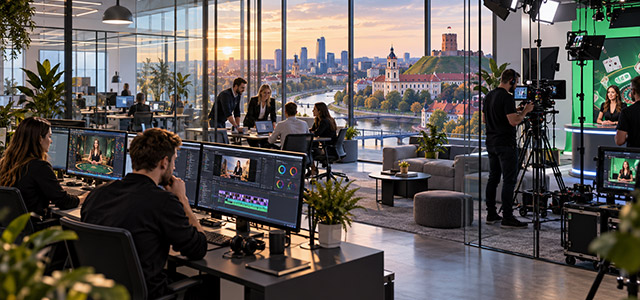
ICONIC21 Establishes New Production Hub and Regional Office in Vilnius
Olga LiLive casino content providers have accelerated studio expansion across Central and Eastern Europe as demand for dedicated and localised production capacity grows. Highlighting this trend, ICONIC21 announced on 1 September 2026 that it will open a new office and studio facility in Vilnius. In the local market context, the Lithuania Gaming Control Authority reported gross gambling revenue of €274.1 million in 2025, a 13% year-on-year increase. The upcoming facility will span more than 1,400 square metres across two full floors, combining studio space with administrative offices, while creating over 350 jobs.