Legal gambling age in ES: 18
Best Online Casinos - Spain
We have made an extensive research of over 800 online casinos and compiled a list of the best online casinos for players from Spain. All casinos appearing on this list are trustworthy, regulated and of course happy take on Spanish players.
Unique Casino
Players residing in your country are accepted. Spanish version is available. Click the icon to play.

 Read casino Review
-
200%
€ 2000
+ 100 spinsWelcome bonus. Click the icon to claim.
- Instant-Play Sofware:
Yggdrasil Gaming
Blaze Spins Casino
Players residing in your country are accepted. Spanish version is available. Click the icon to play.
 Read casino Review
-
88%
$ 1000Welcome bonus. Click the icon to claim.
- Instant-Play Sofware:
Turbo Games
Limitless Casino
Players residing in your country are accepted. Spanish version is available. Click the icon to play.
Check all owners
 Read casino Review
-
777%
UnlimWelcome bonus. Click the icon to claim.
- Instant-Play Sofware:
Realtime Gaming, SpinLogic Gaming
MondCasino
Players residing in your country are accepted. Spanish version is available. Click the icon to play.
 Read casino Review
-
100%
€ 200Welcome bonus. Click the icon to claim.
Min deposit: 20 €/$. Max bet: 4 €/$. Any Deposit Bonus from Welcome offer is active for 7 days from the moment it has been claimed. Max cashout: 20 x deposit amount. The following games are excluded from the bonus promotion offer: See website for list of online slots. - Instant-Play Sofware:
Net Entertainment, Thunderkick, Yggdrasil Gaming, Microgaming, Evolution Gaming + 51 more providers
Spin Dimension Casino
Players residing in your country are accepted. Spanish version is available. Click the icon to play.
 Read casino Review
-
500%
$ 500Welcome bonus. Click the icon to claim.
New Customer Offer. T&C’s Apply. 18+. Min deposit: $25. The maximum bet size permitted with an active welcome match offer is $10. Max Cashout: 10x Deposit. Claimable once. - Instant-Play Sofware:
BetSoft, Rival, Saucify, Qora Games, Vivo Gaming + 4 more providers
Tsars Casino
Players residing in your country are accepted. Spanish version is available. Click the icon to play.
 Read casino Review
-
100%
€ 300Welcome bonus. Click the icon to claim.
- Instant-Play Sofware:
PearFiction Studios, Evolution Gaming
Casoo Casino
Players residing in your country are accepted. Spanish version is available. Click the icon to play.
 Read casino Review
-
100%
€ 300Welcome bonus. Click the icon to claim.
- Instant-Play Sofware:
Net Entertainment, Playn GO, iSoftBet, BetSoft, Wazdan + 23 more providers
EVERYGAME Casino
Players residing in your country are accepted. Spanish version is available. Click the icon to play.
 Read casino Review
-
150%
€ 1500Welcome bonus. Click the icon to claim.
- Instant-Play Sofware:
Realtime Gaming
EVERYGAME Casino Classic
Players residing in your country are accepted. Spanish version is available. Click the icon to play.
 Read casino Review
-
100%
€ 100Welcome bonus. Click the icon to claim.
- Instant-Play Sofware:
Realtime Gaming
LadyLuck Casino
Players residing in your country are accepted. Spanish version is available. Click the icon to play.
 Read casino Review
-
100
spinsWelcome bonus. Click the icon to claim.
New Customer Offer. T&C’s Apply. 18+. 100 Free Spins on Mardi Gras Magic. Min deposit: $35. Max bet: $5. All offers are available on your first five deposits. - Instant-Play Sofware:
Realtime Gaming, SpinLogic Gaming
By Currency
Looking for a full list of casinos offering withdrawals and deposits in EUR? Click here.
By Language
Looking for a full list of casinos which have websites fully translated into Spanish? Click here.
By Targeted Bonus
Looking for a full list of bonuses that are available to players in Spain? Click here.
Legal Status for Spanish Players and Casinos
Gambling is legal in Spain when it is supplied by an authorised operator. Physical casinos, bingo halls, betting shops, gaming machines and lotteries are mainly controlled by the country’s autonomous communities. Online gambling offered across Spain is regulated nationally by the Directorate General for Gambling Regulation, known as the DGOJ. The system is therefore divided: there is no single licence covering every type of gambling, every sales channel and every part of the country.
Gambling is a visible industry, but it is not one of Spain’s main economic drivers. Licensed gambling generates approximately €8 billion in gross gambling revenue. Gross gambling revenue, or GGR, means the amount staked minus the prizes returned to players. This is only around 0.5% of Spain’s total economic output. Tourism, manufacturing, construction, retail and agriculture make much larger contributions. Gambling is better understood as a regulated leisure and entertainment sector than as a central part of the national economy.
The industry nevertheless creates employment and public income. Casinos employ dealers, security staff, cashiers, technicians, hospitality workers and compliance specialists. Published industry figures indicate that physical casinos directly support more than 7,000 jobs, while bingo halls, gaming arcades, betting businesses and machine operators employ many more people. Online operators also employ staff in technology, customer service, fraud prevention and safer gambling.
Licensed businesses pay gambling duties, corporate taxes, licence fees and social security contributions. Land-based casino taxation varies by autonomous community. Rates are normally calculated on GGR and may rise as revenue increases. Depending on the region and revenue level, casino tax rates can range from approximately 15% to more than 50%. Money collected through these taxes enters national or regional public budgets rather than being reserved for one specific social programme.
How Spain compares with other European markets
Spain’s closest regulatory comparison is Portugal. Both countries permit physical and online gambling under licensing systems. Portugal has a smaller market and generally places a heavier tax burden on some online products. Spain offers access to a larger customer base, but its division between national and regional authorities makes compliance more complicated. Spain could learn from Portugal’s more centralised supervision, while Portugal could consider Spain’s more detailed public reporting on online activity and player behaviour.
France is stricter about online casino games. It permits online sports betting, horse-race betting and poker, but does not generally license online slots, roulette or blackjack. Spain allows these games when they are supplied under the correct licence. Spain is therefore more open in the range of online products it regulates. France’s approach reduces legal access to fast casino games, although it may also push some demand towards offshore websites. Spain instead brings these games inside the regulated system, where identity checks and gambling controls can be applied.
Italy permits a broad selection of physical and online gambling, making it closer to Spain. However, Italy introduced an almost complete prohibition on gambling advertising and sponsorship. Spain has used restrictions on broadcasting times, social media, sponsorship, bonuses and the use of celebrities, but its rules have changed following court challenges. Italy offers Spain an example of a simpler advertising rule, although a total ban can make it harder for consumers to distinguish licensed businesses from illegal ones.
Gibraltar is not part of Spain or the EU, but it is an important nearby gambling centre. It has attracted international online operators through specialist regulation and comparatively low taxation. A Gibraltar licence does not give an operator permission to target customers in Spain. Spain’s system places more emphasis on local licensing, Spanish-language information, domestic reporting and Spanish gambling taxes.
Other European markets show the wider regulatory range. Germany is generally stricter, with a shared monthly deposit limit, detailed slot restrictions and central monitoring across licensed operators. Malta is more commercially open and has developed into a base for international gambling companies. However, an EU or Maltese licence does not work like a passport: a Malta-licensed casino must still obtain Spanish authorisation before serving the Spanish market.
Is gambling legal in Spain?
Adults aged 18 or over can take part in authorised gambling. The main legal forms include lotteries, casino table games, gaming machines, bingo, sports betting, horse-race betting and certain competitions. The operator, game and premises must all have the permissions required by the relevant authority.
Spain does not have one regulator for the entire physical industry. Each of the 17 autonomous communities regulates most gambling conducted within its territory. Regional authorities decide which venues may open, approve games and machines, inspect premises and impose regional taxes. The DGOJ coordinates national policy but does not replace these regional regulators.
A business seeking to open a physical casino usually needs authorisation from the relevant autonomous community. Some regions award casino permissions through a public tender rather than accepting applications at any time. Applicants may need to show:
- Who owns and controls the company.
- That the company has sufficient capital and reliable funding.
- The source of its money.
- A suitable business and security plan.
- Approved gambling equipment and technical systems.
- Measures against money laundering and fraud.
- Procedures for checking age and identity.
- Compliance with local planning and location rules.
- Payment of guarantees, licence fees and gambling taxes.
The exact process differs between Madrid, Catalonia, Andalusia and the other communities. A licence for one region does not automatically permit a business to open casinos throughout Spain.
Casinos in Spain
Physical casinos may offer approved games such as roulette, blackjack, baccarat, poker and casino gaming machines. Casinos must control admission, prevent access by minors and self-excluded people, monitor transactions and follow anti-money-laundering rules.
Casino games generate more than €1.1 billion in combined land-based and online GGR. Approximately €390 million comes from physical casino activity, with the rest generated online. Revenue is shared between operating costs, salaries, suppliers, taxes and business profit. Casino taxes enter regional public budgets rather than automatically funding a named social purpose.
Bingo in Spain
Physical bingo halls are regulated by the autonomous communities, which approve premises, game formats, equipment and prize structures. The sector is smaller than lotteries, casinos or sports betting, but it remains an established part of Spain’s land-based market.
Bingo halls pay regional gambling duties and other business taxes. These payments normally go into general regional budgets. Online bingo is much smaller than online casino gaming and betting, generating around €15 million in annual GGR.
Horse-race Betting in Spain
Horse-race betting is legal, but it represents a relatively small part of Spain’s gambling market. Bets may be offered at authorised racecourses, through regional betting businesses or through nationally approved services.
Horse betting has less economic importance in Spain than it does in countries such as the UK, Ireland or France. Its revenue is often reported together with other betting products, making a separate national total difficult to identify. Money generated may support operators, racecourses, prize funds and taxation, but Spain does not depend on horse-race betting as a major source of public revenue.
Lotteries and ONCE in Spain
Spain has one of Europe’s strongest lottery traditions. The national lottery began in 1812, when the first draw was held in Cádiz. It is now operated by the state-owned Sociedad Estatal Loterías y Apuestas del Estado, or SELAE. Its products include the National Lottery, the Christmas Lottery, La Primitiva, Bonoloto, El Gordo de la Primitiva and football pools. Spain’s other major lottery organisation is ONCE, a public-interest organisation that uses income from its lottery products to support blind people and people with other disabilities.
SELAE and ONCE have reserved rights that private businesses do not have. Together, state and public-interest lottery products generate more than €5 billion in annual GGR. SELAE contributes most of this amount. Its profit can be paid to the Spanish Treasury and used through the general public budget.
ONCE, meanwhile, has sold its well-known coupon since 1939 and now offers coupons, draws and instant-win products through authorised sellers and online channels. Its proceeds are used in line with the organisation’s public-interest purpose.
Is online gambling legal in Spain?
Online gambling is legal when the operator holds the required Spanish licences. The national system was created by Gambling Act 13/2011. The law established a common framework for gambling offered in more than one autonomous community and gave the DGOJ responsibility for authorisation, supervision, inspection and enforcement.
Licensed online gambling began operating under the new system in June 2012. The framework later expanded to include online slots, while technical standards, advertising controls and safer-gambling requirements continued to develop. The DGOJ now monitors operators’ systems and financial activity, handles complaints, publishes market data and imposes penalties for breaches.
An online business normally needs two levels of permission. A general licence covers a broad category such as betting or other games. A separate licence is then required for each product, such as roulette, blackjack, poker, bingo or slots. General licences are normally available only when the government opens a licensing window. Holding a licence elsewhere in Europe does not remove this requirement.
National lottery products remain reserved for SELAE and ONCE. A private online operator cannot simply create a competing national lottery. Games that fall outside an approved category may require further authorisation. Prediction markets can also be treated as gambling when customers stake money on uncertain future events.
Foreign casino brands can enter Spain, but they must meet Spanish conditions. An eligible company generally needs to be established in Spain or another European Economic Area country, disclose its owners, demonstrate financial and technical capacity, provide financial guarantees and connect its systems to the regulator’s controls. It must also use Spanish-approved payment, identity-verification and reporting procedures. An offshore licence is not sufficient on its own.
Licensed operators must verify that customers are adults and check whether they appear on Spain’s national self-exclusion register. They must provide deposit limits, responsible-gambling information and account records. Operators also have duties concerning player funds, complaints, fraud prevention, money laundering and the detection of risky gambling behaviour.
Spain has taken active measures against unlicensed websites. The DGOJ investigates companies that target Spanish residents without permission, publishes sanction decisions and can seek the blocking of illegal services. Recent action has also covered foreign prediction-market platforms because Spain considers paid betting on uncertain events to be gambling. Serious violations can result in multimillion-euro fines, website blocking and bans on operating in the country.
Advertising rules have been less stable. Royal Decree 958/2020 introduced strong limits on gambling promotions, sponsorship, bonuses, celebrity endorsements and digital advertising. The Supreme Court later cancelled several provisions because it found that the decree lacked enough support in primary legislation. Some promotions consequently returned. The government has since been working to restore parts of those controls through legislation and further consultation. This means claims that bonuses or influencer advertising are either completely permitted or completely prohibited should be checked against the rules currently in force.
| Name | Allowed Casinos | Friendly Casinos | Targeted Casinos | Land-based | Online operator | Online player | ISP Blocks | Bank Blocks | Notes | Sources | Score |
|---|---|---|---|---|---|---|---|---|---|---|---|
| Spain | 488 | 240 | 44 | Legal | License required for all casinos | Administrative penalty | Some casinos blocked | Some transactions restricted | Title: Top Spain Online Casinos – Pick Among 250+ Reputable Sites
Description: Check out 250+ Spain-friendly online casinos compatible with the online gambling regulations for this country. The review is topped with a roadmap to bonuses.
Title: Top Spain Online Casinos – Pick Among 250+ Reputable Sites
Description: Check out 250+ Spain-friendly online casinos compatible with the online gambling regulations for this country. The review is topped with a roadmap to bonuses.
|
-
Article 1. Purpose. The purpose of this Act is to regulate gaming activity, in its various forms, that is developed with state level in order to ensure the protection of public order, fight against fraud, prevent addictive behaviors, protect the rights of children and safeguard the rights of the participants in the games, without prejudice to the provisions of the Statute of Autonomy.
Article 10. General Licenses. Interested individuals in developing activities of not occasional game should get, prior to the development of any type of game, a general license for each game mode defined in Article 3, letters c), d), e) and f), depending on the type of game that they propose to market.
h) Games through electronic, computer, telematics and interactive media. These use any mechanism, installation, equipment or system that allows to produce, store or transmit documents, data and information, including any networks of communication open or restricted as television, Internet, fixed and mobile telephony or otherwise, or interactive communication, be it in real time or delayed.
The exercise of activities no reserved under this Act is subject to prior obtaining of certificate corresponding, in the terms provided in the following articles. In accordance with this Act, authorizations and licenses of gambling activities are considered enabling titles.
The infractions considered as minor will be sanctioned by the National Gaming Commission with:
a) A written warning.
b) A fine of up to one hundred thousand euros.
2. The infractions considered as serious infringements will be sanctioned by the National Gaming Commission with the following sanctions:
a) Fine of hundred thousand to a million euros.
b) Suspension of activity in Spain for a maximum period of six months.
Penalty For Players
The gaming rule establishes that " infractions classified as minor will be sanctioned by the National Gaming Commission" with written warning and fines of up to 100,000 euros .
|
345
Gambling Availability Score 345. Ranked 250 of 531 |
Banking in Spain
Licensed online casinos in Spain use the euro. A player may sometimes deposit or withdraw using a bank account or card issued outside Spain, but the casino must still verify the customer’s identity and follow Spanish financial controls. Currency conversion may be applied by the player’s bank or payment provider if the original account uses another currency.
Bank cards are the most common way to fund licensed gambling accounts, accounting for approximately 73% of deposits. Electronic wallets represent around 12%, while bank transfers, instant bank payments, and prepaid cards make up most of the remaining activity. Common options may include Visa and Mastercard cards, bank transfers, digital wallets and local services such as Bizum. However, the available methods differ between operators.
Bank transfers play a larger role in withdrawals than deposits. They account for approximately one-third of money withdrawn, while cards receive around half of withdrawals. This difference exists partly because some prepaid or instant-payment methods can send money to a casino but cannot receive withdrawals.
Spanish rules require operators to check who owns a gambling account and where its money comes from. A casino may request identification, proof of address or evidence that a payment method belongs to the customer. Withdrawals may be delayed while these checks are completed. Licensed operators must also monitor transactions for fraud, money laundering and the use of another person’s identity.
Deposit limits
Spanish-licensed operators apply default deposit limits per day, per week and per month to each player account. Players can also set lower personal limits. Requests to reduce a limit should be applied promptly, while requests to increase or remove one are subject to additional checks and a waiting period.
Plus, Spain has approved a shared deposit-limit system for all licensed online gambling sites. Therefore, deposits made through different operators will be counted together. Players will be able to lower the standard limits immediately. Requests to raise or remove them will take effect after three business days.
Can Spanish banks block gambling payments?
Spain does not impose a general ban on bank or card payments to licensed gambling businesses. Credit cards are not prohibited for gambling in the same way as they are in the UK. Banks can nevertheless decline a transaction because of fraud controls, insufficient funds, account restrictions or their own risk policies.
Some banks and payment apps allow customers to activate an optional gambling block. These tools identify payments through the merchant category code attached to the transaction. Their availability and removal conditions depend on the bank. A block may stop card payments but not necessarily bank transfers, cash withdrawals or payments routed through another provider.
Spanish authorities can also act against payment activity connected with unlicensed gambling. This is different from a personal bank block: it is an enforcement measure directed at an unauthorised operator rather than a ban on ordinary payments to licensed sites.
Do players pay tax on casino winnings?
Operators pay gambling duties, but this does not always remove the player’s own tax responsibility. A person who is tax-resident in Spain generally reports net gambling gains through the annual personal income tax return. Gambling gains are treated as a capital gain within the general tax base and are taxed together with other relevant income at the applicable progressive rate.
Losses from gambling during the same tax period can be deducted from gambling winnings, but only up to the value of those winnings. Excess losses cannot create a tax credit or be used to reduce salary or other unrelated income. Players should therefore retain annual account statements showing deposits, withdrawals, winnings and losses across every operator they use. A separate system applies to qualifying prizes from SELAE, ONCE and certain recognised lotteries.


Popular Spanish Games
Spanish-licensed online casinos can offer slots, roulette, blackjack, baccarat and other authorised casino games. Poker and bingo are also legal, although the DGOJ records them as separate market segments.
Slots are the most popular online casino genre by revenue. The latest complete figures show that they produce around 69% of online casino GGR. This means slots account for more money retained by operators after prizes than roulette, blackjack and other casino games. Their share has continued to grow as licensed sites have added larger mobile-friendly catalogues.
Live roulette is the second-largest part of the online casino segment. It generates considerably more revenue than computer-generated roulette and blackjack. Live games stream a real table and dealer from a studio, while players place bets through the casino website or app. The format combines the remote access of online gambling with some of the visual and social features of a physical casino.
International game suppliers can provide content to Spanish players, but each online operator remains responsible for making sure that the games offered through its Spanish site are approved and technically compliant. Therefore, a game developer’s Spanish catalogue may be smaller or different from the catalogue available through the same brand in another country.
Spain also has its own casino-game development industry. Several Spanish companies began in physical gaming machines before moving into online content. For instance, R. Franco Digital belongs to a Madrid gaming group with more than 60 years of experience. It develops online slots and supplies technology for both digital and retail gambling businesses. Its background in Spanish amusement and gaming machines gives many of its games a recognisable traditional slot style.
Zitro is a Spanish-founded company known internationally for video bingo and video slots. It produces cabinets for physical casinos and gaming halls as well as digital versions for online operators. Its growth shows how Spanish video-bingo technology has moved into the wider international casino market.
MGA Games, based in Barcelona, develops slots and video bingo for regulated online markets. The studio is particularly associated with locally themed games and titles based on Spanish television personalities, entertainment and popular culture. Among its popular creations are hits like Galactica, El Cartel, Fire Warlock Megaway, and La Bruja Fortuna.
Red Rake Gaming began in Valencia and produces online slots, video bingo and other casino games. It later expanded through international licences and distribution agreements, allowing games developed in Spain to reach operators in a wide range of regulated markets. Among its popular slots are titles like Wildcano, The Sherlock Files, Mata Hari the Spy, and Viva Las Vegas.
Spanish-licensed sites may therefore combine games from domestic studios with content from large international suppliers. On a side note, free social casino games that do not award money may fall outside Spanish gambling regulation, but a game involving a stake and a prize of monetary value normally requires authorisation.
In American Roulette, there are 38 black and red slots that are numbered as 1-36, one zero, and a double zero, both of which are colored green
Bingo is a game of chance played with different randomly drawn numbers which the player matches against numbers on his 5×5 card.
Great blue slot game by Playtech was released for Canadian players who are interested in the underwater theme.
New Online Casinos in Spain
New casino brands appear less frequently in Spain than in open offshore markets. DGOJ does not publish a separate annual average for newly opened casino brands, so there is no reliable figure for the number of new casinos launched in Spain each year.
Market results give a clearer picture of development. The latest annual figures show that state-regulated online gambling GGR increased by approximately 17%, while the number of active players grew by around 8%. Online casino games produced slightly more than half of total online GGR. The regulated sector can therefore grow significantly even when the number of licensed companies changes very little.
A recent launch date, professional design, or a Spanish domain address does not prove that a casino is authorised. The most reliable check is the DGOJ’s official operator register. A search should confirm the casino’s legal operator, exact website address and relevant licences.
A legitimate Spanish casino should clearly name the company responsible for the website and provide access to its legal terms, privacy policy, complaints procedure and responsible-gambling information. Its games and payment services should operate through the approved Spanish domain. Identity checks, deposit controls and age verification should form part of the account process.
By contrast, an unclear company identity, missing Spanish licence information or instructions to use a VPN should be treated as warning signs. The same applies when a website tells customers to give a false address, promises gambling without verification or asks for payment to an unrelated person or private cryptocurrency wallet.
Players can also review the DGOJ’s published sanction decisions. These records cover both illegal foreign websites and licensed businesses penalised for regulatory breaches. A licence confirms that an operator has entered the Spanish system, but it does not mean that the company has never received a fine or warning.
Registration at a licensed casino normally requires a full legal name, date of birth, residential address and identity-document number. The operator must confirm that the customer is at least 18 and check Spain’s national self-exclusion register. It may also request a copy of a DNI, NIE or passport, proof of address and information about the source of funds.
The registration details should match the information connected with the customer’s bank card, bank account or payment service. Using another person’s payment method can lead to additional checks or a rejected withdrawal. Before depositing, it is also useful to read the withdrawal and account-closure terms, check the applicable deposit limits and retain copies of transaction records.
Requests for identification do not necessarily indicate that something is wrong. Licensed operators have legal duties concerning fraud, identity theft and money laundering. Documents should nevertheless be submitted only through the casino’s secure website or another verified company channel.
Ultimately, “new” describes a stage in a casino’s history. It does not establish stronger protection, faster withdrawals or better service. The more useful checks are whether the exact domain appears in the DGOJ register, which company operates it and whether its registration, payment and withdrawal procedures follow Spanish rules.
FREQUENTLY ASKED QUESTIONS
Gambling Laws in Spain: Things to Know and to Avoid
Is online gambling legal in Spain?
Online gambling has been legal and regulated in Spain since 2011. The government created a clear framework that allows players to enjoy casino games, sports betting, poker, and bingo in a safe environment. The authority responsible for regulating the industry is the Dirección General de Ordenación del Juego (DGOJ). Only gambling sites that hold a valid DGOJ license are allowed to operate legally in the country.
These sites must meet strict rules, including fair play standards, player protection, responsible gambling tools, and secure transactions. That means you, as a player, are better protected here than in many other countries.
How do I know if a gambling site is legal and safe?
Look for the DGOJ seal (it’s a small red and yellow badge) usually found at the bottom of the casino’s homepage. This seal means the site has passed all legal checks and is approved to operate in Spain.
Legal online operators will also clearly state their licensing information and offer terms and conditions in Spanish.
Are online casinos licensed outside of Spain safe to play at?
International casinos that accept Spanish players and that are licensed by respected gambling authorities such as the Malta Gaming Authority, Curaçao eGaming, or the government of Gibraltar, can be viewed as good alternatives to Spain-regulated sites. While they are not licensed by the DGOJ, they still operate legally under international law and offer secure, fair gaming environments.
Many Spanish players enjoy these international options because they provide more game variety, flexible promotions, and access to cryptocurrencies. If you choose an international site, always check its license details, privacy policies, and payment terms. A trustworthy platform will publish this information clearly and operate under regulation.
What documents do I need to register and verify my account?
To play legally in Spain, you must be of legal age (at least 18 years old) and have valid documentation. All DGOJ-licensed sites are required to follow KYC (Know Your Customer) rules. This means you’ll need to verify your identity before you can withdraw any winnings.
Typically, you’ll need to provide:
- A copy of your DNI or NIE
- A utility bill or bank statement with your address
- A selfie or short video for face verification (on some sites)
This process is normal and helps keep your account secure.
What tools exist to help me play responsibly?
Spain is known for having strong responsible gambling laws. All licensed platforms must provide tools to help you control your gambling activity.
These tools include:
- Setting deposit limits (daily, weekly, monthly)
- Reality checks that remind you how long you’ve been playing
- Session time-outs and self-exclusion options
- Access to Registro General de Interdicciones de Acceso al Juego (RGIAJ), the national self-exclusion system
If you feel your gambling is becoming a problem, you can also get help from organizations like FEJAR (Federación Española de Jugadores de Azar Rehabilitados). Their services are free and confidential.
Are gambling winnings taxed in Spain?
Yes, but only if you make a profit over the course of a year. Spain considers gambling winnings part of your personal income. You must declare your net gains (winnings minus losses) on your annual tax return.
Tax rates range from 19% to 47%, depending on your total income. If your total losses are greater than your wins, you don’t need to pay anything. Keep records of your activity, as many Spanish-licensed sites provide downloadable reports to make tax filing easier.
If you’re unsure about your tax obligations, it’s a good idea to consult a local tax advisor.
The State of the Online Gambling Market in Spain
Who gambles online in Spain?
Online gambling in Spain attracts a wide mix of people, but most active players fall between the ages of 25 and 45. The majority play casually, often during evenings or weekends. Studies from the DGOJ show that men make up a slightly higher percentage of players than women, though the gap is narrowing every year.
Mobile gaming is the standard now. Most people use smartphones or tablets to access mobile slots and betting platforms, thanks to smooth mobile apps and browser-friendly sites. Some local research suggests that players enjoy quick sessions (usually 15 to 30 minutes) either while relaxing at home or during commutes.
What are the most popular games of chance in Spain?
Slots are the number one choice for Spanish players. They’re easy to play, visually fun, and available in all kinds of themes. Blackjack and roulette are also popular, especially the live versions where you can play with real dealers in real time. Bingo and poker still have a loyal fan base, but they’re not as dominant as before.
Many players also enjoy sports betting, which sometimes leads them to try games of chance through the same site. That’s why multi-platform operators (offering both games and sports) tend to be successful in the Spanish market.
How much do people typically spend when gambling online?
According to official data, the average online player in Spain spends about €35–€50 per month. Many casual players deposit small amounts (between €10 and €20) to enjoy low-stakes games. High rollers exist, but they are the minority.
Spain’s gambling law includes mandatory deposit and loss limits for DGOJ-licensed sites, which helps prevent overspending. International platforms often include similar settings, even if they are not legally required to do so for Spanish players.
What makes Spanish players different from others in Europe?
Within the trends of European gaming, Spanish players tend to favor entertainment over competition. Many choose games with colorful themes, short playtimes, and simple mechanics. The emotional experience matters more than chasing massive wins.
The strong football culture also shapes preferences. Live betting during matches is very common, and this interest in real-time interaction extends to live dealer casino games. In general, Spanish users are loyal to sites that offer a smooth mobile experience, fast customer service, and bonuses in their native language.
Do most people play for fun or money?
Most Spanish users play for fun. They see gambling as a form of digital entertainment, not a way to make money. Players enjoy the excitement of small wins and bonuses, but they don’t expect to get rich from gambling.
This mindset helps stay responsible while gambling . When entertainment is the goal, people are more likely to stick to limits, take breaks, and enjoy the experience without stress.
The Truth About Bonuses for Spanish Players
Are bonuses allowed in Spain?
Yes, but with limits. Bonuses are legal in Spain, but DGOJ regulations are strict. Licensed Spanish online operators are not allowed to show or offer any kind of promotion to new users until they’ve been registered for at least 30 days and have verified their identity.
This means you won’t see welcome offers or ads about promotions until you create an account and go through the full verification process. The goal is to protect players, not to pressure them with offers as soon as they land on a site.
International sites that accept Spanish players are not subject to this rule. They often show their bonuses right away and offer standard welcome packages as soon as you sign up.
What kinds of bonuses can I get after signing up?
Once your account is verified, you’ll start seeing bonus options if you’re on a DGOJ-licensed site. These usually include:
- Deposit match bonuses (e.g. a cash match to top the initial payment)
- Casino spins on certain slot machines
- Cashback offers on your losses
- Loyalty rewards that build up over time
International sites may offer all of the above from day one. Some also run slot tournaments, prize draws, and rotating promotions that change weekly. Spanish players who want more immediate access to bonuses often choose these platforms.
Keep in mind that bonuses may come with restrictions on which games contribute to the requirements.
What should I look for in the bonus terms?
Reading the small print is key. Before claiming any bonus, check:
- Wagering requirements: This is how many times you need to play through the bonus before cashing out. For instance, a 35xB requirement means you must bet 35 times the bonus amount. If the requirement also has a letter D added, this means that the equivalent of deposited cash must also be rolled over.
- Game contribution rates: Not all games count equally. Slots usually contribute 100%, but blackjack or roulette may count only 10% or not at all.
- Time limits: Most bonuses expire within 1 to 30 days.
- Max bet limits: You might be limited to betting a certain amount of cash per spin or hand while playing with bonus money.
Always read the bonus rules before depositing. If anything seems unclear, ask customer support.
Can I trust promotions from all online operators?
Only trust offers from licensed sites, whether Spanish or international. Legal platforms follow rules that prevent misleading bonuses, unclear terms, and unfair restrictions. If you see a bonus that looks too good to be true or doesn’t explain the conditions, that’s a red flag.
A safe site will always tell you:
- The exact amount you’ll get
- How to use the bonus
- How to complete the wagering
- What games are allowed
Avoid any platform that hides this information or requires strange payment methods to unlock the bonus.
Are loyalty programs worth it?
If you plan to play regularly, loyalty systems can be a nice extra. These programs usually give you points every time you wager, which you can later convert into casino spins, bonus money, or cashback.
Some online operators also offer tiered loyalty levels, with better perks the more you play, like faster withdrawals, birthday gifts, or even a personal account manager. These are more common on international platforms.
You don’t have to chase the status, but if you already enjoy playing, it’s worth keeping an eye on these long-term rewards.
Payments: Depositing and Withdrawing in Spain
What payment methods do most Spanish players use?
Spanish players have many options for funding their gambling accounts. The most popular methods are:
- Bizum: A mobile-based payment tool linked to your bank account. It is secure and perfect for small to medium deposits.
- PayPal: This method is widely accepted on Spanish-licensed platforms and known for its buyer protection and smooth user interface.
- Credit and debit cards: Visa and Mastercard are still widely used, especially for first-time deposits.
- E-wallets: Skrill and Neteller offer speed and privacy. These are great for people who want to keep gambling separate from their main bank account.
- Bank transfer: Slower, but useful for larger withdrawals.
Most platforms (local and international) support these options. Bizum is more commonly found on Spanish-licensed sites, while some international casinos lean more toward e-wallets and crypto.
How fast are deposits and withdrawals?
Deposits
are usually instant, especially with Bizum, PayPal, and cards. E-wallets are also fast, with the money appearing in your balance right away.Withdrawals depend on the method:
- E-wallets: 0–24 hours
- PayPal: 24–48 hours
- Cards: 2–5 business days
- Bank transfers: 3–7 business days
DGOJ-licensed sites tend to take longer because of mandatory security checks. International platforms often process payouts faster, especially for long-time verified users.
Can I use cryptocurrencies to gamble online in Spain?
Not on Spanish-licensed sites. DGOJ does not allow crypto deposits or withdrawals, so if you’re playing on a local platform, you’ll need to stick with euros and traditional methods.
However, many international lobbies that accept players from Spain do support cryptocurrencies like Bitcoin, Ethereum, or Litecoin. These platforms allow fast, anonymous payments and often feature exclusive crypto bonuses. Just remember that crypto is more volatile, and refunds or disputes may not be as straightforward.
If you decide to use crypto, check the site’s wallet address carefully and start with a small test deposit.
Are there any fees I should know about?
Most Spanish-licensed sites don’t charge fees for deposits or withdrawals, but it depends on your chosen payment method.
- Bizum and PayPal are usually free to use.
- E-wallets like Neteller or Skrill may charge 1%–3% for currency exchange or withdrawals.
- Bank transfers might have a small fee, especially for international transfers from global casinos.
Before you confirm a payment, check the cashier section of the site. Reliable platforms always list fees clearly. You can also ask the website you’re playing on for support if you’re unsure.
Do I need to withdraw using the same method I used to deposit?
Usually, yes. This is a standard anti-fraud rule. Most online lobbies will automatically send your withdrawal to the same method you used for the deposit, unless that method doesn’t support payouts (like prepaid cards or Bizum in some cases).
In that case, you’ll be asked to choose an alternative like a bank transfer or e-wallet. The rule helps ensure your money goes to the right place and reduces the risk of identity theft or payment fraud.
Once you verify your account, your future payouts tend to be faster and smoother.
Games for Spain: What You Can Play and How to Choose
What types of games are available in Spanish online lobbies?
Spanish players have access to a wide range of games, from fast-paced slots to live table classics. On both Spanish-licensed and international sites, you’ll find:
- Video slots: The most popular category. Games range from fruit machines to movie-themed adventures.
- Live dealer games: Real-time blackjack, roulette, baccarat, and more, hosted by human dealers on camera.
- Table games: Digital versions of blackjack, roulette, poker, and craps with customizable limits.
- Jackpot games: Progressive slots that offer massive wins with just one spin.
- Bingo and scratch cards: Lighter games for players who prefer a relaxed pace.
Spanish-licensed sites often feature top providers like MGA Games, Playtech, and NetEnt. International platforms offer even more variety, with hundreds of slots from providers like Pragmatic Play, Play’n GO, and Evolution.
Are the games fair and safe to play?
Yes, as long as you play on licensed platforms. All legal sites (Spanish or international) must use Random Number Generators (RNGs) for digital games. RNGs ensure every spin, card, or dice roll is completely random.
Live games are streamed in real time and use physical equipment, just like in a land-based casino. Many live games are run by companies like Evolution or Ezugi, which are regulated and independently audited for fairness.
Look for games certified by labs like eCOGRA or iTech Labs. These testing agencies check payout rates, mechanics, and security. Most casinos include a link to certification details at the bottom of their site.
What does RTP mean, and why should I care?
RTP stands for Return to Player. It tells you how much money, on average, a game gives back over time. For example, a slot with 96% RTP pays out €96 for every €100 wagered (in the long run).
The higher the RTP, the better your chances over time. Most slots have an RTP between 94% and 97%. Blackjack and video poker usually offer higher RTPs (sometimes over 99%) if played with basic strategy.
Checking the RTP helps you avoid games with low returns and gives you more value from your bankroll.
What is volatility, and how does it affect gameplay?
Volatility (also called variance) tells you how often and how much a game tends to pay out.
- Low volatility games pay smaller amounts frequently. Ideal for longer sessions and beginners who want more action.
- High volatility games pay less often, but wins can be big when they happen. Better suited for players with more patience or bigger budgets.
If you’re new, start with low to medium volatility slots. You’ll enjoy more regular wins and fewer long dry spells. Most online lobbies mention volatility in the game info section, or you can search for the game online to check.
Are there live games in Spanish?
Yes, and they’re growing in popularity. Many platforms, especially those with a strong presence in Spain or South America, offer live dealer games hosted in Spanish. You’ll find Spanish-speaking roulette, blackjack, and game shows like Crazy Time or Monopoly Live.
Even when the dealer isn’t speaking Spanish, most live games include a Spanish interface and chat box, so you can still enjoy the experience comfortably.
Live games give you the feel of a real casino, without leaving home. They’re streamed in HD, with betting limits that suit both casual players and high rollers.
Final Thoughts and Smart Gambling Habits
What’s the best way to start playing safely?
Start small. Choose a trusted site that’s either licensed by the DGOJ or holds a strong international license. Set your first deposit limit and take time to explore the games with free demos or low-stake options. Never rush into high bets or complex strategies.
Before making your first deposit, double-check the payment options and browse the terms of bonuses or promotions. A few minutes of reading will save you from confusion later.
What should I avoid as a beginner?
Avoid unlicensed or anonymous sites with no clear ownership or license details. Stay away from offers that seem too good to be true, especially if they don’t explain the rules. Also, don’t skip account verification — it’s a step required by law and protects your payouts.
Lastly, don’t chase losses. Every player has unlucky streaks. Stick to your limits, take breaks, and always play with money you can afford to lose.
Where can I go for help if I need it?
If you ever feel overwhelmed or out of control, you’re not alone, and support is available. Spanish players can access:
- FEJAR (Federación Española de Jugadores de Azar Rehabilitados) — free help and resources
- RGIAJ (National Self-Exclusion Register) — blocks access to all Spanish-licensed casinos
- Casino customer support — ask about self-exclusion, deposit limits, or cool-down tools
Responsible gambling tools are built into most platforms. Use them early, even if just as a precaution.
Is it okay to play just for fun?
Absolutely. In fact, that’s the healthiest approach. Most Spanish players use gambling as a form of entertainment — something fun, like watching football or playing video games. Winning is exciting, but it shouldn’t be the only reason you play.
If you ever notice you’re playing out of stress, boredom, or frustration, that’s a sign to pause. Gambling should be enjoyable, not stressful.
Will I get better over time?
Yes, experience helps. You’ll learn which games you enjoy, how to read bonus terms, and how to manage your bankroll more wisely. With practice, you’ll also get faster at spotting good promotions and avoiding weak ones.
Keep your curiosity, take breaks when needed, and remember that the goal is not just to win, but to enjoy the ride.
Spain latest news
Spain Proposes Strict Ban on Celebrity and Influencer Gambling Ads
Olga Li#BettingLegislation #GambleLike_Spain
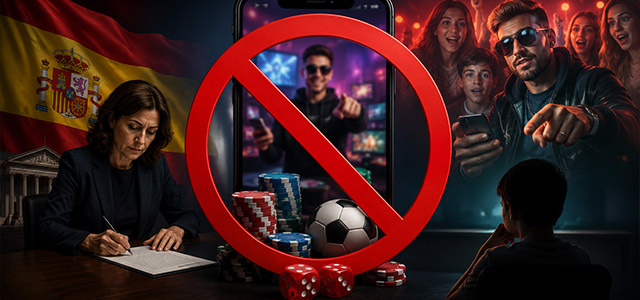
Spain’s Directorate General for the Regulation of Gambling (DGOJ) has launched a public consultation on a sweeping set of proposals aimed at tightening the country's gambling advertising laws. The consultation, which runs until 22 June 2026, focuses on banning the use of celebrities and influencers in gambling marketing, restricting promotional customer acquisition bonuses, and limiting the visibility of gambling content in organic search engine results unless a user explicitly searches for betting products.

SYNOT Games Strengthens Spanish Presence with Platin Casino Partnershi...
Olga Li#GambleLike_Spain #SoftwareLab #GamingDeals
SYNOT Games, a leading provider in the iGaming industry, has announced a significant partnership with Platin Casino, a prominent online casino operator in Spain. This collaboration will see the integration of over 30 of SYNOT Games' most popular and engaging slots into Platin Casino's diverse game library.

Upcoming Gambling Events and Conferences with Impact on Industry’s Fut...
Iryna SI#GamblingEvents #GambleLike_Spain
Gambling events are an essential part of the industry’s development and its innovation. No wonder, plenty of them happen all year round. Gambling award ceremonies recognize the biggest achievements and show direction for upcoming trends, while conferences contribute to the improvements, innovation, and reformation of gambling. The end of spring has both variants to offer to those willing to track the industry’s evolution: Baltic and Scandinavian Gaming Awards await us in June, while the 2024 Gaming in Spain Conference is planned in May.