Legal gambling age in MK: 18
Best Online Casinos - Macedonia
Gambling in North Macedonia is a regulated activity that forms part of the wider service economy. Licensed betting shops and gaming venues operate across the country, generating tax income and supporting jobs in retail, hospitality, and operations. While gambling is clearly defined by law, its presence is mostly practical rather than alluring. Most residents treat it as a controlled form of paid entertainment rather than a lifestyle activity. This position reflects North Macedonia’s broader economic model. As a small market with limited industrial output, the country relies heavily on services, consumption, and the regulated private sectors. Gambling was formalised early under state supervision to keep the activity taxable and monitored. The country was not a pioneer in shaping the regional gambling industry, but it did adopt a clear regulatory approach earlier than some neighbouring markets, avoiding long periods of legal uncertainty. Most active players in North Macedonia are between 25 and 55 years old, with higher engagement in urban areas such as Skopje and other regional centres. Monthly spending per player remains lower than in Western European markets, which aligns with local income levels and generally cautious spending habits. Several other facts about gambling in North Macedonia help clarify how the industry functions in this country in practice:
- Gambling taxes and licensing fees contribute a meaningful share of public revenue compared to other leisure sectors, making the industry fiscally relevant.
- North Macedonia has a high number of licensed gambling venues per capita, particularly betting shops, most of which operate on a small to mid-scale basis.
- Sports betting dominates player activity, with football accounting for the majority of wagers placed each year, followed by basketball and tennis.
- Online gambling participation has increased steadily alongside smartphone use and digital payments, even though land-based venues continue to attract regular traffic.
Understanding how gambling laws work in North Macedonia is important for practical reasons. Regulations define which operators are licensed, how player funds are handled, what protections exist, and how disputes are resolved. Without this knowledge, players may misunderstand their rights, choose unreliable operators, or overlook important safeguards related to payments and age limits. This review focuses on providing clear, practical information. It explains how the regulatory system works, how gambling operates in everyday terms, and what players should consider before gambling online or offline. The goal is to help readers make informed decisions, understand their options, and approach betting and games of chance with realistic expectations based on how the market is actually structured.
Rocket Play Casino
Players residing in your country are accepted. English version is available. Click the icon to play.

 Read casino Review
-
200%
€ 200Welcome bonus. Click the icon to claim.
- Instant-Play Sofware:
7Rings Gaming
Spin Dimension Casino
Players residing in your country are accepted. English version is available. Click the icon to play.
 Read casino Review
-
500%
$ 500Welcome bonus. Click the icon to claim.
New Customer Offer. T&C’s Apply. 18+. Min deposit: $25. The maximum bet size permitted with an active welcome match offer is $10. Max Cashout: 10x Deposit. Claimable once. - Instant-Play Sofware:
BetSoft, Rival, Saucify, Qora Games, Vivo Gaming + 4 more providers
Tsars Casino
Players residing in your country are accepted. English version is available. Click the icon to play.
 Read casino Review
-
100%
€ 300Welcome bonus. Click the icon to claim.
- Instant-Play Sofware:
PearFiction Studios, Evolution Gaming
Lucky Emperor Casino
Players residing in your country are accepted. English version is available. Click the icon to play.
 Read casino Review
-
100%
€ 100Welcome bonus. Click the icon to claim.
- Downloadable Software: Microgaming
Instant-Play Software: Microgaming, Games Global
CasinoEuro
Players residing in your country are accepted. English version is available. Click the icon to play.
 Read casino Review
-
100%
€ 150Welcome bonus. Click the icon to claim.
New customers only. T&C’s Apply. 18+. BeGambleAware.18+. New GB Customers and first deposit only. Spins only available on Starburst. Deposit and play through £25 on selected games and get 25 spins OR; Deposit and play through £100 on selected games and get 100 spins OR; Deposit and play through £200 on selected games and get 200 spins. 3 day expiry of spins after they have been added. 14 days from registration to claim offer. You have a right to withdraw your cash deposit or any remaining cash deposit and any cash winnings from this deposit. If this is withdrawn, the spins and any winnings from the spins will be forfeited. All winnings from the spins will be paid out cash. Further eligibility and terms apply. - Instant-Play Sofware:
Net Entertainment, Microgaming, Playn GO, Blueprint Gaming, Williams Interactive + 16 more providers
CasinoCasino
Players residing in your country are accepted. English version is available. Click the icon to play.
 Read casino Review
-
100%
kr 1000Welcome bonus. Click the icon to claim.
New Customer Offer. T&C’s Apply. 18+. Spela ansvarsfullt. www.stodlinjen.se. Regler & Villkor gäller - Instant-Play Sofware:
Merkur Gaming, Just for the Win, GECO Gaming
Casoo Casino
Players residing in your country are accepted. English version is available. Click the icon to play.
 Read casino Review
-
100%
€ 300Welcome bonus. Click the icon to claim.
- Instant-Play Sofware:
Net Entertainment, Playn GO, iSoftBet, BetSoft, Wazdan + 23 more providers
EVERYGAME Casino
Players residing in your country are accepted. English version is available. Click the icon to play.
 Read casino Review
-
150%
€ 1500Welcome bonus. Click the icon to claim.
- Instant-Play Sofware:
Realtime Gaming
EVERYGAME Casino Classic
Players residing in your country are accepted. English version is available. Click the icon to play.
 Read casino Review
-
100%
€ 100Welcome bonus. Click the icon to claim.
- Instant-Play Sofware:
Realtime Gaming
SirWin Casino
Players residing in your country are accepted. English version is available. Click the icon to play.
 Read casino Review
-
100%
$ 1000Welcome bonus. Click the icon to claim.
- Instant-Play Sofware:
Novomatic, Net Entertainment, Thunderkick, Yggdrasil Gaming, Playn GO + 44 more providers
Legal Status for Macedonian Players and Casinos
Gambling plays a measurable role in the economy of North Macedonia, which is part of the Balkan region both geographically and economically. In recent years, gambling-related taxes, licensing fees, and concession payments have brought in tens of millions of euros annually, placing the sector among the more significant contributors within the service economy. This revenue is absorbed into the general state budget and used alongside other public income for areas such as public-sector wages, municipal funding, and infrastructure spending.
Looking first at its Balkan neighbours, North Macedonia follows a broadly similar path but with its own balance. Serbia operates a large, competitive gambling market with strong private-sector participation. Croatia, on the other hand, combines private operators with state influence and tighter controls, particularly in online gambling. Compared to both, North Macedonia sits somewhere in the middle: gambling is legal and regulated, operators are licensed, and the state focuses on predictable tax income rather than rapid expansion or heavy restriction.
When placed next to more progressive European gambling markets, this helps put North Macedonia’s approach into context. Denmark runs one of Europe’s most open and structured systems, where multiple private operators compete under strict licensing rules and strong consumer protection standards. Sweden follows a similar model, with a modern licensing framework that places heavy emphasis on responsible gambling tools and advertising limits.
These markets prioritise channeling player demand into licensed platforms by keeping legal options competitive and clearly regulated. North Macedonia has not gone this far in terms of regulatory complexity or consumer tools, but it shares the same core idea: gambling should be licensed, taxed, and supervised rather than left informal.
On the more conservative European side, some countries take a much tighter stance. Norway operates a near-monopoly system where most gambling activity is handled by state-run operators, with strict limits on advertising and game variety. Finland has traditionally followed a similar monopoly-based approach, focusing strongly on harm prevention and public control rather than competition. Compared to these other cultures, North Macedonia is clearly more open to private operators and market participation, but without adopting the full liberalisation seen in Scandinavia’s competitive markets.
Taken together, these comparisons show that North Macedonia has chosen a pragmatic, revenue-focused regulatory model. It is neither experimental nor overly restrictive. Understanding this positioning helps explain both what is allowed today and how the market is likely to evolve over time.
Is gambling legal in North Macedonia?
Offline gambling in North Macedonia is legal and regulated, but the system has developed over time rather than appearing in its current form from the start. Early versions of gambling regulation were introduced in the late 1990s, with major updates and restructuring taking place in the following decades as the market expanded. Today’s framework is defined by the Law on Games of Chance and Entertainment Games, which sets out what types of gambling are allowed, how licences are issued, and what obligations operators must meet.
Oversight sits mainly with the Ministry of Finance, which handles licensing, supervision, and compliance. For large land-based gambling venues, including casinos, licences are granted by the government following a formal application process managed through the ministry. This means decisions are centralised and tightly controlled, rather than handled at the municipal level. Operators are monitored through reporting requirements and inspections, and failure to meet conditions can lead to penalties or loss of licence.
In practical terms, land-based gambling venues are concentrated where demand makes economic sense. Most casinos are located in larger cities such as Skopje, as well as in border areas, particularly in the south near Greece. These border locations attract foreign visitors and cross-border traffic, while city venues mainly serve local players. This geographic pattern is not accidental; it reflects both licensing policy and the commercial realities of running large gambling premises.
Licensed venues are allowed to offer casino-style games, sports betting, and slot machines, provided these activities are clearly covered by the licence. Casino floors typically include table games and slots, while separate betting shops focus on sports wagering. Entry is restricted to adults, and operators are legally required to prevent access by minors. Venues must also meet technical and security standards, including surveillance systems and strict controls around cash handling and payouts.
Running a land-based casino is expensive. Operators must show significant financial strength before they are even considered for a licence. This includes high minimum capital requirements, a substantial one-time licence fee, and financial guarantees to ensure winnings can always be paid. Licences are issued for a fixed period and tied to a single location, which means opening new venues or expanding an existing operation requires fresh approval. New licences are not issued on a regular schedule but appear when applications are approved, licences expire, or existing operators restructure.
Land-based gambling brings in a large share of the sector’s overall revenue. While official figures often combine online and offline income, it is clear that physical venues generate significant tax income through licence fees, gaming taxes, and ongoing reporting of earnings. The importance of this income explains why changes to land-based gambling rules tend to attract strong public attention.
There has been an ongoing public and political debate about whether the current model should be adjusted. Discussions have focused on limiting where venues can operate, increasing distances from schools and residential areas, and reducing the visibility of gambling in everyday life. At the same time, there is concern that overly strict changes could reduce state revenue and lead to job losses. As a result, reform tends to move slowly, with amendments debated heavily before being introduced.
Is online gambling legal in North Macedonia?
Online gambling in North Macedonia is legal and operates under the same core legal framework as land-based gambling. The activity is governed by the Law on Games of Chance and Entertainment Games, and supervision again sits with the Ministry of Finance. There is no separate regulator for online play, which means digital operators are subject to the same overall policy goals as physical venues: licensing, taxation, reporting, and player protection are all handled within one system rather than split across different authorities.
Online gambling has become increasingly popular among local players, mainly because it offers convenience and a wider choice than physical venues can provide. Younger adults and urban players are the most active group, but use is no longer limited to one demographic. For many players, online gambling is treated as an alternative to visiting betting shops rather than a replacement. Sports betting remains the most widely used online product, but online casino-style games have steadily gained ground as internet access and mobile use have improved.
When it comes to market balance, North Macedonia has a relatively small number of locally licensed online operators compared to larger European markets. As a result, a significant share of online play involves international platforms that are licensed in other well-known jurisdictions and accept Macedonian players. This is not unusual for smaller countries. Local operators mainly focus on serving the domestic audience, while international platforms operate at scale and cater to players from many countries at once. From a player’s point of view, this creates more choice.
Online gambling contributes meaningfully to public income, though, as with land-based play, official figures often combine online and offline revenues. Digital operators pay licence fees, gaming taxes, and are subject to ongoing reporting obligations, which means online activity feeds into the same budget streams as physical venues. The steady growth of online participation is one of the reasons gambling remains a relevant source of state revenue even as player habits change.
The law allows licensed online operators to offer sports betting and casino-style games, provided these products are clearly covered by their licence. This typically includes slots, table games, and live dealer formats, alongside pre-match and live sports betting. As with offline gambling, access is for adults only, and operators must apply responsible gambling measures and identity checks.
To obtain an online gambling licence, a business must meet several concrete requirements. These include having sufficient paid-in capital to demonstrate financial stability, paying a significant licence fee to the state, providing financial guarantees to ensure player winnings can be paid, and proving that its technical systems meet security and reporting standards. Operators must also submit regular data on revenues and activity to the authorities and comply with anti-money laundering and player verification rules. Licences are issued for fixed terms and can be withdrawn if conditions are not met.
Macedonian players often ask whether they are allowed to play at international online casinos that are not licensed locally. In practice, many players do exactly that. These platforms are typically licensed in established gambling jurisdictions and operate under recognised regulatory standards. While they are not supervised directly by Macedonian authorities, they can still offer a safe and reliable experience when properly licensed elsewhere.
For players, this means the choice is wider than the domestic market alone. International platforms often provide larger game libraries, more frequent bonuses, and access to global game developers and live dealer studios. They also tend to invest heavily in mobile platforms and customer support. As long as players choose reputable, licensed operators, these sites can be a good fit for Macedonian users looking for variety and competitive offers. The key is understanding how licensing works and making informed choices, rather than assuming that only locally licensed platforms are viable options.
| Name | Allowed Casinos | Friendly Casinos | Targeted Casinos | Land-based | Online operator | Online player | ISP Blocks | Bank Blocks | Notes | Sources | Score |
|---|---|---|---|---|---|---|---|---|---|---|---|
| Macedonia | 1014 | 1001 | 0 | Legal | License required for local casinos | No penalty | Not blocked | Not Restricted | 0 |
-
Article 7
(1) The organization of games of chance and entertainment games defined in this Law shall be the right of the Republic of Macedonia, unless otherwise regulated by this Law.
(2) The lottery games of chance, except the closed-type tombola, shall be organized solely by the Republic of Macedonia by establishing a trade company for organization of games of chance wherein the Republic of Macedonia is a partner or a shareholder holding at least 51% of the basic capital.
(3) The electronic and the online games of chance shall be organized by the trade company referred to in paragraph (2) of this Article, solely or jointly with other organizers, and regardless of the form of association this trade company should have participation in the capital and in the decision-making rights in the association of at least 51%.
(4) The Republic of Macedonia shall transfer the right to organize the other games of chance and the entertainment games defined in this Law, including the closed-type tombola, to trade companies, that is, a sole proprietor that fulfill the conditions set out in this Law, by issuing a license, that is, permit.
(5) The license, that is, the permit referred to in paragraph (3) of this Article must not be transferred to another trade company, that is, sole proprietor.
|
791
Gambling Availability Score 791. Ranked 44 of 531 |
Banking in Macedonia
Banking is one of the most practical parts of the online gambling experience, and it is often the point where things either work smoothly or fall apart. Even a well-designed platform can become frustrating if deposits are slow, withdrawals are delayed, or fees are unclear. Poor banking support leads to blocked payments, repeated verification requests, and unnecessary costs, all of which take away from the actual gameplay. For most players, reliable payments matter just as much as game variety or bonuses.
The local currency is the Macedonian denar (MKD), and this plays an important role in banking choices. Domestically licensed platforms usually support MKD accounts, which means players can deposit and withdraw without currency conversion. This helps avoid exchange fees and makes account balances easier to track. Many international platforms, however, operate mainly in euros or US dollars. While this is not a problem in itself, it does mean currency conversions are part of the process. Players using locally supported currency options generally save money over time, especially if they play regularly.
Bank transfers and card payments are widely used in North Macedonia and are considered safe for gambling transactions. Local banks do not automatically block gambling-related payments, and there is no routine penalty for using cards or transfers on licensed platforms. That said, banks apply standard monitoring rules for fraud prevention and anti-money laundering, which means large or unusual transactions can sometimes trigger additional checks. For most players, card payments are convenient for deposits, while withdrawals may take longer depending on the bank and the amount.
Because of these delays, many players look for alternatives that offer more flexibility. Several international e-wallets accept users from North Macedonia and are commonly used for online gambling. Services such as MuchBetter, Payz, and AstroPay provide faster transfers and keep gambling transactions separate from main bank accounts. These wallets are popular because they reduce waiting times, simplify withdrawals, and often involve lower fees than repeated card transactions. Availability can vary by platform, so it is always worth checking which wallets are supported before registering.
Cryptocurrency has also become a practical option for some players. Digital currencies allow fast deposits and withdrawals, usually with lower fees and fewer intermediaries. For players who value speed and privacy, crypto is a strong alternative to traditional banking. The main downside is volatility, as the value of digital currencies can change between deposit and withdrawal. This makes crypto better suited to players who already understand how digital wallets work and are comfortable managing that risk.
When it comes to taxes, gambling operators are responsible for paying gaming taxes and licence fees to the state. For players, winnings from gambling are generally not taxed at the point of withdrawal, as taxation is handled at the operator level rather than the individual player level. This is one of the reasons regulated gambling remains attractive to the state, as revenue is collected directly from licensed businesses rather than through complex player reporting.
In practical terms, choosing the right banking method makes a noticeable difference. Platforms that support local currency, offer multiple payment options, and process withdrawals efficiently provide a much smoother experience. Whether players prefer traditional bank methods, e-wallets, or crypto, understanding how each option works helps avoid delays, extra costs, and unnecessary stress.


Popular Macedonian Games
When it comes to game content, North Macedonia is not a major producer of gambling software. The country does not have large, internationally recognised casino game development studios based locally. Instead, the market is shaped almost entirely by international providers whose games are distributed through locally licensed platforms and international sites that accept Macedonian players. This is typical for smaller European markets, where regulation and distribution matter more than domestic game production.
Among Macedonian players, several international studios consistently stand out because of familiarity, availability, and play style. Pragmatic Play is one of the most popular, mainly due to its fast-paced slots and wide selection of live dealer games. Fazi also has a strong following, especially for slots with simple mechanics and clear bonus features. Evolution dominates the live casino space, while Ezugi is well-liked for its accessible tables and regional appeal. These studios appear across both domestic and international platforms, which helps explain their popularity.
In terms of player preferences, slots attract the largest share of attention overall. They are easy to access, work well on mobile devices, and allow short play sessions, which fits well with how most Macedonian players gamble. Sports betting remains important, but within casino-style content, slots clearly lead.
For slots, features tend to matter more than themes. While classic themes like mythology, adventure, and fruit-style designs still perform well, players are more drawn to mechanics that extend gameplay or increase win potential. Free spins, multipliers, and bonus buys are especially valued. High volatility slots are common among experienced players, while casual players often prefer games with simpler rules and frequent small wins.
Some newer slot titles that have shown consistent traction with Macedonian players include games such as UFO Pyramids by BGaming, Slattors Battle by Belatra, Majestic Atlas by Spinomenal, and Wild Fortune by Amusenet. These titles combine straightforward gameplay with strong bonus features and are widely available across platforms that accept Macedonian users.
Live dealer games follow a slightly different pattern. Here, familiarity and trust matter more than novelty. Classic live roulette and blackjack tables dominate usage, especially those with standard rules and reasonable table limits. Game shows and experimental live formats attract curiosity but usually remain secondary choices.
New Online Casinos in Macedonia
When players start looking for the newest online casinos that accept users from North Macedonia, the first thing they notice is the volume of choice. In reality, the number of locally licensed online casinos that launch each year is fairly limited. New domestic licences are not issued frequently, and most years see either no new launches or just one new locally focused platform. This is because licensing is expensive, tightly controlled, and tied to long approval processes.
The picture is very different when it comes to international casinos. Every month, dozens of new international platforms go live across Europe and beyond, and many of them accept Macedonian players from day one. From a player’s perspective, this means that most “new” options they see are international brands rather than locally licensed ones. This steady flow of global launches is what creates the feeling of constant expansion and choice.
Having so many options can be both a benefit and a challenge. On the positive side, competition pushes casinos to offer better game libraries, smoother mobile platforms, and more attractive bonuses. On the downside, not every site is equally reliable. Some newer platforms cut corners on customer support, delay withdrawals, or use unclear bonus terms. Others may look professional but lack a solid track record. For players, the main risks come from choosing sites without checking licences, payment reliability, or reputation.
This is where careful selection matters. A good online casino is not defined by flashy design alone. Practical factors such as supported currencies, withdrawal speed, payment methods, and game providers make a much bigger difference over time. Bonus offers also need context. Large welcome bonuses can look appealing, but high wagering requirements or restricted games can reduce their real value. Without guidance, comparing these details across dozens of sites quickly becomes time-consuming.
To simplify this process, our team reviews new online casinos on an ongoing basis and adds the strongest options to a curated collection. Each site is checked for licensing, game providers, banking reliability, and overall usability before being listed. Players can then filter casinos by launch year, software providers, supported currencies, payment methods, and types of bonuses. This makes it easier to narrow the field and focus only on platforms that match individual preferences and practical needs.
In a market where international options heavily outnumber local launches, having a structured way to compare sites saves time and reduces risk. Instead of guessing which new operator is worth trying, players can rely on filtered, up-to-date reviews that highlight strengths, flag potential drawbacks, and focus on real usability rather than marketing claims.
Macedonia latest news
Vindral and Gaming Support Partner to Introduce GLI-Certified Green Wh...
Olga Li#GamingInnovations #SoftwareLab
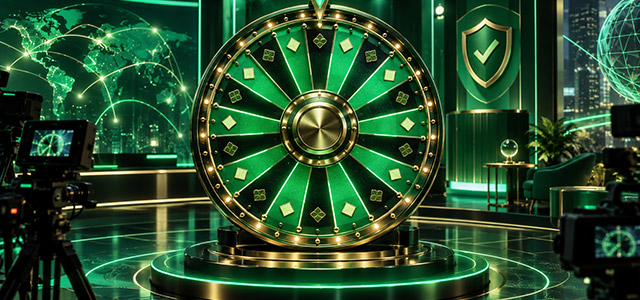
Vindral and Gaming Support announced a technology partnership on 29 September 2026 to offer the first Green Wheel built on GLI-certified gaming hardware. The collaboration pairs Rotterdam-based equipment manufacturer Gaming Support with Swedish live video specialist Vindral, validating the certified physical equipment for use with Vindral’s V-Track Money Wheel system. Live casino hardware certification has increasingly become a significant barrier in studio production pipelines as operators demand regulated physical assets that can reliably support digitally enhanced game shows at scale. By combining GLI-validated hardware with real-time digital overlay technology, the agreement provides live studios with a certified physical foundation capable of hosting multiple branded wheel games from a single certified wheel structure.
In the world of slot mechanic: Link&Win - five card features and jackp...
Olga Li#GamingInnovations #SoftwareLab
Games Global and Stormcraft Studios announced the release of Immortal Romance ASSEMBL’EM on 30 September 2026, marking the latest extension of the long-running franchise Immortal Romance that originally debuted in 2011. Built on a 5×3 grid with 20 paylines, a 96% RTP, high volatility, and a maximum win potential of 5,000x, the slot introduces a new narrative character alongside the ASSEMBL’EM mechanic.
ICONIC21 Establishes New Production Hub and Regional Office in Vilnius
Olga LiLive casino content providers have accelerated studio expansion across Central and Eastern Europe as demand for dedicated and localised production capacity grows. Highlighting this trend, ICONIC21 announced on 1 September 2026 that it will open a new office and studio facility in Vilnius. In the local market context, the Lithuania Gaming Control Authority reported gross gambling revenue of €274.1 million in 2025, a 13% year-on-year increase. The upcoming facility will span more than 1,400 square metres across two full floors, combining studio space with administrative offices, while creating over 350 jobs.