Legal gambling age in SZ: 18
Best Online Casinos - Swaziland
Eswatini (formerly Swaziland) is a small Southern African country with a growing interest in online gambling. As internet access and smartphone usage expand, more players are exploring international casino and sports betting platforms offering slots, live dealer games, and virtual sports. The country has a population of just over one million people and a young, digitally connected demographic. While traditional forms of gaming and betting have long existed in various forms, online platforms are becoming a popular alternative due to their convenience and variety. Players no longer need to travel to specific venues to enjoy their favourite games. Instead, they can access thousands of options directly from their mobile devices or computers, often at any time of day. The country’s close economic and cultural ties with neighboring South Africa also influence local gaming habits. Many residents follow South African sports leagues and gaming trends, which help shape interest in sports betting and online gaming. Payment technologies and digital services that gain popularity in South Africa often find their way into Eswatini as well, making it easier for players to access international platforms and online entertainment. Here are a few interesting facts about gambling in Eswatini:
- Eswatini is one of Africa’s few monarchies, which gives its regulatory and economic landscape a unique character compared to many neighboring countries.
- Football remains the country’s most popular sport, creating strong interest in sports-related betting activities.
- The country has a strong tradition of community events and social gatherings, where sports and shared entertainment play an important role in everyday life.
- Cross-border tourism from South Africa contributes to demand for entertainment activities in Eswatini, including gaming and betting services.
This guide was created to help readers better understand the online gambling landscape in Eswatini. Whether you are curious about industry trends, payment methods, popular games, player safety, or practical tips for getting started, the following sections provide clear and up-to-date information. Our goal is to offer a detailed overview that helps you make informed decisions and enjoy online gaming responsibly.
Rocket Play Casino
Players residing in your country are accepted. English version is available. Click the icon to play.

 Read casino Review
-
200%
€ 200Welcome bonus. Click the icon to claim.
- Instant-Play Sofware:
7Rings Gaming
Blaze Spins Casino
Players residing in your country are accepted. English version is available. Click the icon to play.
 Read casino Review
-
88%
$ 1000Welcome bonus. Click the icon to claim.
- Instant-Play Sofware:
Turbo Games
Limitless Casino
Players residing in your country are accepted. English version is available. Click the icon to play.
Check all owners
 Read casino Review
-
777%
UnlimWelcome bonus. Click the icon to claim.
- Instant-Play Sofware:
Realtime Gaming, SpinLogic Gaming
MondCasino
Players residing in your country are accepted. English version is available. Click the icon to play.
 Read casino Review
-
100%
€ 200Welcome bonus. Click the icon to claim.
Min deposit: 20 €/$. Max bet: 4 €/$. Any Deposit Bonus from Welcome offer is active for 7 days from the moment it has been claimed. Max cashout: 20 x deposit amount. The following games are excluded from the bonus promotion offer: See website for list of online slots. - Instant-Play Sofware:
Net Entertainment, Thunderkick, Yggdrasil Gaming, Microgaming, Quickspin + 51 more providers
Spin Dimension Casino
Players residing in your country are accepted. English version is available. Click the icon to play.
 Read casino Review
-
500%
$ 500Welcome bonus. Click the icon to claim.
New Customer Offer. T&C’s Apply. 18+. Min deposit: $25. The maximum bet size permitted with an active welcome match offer is $10. Max Cashout: 10x Deposit. Claimable once. - Instant-Play Sofware:
BetSoft, Rival, Saucify, Qora Games, Vivo Gaming + 4 more providers
Tsars Casino
Players residing in your country are accepted. English version is available. Click the icon to play.
 Read casino Review
-
100%
€ 300Welcome bonus. Click the icon to claim.
- Instant-Play Sofware:
PearFiction Studios, Evolution Gaming
Lucky Emperor Casino
Players residing in your country are accepted. English version is available. Click the icon to play.
 Read casino Review
-
100%
€ 100Welcome bonus. Click the icon to claim.
- Downloadable Software: Microgaming
Instant-Play Software: Microgaming, Games Global
CasinoEuro
Players residing in your country are accepted. English version is available. Click the icon to play.
 Read casino Review
-
100%
€ 150Welcome bonus. Click the icon to claim.
New customers only. T&C’s Apply. 18+. BeGambleAware.18+. New GB Customers and first deposit only. Spins only available on Starburst. Deposit and play through £25 on selected games and get 25 spins OR; Deposit and play through £100 on selected games and get 100 spins OR; Deposit and play through £200 on selected games and get 200 spins. 3 day expiry of spins after they have been added. 14 days from registration to claim offer. You have a right to withdraw your cash deposit or any remaining cash deposit and any cash winnings from this deposit. If this is withdrawn, the spins and any winnings from the spins will be forfeited. All winnings from the spins will be paid out cash. Further eligibility and terms apply. - Instant-Play Sofware:
Net Entertainment, Microgaming, Playn GO, Blueprint Gaming, Williams Interactive + 16 more providers
CasinoCasino
Players residing in your country are accepted. English version is available. Click the icon to play.
 Read casino Review
-
100%
kr 1000Welcome bonus. Click the icon to claim.
New Customer Offer. T&C’s Apply. 18+. Spela ansvarsfullt. www.stodlinjen.se. Regler & Villkor gäller - Instant-Play Sofware:
Merkur Gaming, Just for the Win, GECO Gaming
Casoo Casino
Players residing in your country are accepted. English version is available. Click the icon to play.
 Read casino Review
-
100%
€ 300Welcome bonus. Click the icon to claim.
- Instant-Play Sofware:
Net Entertainment, Playn GO, iSoftBet, BetSoft, Wazdan + 23 more providers
Legal Status for Swazi Players and Casinos
Eswatini occupies a middle ground among African gambling markets. Unlike countries where gambling remains heavily restricted or poorly regulated, Eswatini has a legal framework that recognizes and licenses gambling activities.
At the same time, it has not developed the highly sophisticated regulatory systems found in larger markets such as South Africa.
Compared to its neighbors, Eswatini shares several similarities with Botswana and Namibia, where gambling is legal but operates on a more modest scale than in South Africa.
South Africa remains the regional benchmark, generating billions of rand annually through casinos, betting operators, and lotteries while maintaining extensive provincial oversight structures. Angola has also moved to modernize its gambling laws in recent years, particularly in the online sector.
Due to its size, Eswatini cannot match the gambling revenues generated by larger African economies. However, smaller jurisdictions often have the advantage of being able to monitor operators more closely and implement reforms more quickly.
As online gambling grows across Africa, Eswatini is increasingly focused on balancing economic opportunities with social responsibility. Recent discussions have centered on player identification, underage gambling prevention, and ensuring that licensed operators meet modern compliance standards. These developments suggest Eswatini is steadily moving toward stronger oversight and greater accountability.
Is gambling legal in Eswatini?
Yes, offline gambling is legal in Eswatini when conducted by licensed operators. The country's gambling framework has deep historical roots, dating back more than half a century.
The Casino Act of 1963 established the legal basis for casino operations, while the Lotteries Act of 1963 and the Bookmakers and Taxation Act of 1970 created separate structures for lotteries and betting activities. These laws laid the foundation for a regulated gambling sector that continues to operate today.
Oversight is provided through the Gaming Board under the Ministry of Tourism and Environmental Affairs. Businesses wishing to operate gambling facilities must obtain approval through the licensing process and comply with regulatory requirements.
Applicants are expected to provide detailed information regarding ownership, business plans, financial resources, and operational procedures. Licensed operators are also subject to ongoing compliance obligations designed to ensure fair play and proper conduct.
Legal forms of offline gambling include casino-style games, lotteries, and betting activities. These activities are generally concentrated in urban centers and tourism-oriented locations, where they serve both local customers and visitors. Unlicensed gambling operations remain illegal, and authorities periodically warn the public against participating in unauthorized schemes.
Since the government's approach has traditionally focused on maintaining control rather than maximizing expansion, the number of licensed operators remains limited compared to larger jurisdictions. This conservative strategy has helped authorities maintain oversight while allowing the sector to contribute modestly to employment, tourism, and public revenue.
Is online gambling legal in Eswatini?
The legal status of online gambling in Eswatini is more complex than its offline counterpart. Gambling itself is recognized as a legal activity.
However, the country does not yet have the same comprehensive online gambling framework found in more mature regulated markets. This means that while digital gambling exists within the broader gaming environment, the regulatory structure remains to be developed.
For operators, licensing and compliance remain essential requirements. Businesses offering gambling services must satisfy regulatory standards relating to customer protection, operational integrity, and financial transparency. Platforms that fail to obtain the necessary approvals are not considered part of the regulated market.
Offshore operators add another layer of complexity. Many international gambling websites accept players from Eswatini despite not being licensed locally. Some of these companies hold licenses from respected foreign jurisdictions and may offer strong security measures, audited games, and responsible gambling tools. However, these operators are not directly supervised by Eswatini's authorities.
As internet access and smartphone adoption continue to grow, online gambling is expected to become an increasingly important part of the country's gaming landscape. Future regulatory reforms are therefore likely to focus on digital oversight and clearer licensing standards.
| Name | Allowed Casinos | Friendly Casinos | Targeted Casinos | Land-based | Online operator | Online player | ISP Blocks | Bank Blocks | Notes | Sources | Score |
|---|---|---|---|---|---|---|---|---|---|---|---|
| Swaziland | 1006 | 992 | 2 | Legal | Not banned | No penalty | Not blocked | Not Restricted | 0 |
-
Any person who keeps or visits a gambling house or gaming table within Swaziland shall be guilty of an offense
|
800
Gambling Availability Score 800. Ranked 29 of 531 |
Banking in Swaziland
Banking is one of the most important factors to consider before registering with an online casino. A casino may offer thousands of games, but if deposits are complicated, withdrawals are delayed, or fees are excessive, the overall experience quickly becomes frustrating. This is why it is essential to evaluate banking options before opening an account.
For players in Eswatini, fiat payment methods remain the most commonly used option. The country is closely integrated with South Africa's financial system through the Common Monetary Area, and the lilangeni is pegged to the South African rand. As a result, many residents are comfortable using conventional banking channels for online transactions.
The most popular fiat methods include Visa and Mastercard debit cards, which are widely issued by local banks such as Eswatini Bank, Nedbank Eswatini, Standard Bank Eswatini, and First National Bank Eswatini. These cards are accepted by most international gambling platforms that welcome players from the country.
Bank transfers are another common option, particularly among players who prefer moving larger amounts of money directly from their bank accounts.
Mobile money services have also gained traction in recent years. MTN MoMo, in particular, has become one of the country's most widely used digital payment solutions, although support for mobile money varies between operators and is not yet as common as card payments.
Cryptocurrency is becoming increasingly popular among younger and more tech-savvy players, but it has not overtaken fiat methods. Bitcoin, Ethereum, USDT, and other digital assets appeal to users seeking faster withdrawals, lower transaction costs, and greater privacy. Crypto can also help avoid some of the limitations associated with international banking transfers.
However, many players still prefer traditional methods because they are familiar, stable, and denominated in currencies they use every day.


What is important to highlight for beginners
Eswatini is one of Africa’s smallest countries, one of the world’s few remaining monarchies, and a country whose economy is closely connected to its larger neighbor, South Africa. The country has a population of about 1.2 million people, and its GDP per capita was estimated at around $3,910, placing it in the lower-middle-income category.
Eswatini’s economy is unusual because it combines a compact domestic market with strong regional integration. Its currency, the lilangeni, is pegged to the South African rand, which helps support monetary stability and cross-border trade. The country is also part of the Southern African Customs Union, making SACU receipts an important source of government income.
The main drivers of the local economy are manufacturing, agriculture, services, public investment, and trade with South Africa. Services also play a major role, especially government services, retail, transport, finance, and tourism.
Tourism adds another important layer to the economy. Eswatini promotes itself through wildlife reserves, mountain scenery, cultural festivals, and its identity as a traditional kingdom. This matters for gambling because entertainment activity is often linked to travel, hotels, sports, and leisure spending.
Still, gambling is not one of Eswatini’s leading economic drivers. Recent figures coming from a parliamentary update reported E26.1 million in gambling revenue from licensed operators. This money came from levies and fees paid by approved companies and was directed toward government programmes connected to tourism and environmental affairs.
To put that into context, E26.1 million is useful public revenue, but it is modest beside the wider economy. It suggests gambling plays a supporting role rather than a central one.
Public data on gamblers in Eswatini is still limited. There is no widely available national participation survey showing exact gender, age, or average spending patterns. However, local reporting and regional evidence suggest that sports betting is especially visible among younger adults. One local report cited an average age of 27 for sports betting customers in Eswatini, which fits the broader African pattern of mobile-first betting being strongest among young adults.
Spending figures are also not published in a complete national dataset. This means it is safer to discuss official revenue from operators rather than claim a precise average amount spent per person. What can be said is that mobile betting has made participation easier, particularly for people with smartphones and access to digital payments.
The main policy discussion now is safety. Eswatini has moved toward a more meticulous customer verification, with operators required to register clients using national ID documents. The aim is to reduce underage gambling, improve oversight, and support responsible gaming rules.
These debates mirror wider African concerns. Across the continent, online betting has grown quickly, and governments are now looking at stronger rules, better tax collection, and more protection for vulnerable players. Reuters reported in 2026 that several African states were reviewing gambling taxes and addiction safeguards as online participation increased.
For Eswatini, the key challenge is balance. Gambling can provide revenue and entertainment, but its economic value remains limited unless it is managed carefully. The stronger long-term priority is not simply market growth, but a safer, more transparent industry with age checks, responsible gambling support, clear operator rules, and better public data.
Popular Swazi Games
The online gaming scene in Eswatini reflects broader trends seen across Southern Africa. Players who join online casinos tend to gravitate toward two main categories: slots and live dealer games.
At present, slots appear to attract a larger audience. They are simple to understand, available at every stake level, and offer a huge variety of themes and bonus features.
Many players use mobile devices to access online casinos, and slots are particularly well-suited to short gaming sessions. The ability to spin instantly without learning complex rules makes them appealing to both newcomers and experienced players.
When it comes to themes, adventure and jackpot-focused slots are among the most popular. African wildlife, safari settings, treasure hunts, ancient civilizations, and mythology-based games all perform well with players across the region.
Football-themed slots also generate interest, reflecting the country's passion for the sport. Features such as free spins, multipliers, and progressive jackpots tend to attract the most attention because they offer the possibility of extending gameplay or diversifying action.
Live dealer games have been gaining ground in recent years. Many players enjoy the social aspect of interacting with a real dealer and watching the action unfold in real time. Among live titles, roulette consistently ranks as one of the most popular choices, followed by blackjack and baccarat. These games offer a more authentic casino atmosphere while still allowing players to participate from home or on a mobile device.
Despite the growth of Africa's gaming industry, European developers continue to dominate the online casino market available to Eswatini players. Companies such as Evolution, Pragmatic Play, Play'n GO, and Red Tiger supply the majority of slots and live dealer games found on international platforms.
Africa-based developers are gradually expanding their presence, particularly in sports betting products and localized content, but they remain a small part of the casino software market.
New Online Casinos in Swaziland
Hundreds of new online operators enter the global market each year, while the existing ones regularly update their platforms, payment systems, and game portfolios to remain competitive. For players in Eswatini, this creates more choice than ever before, but it also makes selecting a trustworthy operator significantly more challenging.
Safety should always be the starting point. Before registering, players should verify that the casino holds a valid gambling license from a recognized regulator. Trusted licensing authorities typically require operators to meet standards relating to security, fairness, and responsible gambling.
A legitimate casino should also use encryption technology and cybersecurity protocols to protect customer information and clearly display its licensing details on its website.
Verification is another important consideration, especially for newcomers. Many players are surprised when a casino requests identification documents before processing withdrawals. In reality, this is a standard part of modern gambling regulation.
Reputable operators conduct KYC checks to verify identity, prevent fraud, and comply with anti-money laundering requirements.
Banking deserves equal attention. Players should review available payment methods before opening an account. A casino that offers convenient deposits but slow withdrawals is rarely a good long-term choice. Understanding fees, processing times, and minimum withdrawal limits is essential.
New players should also take time to understand welcome bonuses. A large promotional offer does not automatically translate into free money. Most bonuses come with wagering requirements, game restrictions, and withdrawal conditions.
For example, a 100% match bonus may require players to wager the bonus amount dozens of times before any winnings can be withdrawn. Reading the terms and conditions carefully helps prevent disappointment and allows players to compare offers more effectively.
Our team continuously monitors the industry, reviews newly launched licensed casinos, and evaluates their safety, banking options, verification procedures, bonuses, and overall reliability before presenting them to players.
FREQUENTLY ASKED QUESTIONS
Do I have to pay tax on gambling winnings in Eswatini?
Tax rules can change over time, and personal circumstances matter, so it is always worth checking the latest guidance from local authorities or a qualified tax professional. In many cases, players focus on whether a casino withholds taxes rather than whether winnings themselves are taxable.
International operators generally process withdrawals without deducting taxes, meaning it is the player's responsibility to understand any reporting obligations that may apply. If you win a significant amount, keeping records of deposits, withdrawals, and account activity is a sensible precaution.
Should I use fiat payments or cryptocurrency?
Both options have advantages and disadvantages. Traditional payment methods such as Visa, Mastercard, bank transfers, and e-wallets are familiar, widely accepted, and generally easier for beginners to understand.
Cryptocurrency offers faster transfers, greater privacy, and often lower transaction fees. However, digital assets can be volatile. A withdrawal worth a certain amount today may be worth more or less by the time it is converted into cash. Crypto also requires users to understand wallets, addresses, and transaction security.
Are loyalty programs worth joining?
Loyalty programs can provide additional value through cashback, exclusive bonuses, faster withdrawals, and personal account managers. Frequent players often benefit from these rewards.
However, loyalty programs also encourage more activity. Some players find themselves wagering more than they originally planned to reach higher status levels. The best approach is to treat loyalty rewards as a bonus rather than a goal. If you are changing your gambling habits just to earn points, the program is probably costing more than it is returning.
How do progressive jackpot slots work?
Progressive jackpots are linked prize pools that increase every time players place qualifying bets. A small portion of each wager contributes to the jackpot, allowing prizes to grow into substantial amounts.
Some jackpots are tied to a single game, while others are connected across entire networks of casinos. Although the potential rewards are enormous, the odds of hitting a jackpot are generally lower than those of winning smaller prizes on regular slots. Players should view progressive jackpots as entertainment rather than a realistic way to generate income.
Can I use a VPN to access a casino that is unavailable in my region?
This is generally not recommended. Most licensed casinos require players to comply with their terms and conditions, including geographic restrictions. Using a VPN may violate those terms and could result in account suspension, confiscated winnings, or withdrawal problems later. It is always safer to use operators that openly accept players from Eswatini.
What is the best way to avoid losing money too quickly?
The most effective strategy is setting limits before you begin playing. Decide how much money you can comfortably afford to lose and never exceed that amount. Many reputable casinos offer responsible gambling tools such as deposit limits, session reminders, and self-exclusion options. These features can help maintain control and reduce impulsive decisions.
What should I do if a withdrawal is delayed?
Many delays occur because verification documents are still being reviewed or because the withdrawal is waiting to be processed. Check the casino's stated withdrawal timeframes and ensure all requested identification documents have been submitted. If the delay exceeds the published processing period, contact customer support and request an update.
Keep records of emails, chat logs, and transaction references. If the operator is licensed, you can also escalate the issue to the relevant gambling regulator if support fails to provide a satisfactory resolution.
Swaziland latest news
ICONIC21 Establishes New Production Hub and Regional Office in Vilnius
Olga LiLive casino content providers have accelerated studio expansion across Central and Eastern Europe as demand for dedicated and localised production capacity grows. Highlighting this trend, ICONIC21 announced on 1 September 2026 that it will open a new office and studio facility in Vilnius. In the local market context, the Lithuania Gaming Control Authority reported gross gambling revenue of €274.1 million in 2025, a 13% year-on-year increase. The upcoming facility will span more than 1,400 square metres across two full floors, combining studio space with administrative offices, while creating over 350 jobs.

BGaming Metrics Confirm Success of Three Game Worlds Segmentation Conc...
Olga LiAs digital casino catalogues continue to expand, online operators are turning to structured product models rather than relying on unorganized game lists. Addressing this market demand, Malta-based iGaming software developer BGaming released performance statistics on 26 August 2026 to back its Three Game Worlds strategy. Originally introduced in 2025, the framework divides the studio's titles into Casual, Entertainment, and Classic segments, matching specific game mechanics to key stages of the player life cycle.
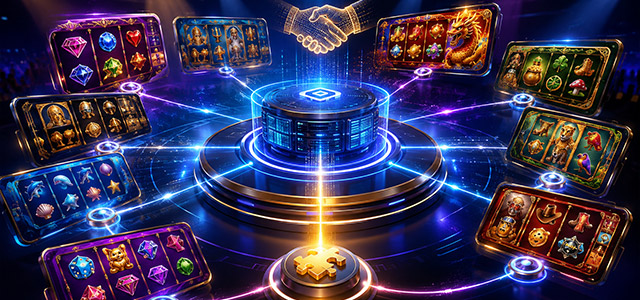
Hub88 Expands Portfolio with Gametimetec Showtime Slots Integration
Olga LiiGaming aggregator Hub88 has integrated the Showtime Slots portfolio from slot developer Gametimetec into its network. Announced on 20 August 2026, the deal allows operator partners to access Gametimetec's content suite through a single API integration. Based in Estonia, Hub88 operates as part of Yolo Group, continually expanding its aggregation platform to deliver diverse, high-performance titles to international casino operators across regulated jurisdictions.