Legal gambling age in AL: 18
Best Online Casinos - Albania
Gambling in Albania has long sat at an interesting crossroads between tradition, modern entertainment, and economic ambition. For years, gaming venues and related services were closely tied to nightlife, hospitality, and cross-border tourism, particularly in larger cities and coastal areas. While its legal status has shifted over time, gambling has still played a visible role in how leisure, tourism, and private spending developed in the country. To understand how gambling fits into Albania’s broader picture, it helps to look at the country’s economic model. Albania is a service-driven economy, with tourism and small private enterprises forming its backbone. Over the past two decades, the government has focused on attracting foreign visitors and investment, especially from neighbouring European markets. Gambling followed this trend rather than leading it. Albania was not a trailblazer in the global gambling industry, nor did it set regulatory standards for others to follow. Instead, it mirrored regional developments, allowing gambling to expand alongside tourism before later stepping back to reassess its social and economic impact. This cautious, reactive approach shaped local participation. Interest among residents has been growing steadily. Studies and regional estimates suggest that most active players fell into the 30–45 age bracket, with men making up the majority. Average spending levels were modest compared to Western European markets. Monthly gambling budgets were typically estimated at €30–€70 per person, reflecting Albania’s lower average income levels. Gambling was viewed less as a luxury pursuit and more as occasional entertainment, often tied to social outings, sports interests, or seasonal tourism activity.
- Before stricter regulations were introduced, Albania had one of the highest ratios of betting shops per capita in the Western Balkans.
- Sports betting consistently accounted for the largest share of gambling revenue, driven mainly by football interest.
- Urban areas generated the majority of gambling turnover, while rural participation remained limited.
- Younger adults showed a stronger shift toward online platforms earlier than older age groups, even before formal restrictions took effect.
Looking ahead, Albania’s prospects depend on balance rather than expansion. The country has been steering toward stronger control of the gambling industry, focusing on social protection and public order instead of direct gambling revenue. This does not mean gambling has disappeared from Albanian life, but rather that it is being reshaped under tighter oversight and clearer boundaries. Future adjustments are likely to be cautious, measured, and influenced by European regulatory standards rather than aggressive growth strategies. For players, this review serves a practical purpose. It explains what options to play at online casinos safely exist today, and how this local market differs from those in neighbouring countries. By understanding the economic background, player behaviour, and regulatory direction, readers can make informed decisions, avoid common misunderstandings, and approach gambling in a way that fits both the law and their personal preferences.
Rocket Play Casino
Players residing in your country are accepted. English version is available. Click the icon to play.

 Read casino Review
-
200%
€ 200Welcome bonus. Click the icon to claim.
- Instant-Play Sofware:
7Rings Gaming
Spin Dimension Casino
Players residing in your country are accepted. English version is available. Click the icon to play.
 Read casino Review
-
500%
$ 500Welcome bonus. Click the icon to claim.
New Customer Offer. T&C’s Apply. 18+. Min deposit: $25. The maximum bet size permitted with an active welcome match offer is $10. Max Cashout: 10x Deposit. Claimable once. - Instant-Play Sofware:
BetSoft, Rival, Saucify, Qora Games, Vivo Gaming + 4 more providers
Tsars Casino
Players residing in your country are accepted. English version is available. Click the icon to play.
 Read casino Review
-
100%
€ 300Welcome bonus. Click the icon to claim.
- Instant-Play Sofware:
PearFiction Studios, Evolution Gaming
Lucky Emperor Casino
Players residing in your country are accepted. English version is available. Click the icon to play.
 Read casino Review
-
100%
€ 100Welcome bonus. Click the icon to claim.
- Downloadable Software: Microgaming
Instant-Play Software: Microgaming, Games Global
Casoo Casino
Players residing in your country are accepted. English version is available. Click the icon to play.
 Read casino Review
-
100%
€ 300Welcome bonus. Click the icon to claim.
- Instant-Play Sofware:
Net Entertainment, Playn GO, iSoftBet, BetSoft, Wazdan + 23 more providers
EVERYGAME Casino
Players residing in your country are accepted. English version is available. Click the icon to play.
 Read casino Review
-
150%
€ 1500Welcome bonus. Click the icon to claim.
- Instant-Play Sofware:
Realtime Gaming
EVERYGAME Casino Classic
Players residing in your country are accepted. English version is available. Click the icon to play.
 Read casino Review
-
100%
€ 100Welcome bonus. Click the icon to claim.
- Instant-Play Sofware:
Realtime Gaming
SirWin Casino
Players residing in your country are accepted. English version is available. Click the icon to play.
 Read casino Review
-
100%
$ 1000Welcome bonus. Click the icon to claim.
- Instant-Play Sofware:
Novomatic, Net Entertainment, Thunderkick, Yggdrasil Gaming, Playn GO + 44 more providers
Casino - Mate
Players residing in your country are accepted. English version is available. Click the icon to play.
 Read casino Review
-
50%
€ 400Welcome bonus. Click the icon to claim.
- Downloadable Software: Microgaming
Instant-Play Software: Microgaming, Games Global
Casinozer Casino
Players residing in your country are accepted. English version is available. Click the icon to play.
 Read casino Review
€ 20
+ 23 spinsWelcome bonus. Click the icon to claim.
- Instant-Play Sofware:
Net Entertainment, Thunderkick, Yggdrasil Gaming, Playn GO, Merkur Gaming + 50 more providers
Legal Status for Albanian Players and Casinos
In recent years, gambling-related activity in Albania has contributed noticeably to the local economy. Estimates from before and after regulatory changes suggest that gambling and betting once generated tens of millions of euros annually, with peak figures often cited in the range of €60–€80 million per year. This money flowed not only through operators but also into wages, rent, advertising, and service industries linked to nightlife and tourism. A portion of state income came through licensing fees, taxes, and fines, while local economies benefited indirectly as players spent on transport, food, and entertainment around gaming venues.
More recently, as restrictions tightened, the focus shifted away from revenue generation toward limiting social harm, reducing visible gambling activity, and redirecting public attention to other growth sectors such as tourism and digital services.
When compared to nearby Balkan markets, Albania’s approach stands out as notably firm. North Macedonia and Montenegro maintain more permissive frameworks, where betting shops and gaming venues are still common sights and contribute steadily to state budgets, although illegal activity is closely monitored and blocked.
Serbia goes even further, combining dense retail networks with active online licensing, making gambling a visible and normalized part of everyday urban life. Against this backdrop, Albania has chosen restraint over expansion. Rather than fine-tuning regulation to capture revenue, it opted to significantly limit domestic availability, prioritising public order and social considerations even at the cost of forgone tax income.
Looking wider across Europe, the contrast becomes even clearer. Innovative markets such as the United Kingdom and Malta have built sophisticated regulatory systems that allow gambling to thrive under strict oversight. These countries focus on licensing, consumer protection, and technology-driven compliance, using gambling as a regulated economic engine while investing heavily in monitoring and responsible play tools.
On the other end of the spectrum sit more conservative European models, including Norway and Iceland, where state monopolies or heavy restrictions sharply limit private operators. In these systems, gambling exists but is tightly controlled, with social policy clearly taking precedence over commercial opportunity.
Albania fits somewhere between these conservative models and the more liberal Balkan markets, but its trajectory leans closer to the cautious end of the scale. It does not fully embrace monopoly-style control, nor does it support a broad commercial market. Instead, Albania reflects a European tendency seen in smaller or developing economies that experimented with liberalisation and then recalibrated once social costs became more visible. The result is a framework that treats gambling as a manageable risk rather than a growth industry.
Is gambling legal in Albania?
For many years, land-based gambling in Albania operated under a relatively open framework, with betting shops, slot halls, and a small number of traditional casinos spread across major cities. This changed after growing public concern around social harm, visibility near schools, and links to informal money flows. In response, the Albanian government introduced a much stricter model, effectively reshaping the entire offline sector. The current framework is the result of laws adopted in the late 2010s, which marked a clear turning point from regulation and control toward sharp limitation.
The industry is defined primarily by amendments to the existing gambling legislation that culminated in a nationwide clampdown on most land-based gambling activities. These laws restricted offline gambling almost entirely, allowing it only under tightly controlled conditions. Oversight sits with the Gambling Supervisory Authority, the public body responsible for licensing, supervision, enforcement, and compliance. Its role shifted significantly after the reforms, moving from managing a broad market to policing a very narrow one and ensuring that no unauthorised venues operate outside the permitted framework.
On the ground, this means offline casinos are limited to a handful of locations, almost exclusively inside high-end hotels and designated tourist resorts. Standalone casinos, betting shops, and slot halls are no longer permitted. Where land-based gambling is allowed, it is designed to be discreet, destination-based, and largely separated from everyday residential areas. Within these venues, permitted activities typically include classic casino games such as roulette, blackjack, poker, and approved slot machines. Sports betting and other mass-market formats that once dominated city streets are no longer legally available in physical form to the general public.
The impact on revenue was immediate and substantial. Before the restrictions, offline gambling generated steady tax income and supported thousands of small businesses through rent, staffing, and local services. After tighter regulations were adopted, this revenue stream dropped sharply, with most of the previous market disappearing quickly. While the remaining licensed venues still contribute through tourism-focused spending, the overall economic footprint of offline gambling today is only a fraction of what it once was. The trade-off was deliberate: reduced income in exchange for lower social exposure and stronger public control.
New offline casino licences are now extremely rare. The licensing process is demanding and selective, requiring applicants to meet high financial thresholds, strict ownership transparency rules, and clear links to approved hotel or resort developments. Operators must demonstrate strong compliance systems, secure premises, and alignment with tourism objectives rather than mass local demand. This effectively prevents rapid expansion and ensures that any new licence fits within the narrow vision set by policymakers.
Public discussion around offline gambling in Albania continues, but it is measured rather than heated. Most debate focuses on whether the current model is too restrictive or appropriately cautious. Some argue for limited adjustments that would improve oversight while recovering a portion of lost tax revenue. Others insist that the existing framework strikes the right balance and should remain unchanged. What is clear is that Albania is unlikely to return to its previous high-street gambling model.
Is online gambling legal in Albania?
Online gambling in Albania is governed by the same core legal framework that applies to land-based gambling, but its practical scope is much narrower. The legislation that reshaped the sector in the late 2010s applies equally to digital activity, and oversight remains with the national gambling supervisory authority operating under the Ministry of Finance.
For several years, online gambling was effectively blocked in Albania, including sports betting. Despite this, local demand did not disappear. Local bettors continued to follow international football, basketball, and other competitions, and many found ways to place bets through unlicensed or offshore platforms. Over time, it became clear that a complete ban was not stopping activity, but was instead pushing it beyond the reach of local supervision. As a result, Albania adjusted its position and chose to re-allow online sports betting under a very limited licensing system.
Today, online sports betting is the only form of online gambling that can be licensed locally. Full online casino-style gaming, such as digital slots, live dealer tables, or virtual card games, is not broadly licensed for the domestic market.
During the period of strict bans, large sums were estimated to flow out of the country through offshore platforms, generating no local tax income and offering no direct consumer protection. With licensed online sports betting back in place, part of this spending is now captured through taxes, licensing fees, and regulated operations. However, because online casino games remain excluded, Albania still misses out on a significant share of potential digital gambling revenue compared to countries with more liberal regulatory frameworks.
To qualify for an Albanian online sports betting license, an operator must meet demanding criteria. These typically include:
- Proven experience running sports betting operations in regulated European or comparable markets
- Strong financial backing, including capital reserves and the ability to meet tax and guarantee obligations
- Robust compliance systems covering player verification, anti-money laundering controls, and responsible gambling tools.
These requirements are intended to keep the number of operators small and ensure that only established, well-funded companies enter the market.
Local players can and do access international platforms that are not licensed by Albania. While these sites operate outside Albanian regulation, many of them hold licenses in other well-known jurisdictions and are viewed as trustworthy. For players, this means the situation is not as risky as it may sound at first. Well-regulated international platforms often offer decent game libraries, fun bonuses, and reliable player protection features.
Current public discussion in Albania is relatively calm and pragmatic when it comes to online games of chance. There is little appetite for reopening a broad online casino market, but there is ongoing interest in making sure the limited online sports betting model works properly. The focus remains on enforcement, keeping unlicensed operators out, and ensuring that licensed platforms meet high standards.
| Name | Allowed Casinos | Friendly Casinos | Targeted Casinos | Land-based | Online operator | Online player | ISP Blocks | Bank Blocks | Notes | Sources | Score |
|---|---|---|---|---|---|---|---|---|---|---|---|
| Albania | 862 | 852 | 0 | Legal | Not banned | No penalty | Not blocked | Not Restricted | 0 |
-
1) The Authority is authorized to give a license for Casino for a 10-year period to the Organizer.
a. The license is given to the applicant fulfilling who meets the criteria specified in this law and legal acts for its implementation.
b. The tariffs to get the license are as per below:
- License in Tirana 1 billion ALL
- License in Durrës 600 million ALL
- In other cities 300 million ALL
2) The organizer who has the license could not open more than one casino (Changed by the law no. 10200, dt. 17.12.2009)
1. No society can organize or use electronic tools in electronic casino, and electronic casino in the distance, if it does not fulfill the obligations stipulated by this law and subordinate legal acts, in its implementation.
4. Only the organizer, who has met the criteria for electronic casino should use the table with the name "Electronic Casino" in environments where these games are conducted.
The administrator of the distance electronic casino should:
a) not allow a person to participate in the game as a player, unless that person is registered as a player and has a bank account online with the organizer of electronic casino in the distance; register a person as a player only if the organizer of electronic casino in the distance received from this person application / registration form completed. This form must contain at least the following information:
i) Player age (in any case the player must be over 18 years old);
ii) The personal number of the identity card of the player;
iii) Player residence;
iv) A valid e-mail address of the player.
|
756
Gambling Availability Score 756. Ranked 78 of 531 |
Banking in Albania
For players, banking is not just a technical detail. Slow deposits, unclear fees, delayed withdrawals, or payment methods that stop working without warning all take away from the experience. Banking, therefore, determines how smooth everything feels, from funding an account to accessing winnings. In markets like Albania, where regulation and availability differ from one platform to another, choosing a site with banking options that truly fit local conditions makes a noticeable difference.
The national currency is the Albanian lek, and this plays an important role in payments. Realistically, the lek is not that well-supported by internationally licensed operators that accept Albanian players. When a platform supports deposits and withdrawals directly in lek, players can avoid repeated currency conversions. This helps keep costs down and makes balances easier to track. Where the lek is not supported, transactions are usually handled in euros, which still keeps conversion costs relatively low compared to more distant currencies.
Bank transfers and card payments remain the most common options for Albanian players. Debit and credit cards issued by local banks are widely accepted by international gambling platforms, and standard bank transfers are also used, especially for larger amounts. These methods are generally safe to use.
Banks in Albania do monitor transactions as part of standard compliance checks, but ordinary deposits and withdrawals linked to licensed or well-known international platforms are not typically penalised. For most users, cards and transfers work reliably, although withdrawals can take a few business days depending on the bank.
For those who prefer alternatives, several international e-wallets offer practical solutions for Albanian residents. Services such as Paysera, Wise, and Revolut are commonly used for online payments and are accepted by many gambling platforms. These wallets are popular because they offer faster processing times than traditional bank transfers and often lower fees. They also add a layer of separation between personal bank accounts and gaming balances, which many players appreciate.
Cryptocurrency is another option that continues to grow in popularity. Digital assets such as Bitcoin are accepted by a wide range of international platforms that welcome Albanian players. Crypto payments are valued for their speed, privacy, and reduced reliance on traditional banking systems. Deposits are usually processed quickly, and withdrawals can be faster than card-based methods.
Gambling winnings are generally subject to taxation, with rules focusing more on operators than on individual recreational players. Licensed platforms are responsible for meeting their tax obligations, while players are expected to follow general income reporting rules if winnings reach significant levels. In practice, casual players rarely face direct tax issues, especially when playing on reputable platforms that handle compliance properly.


Popular Albanian Games
When it comes to game creation, Albania does not currently have a recognised domestic studio developing commercial casino or betting games for the international market. Unlike some European countries that built local game development scenes alongside gambling regulation, Albania’s role has been almost entirely on the player side rather than the production side. Local tech talent tends to focus on software services, outsourcing, and startups outside of gambling, which means Albanian players mainly consume content created abroad.
That said, preferences among Albanian players are quite clear, and several modern international studios stand out. In recent years, developers such as Hacksaw Gaming, Push Gaming, Nolimit City, and Relax Gaming have gained strong traction. These studios are known for fresh mechanics, bold design choices, and games that feel different from traditional slot formulas.
In terms of content type, slots clearly dominate overall interest. For slots, features matter more than storytelling. While themes like mythology, action, and modern pop culture help draw attention, players care most about mechanics such as bonus buy options, multipliers, and free spin that can change the pace of a session quickly.
Among slot titles that have been consistently trending with Albanian players are games like Wanted Fear the Dark from Hacksaw Gaming, Razor Shark and Jammin’ Jars from Push Gaming, Deadwood and San Quentin from Nolimit City, and Money Train 4 from Relax Gaming.
Live games follow a slightly different pattern. Here, the leading force is Evolution, which remains the most recognised name among Albanian players for live roulette, blackjack, and newer game-show-style formats. Players are drawn less by constant innovation and more by trust, smooth streaming, and professional presentation. Live roulette remains the top choice, followed by blackjack and game-show titles that blend simple rules with high entertainment value.
What Albanian players value most in live games is realism and pace. Popular tables, responsive dealers, and stable video quality matter more than flashy extras. Recent live formats that mix fast rounds with optional side bets are particularly popular. Overall, the Albanian audience shows a strong preference for modern, feature-driven casino content.
New Online Casinos in Albania
Tens of new international casinos that accept Albanian players tend to launch each year. Not all of them are designed specifically for Albania, but many include the country in their accepted regions by offering tailored services. This constant flow creates choice, but it also creates noise. For players, the challenge is no longer finding a site that accepts Albania, but deciding which ones are actually worth time and money.
Picking from such a wide variety can be overwhelming. On the surface, many sites look similar. They promise large bonuses, fast payouts, and huge game libraries. The risks appear when you look closer. Some newer platforms rush to market with weak banking support, unclear bonus terms, or limited customer service. For Albanian players, another common risk is poor currency support, which can quietly eat into balances through repeated conversion fees.
This is where structured evaluation becomes essential. Our team continuously reviews newly launched and established international casinos that welcome Albanian players and adds only the strongest performers to our collection. Each site is tested against clear, practical criteria. Players can then filter results based on what actually matters to them, instead of scrolling through dozens of near-identical offers.
One of the most useful filters is launch year. This allows players to focus specifically on the newest platforms, which often bring modern design, updated bonus mechanics, and smoother mobile performance. Other filters focus on game providers, making it easy to find sites that feature modern studios preferred by Albanian players rather than outdated content. Currency support is another key option, helping players identify casinos that accept the Albanian lek.
Players can also narrow choices by card payments, bank transfers, e-wallet support, or crypto options, depending on what feels most comfortable. Bonus filters also help cut through confusion. Whether someone prefers no-deposit offers, low-wagering welcome bonuses, cashback deals, or ongoing reload promotions, filtering removes platforms that do not match those expectations.
By using a curated collection instead of trial and error, Albanian players reduce risk and save time. Rather than guessing which new casino might be reliable, they can rely on reviews that examine payouts, terms, support quality, and long-term usability.
Albania latest news
Vindral and Gaming Support Partner to Introduce GLI-Certified Green Wh...
Olga Li#GamingInnovations #SoftwareLab
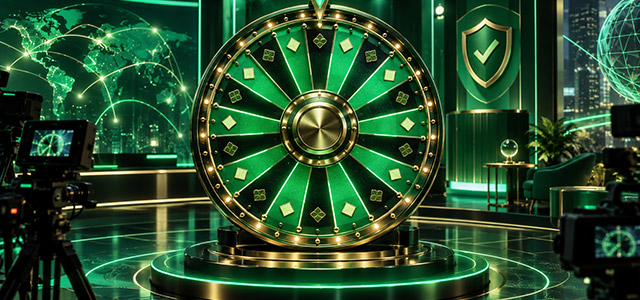
Vindral and Gaming Support announced a technology partnership on 29 September 2026 to offer the first Green Wheel built on GLI-certified gaming hardware. The collaboration pairs Rotterdam-based equipment manufacturer Gaming Support with Swedish live video specialist Vindral, validating the certified physical equipment for use with Vindral’s V-Track Money Wheel system. Live casino hardware certification has increasingly become a significant barrier in studio production pipelines as operators demand regulated physical assets that can reliably support digitally enhanced game shows at scale. By combining GLI-validated hardware with real-time digital overlay technology, the agreement provides live studios with a certified physical foundation capable of hosting multiple branded wheel games from a single certified wheel structure.
In the world of slot mechanic: Link&Win - five card features and jackp...
Olga Li#GamingInnovations #SoftwareLab
Games Global and Stormcraft Studios announced the release of Immortal Romance ASSEMBL’EM on 30 September 2026, marking the latest extension of the long-running franchise Immortal Romance that originally debuted in 2011. Built on a 5×3 grid with 20 paylines, a 96% RTP, high volatility, and a maximum win potential of 5,000x, the slot introduces a new narrative character alongside the ASSEMBL’EM mechanic.
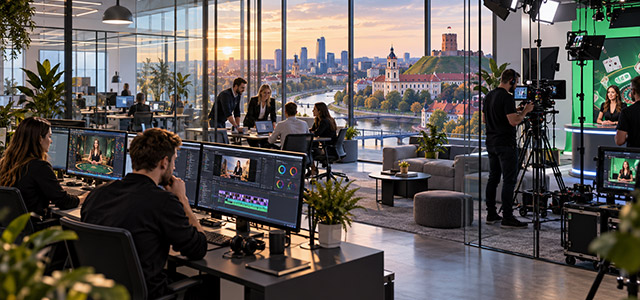
ICONIC21 Establishes New Production Hub and Regional Office in Vilnius
Olga LiLive casino content providers have accelerated studio expansion across Central and Eastern Europe as demand for dedicated and localised production capacity grows. Highlighting this trend, ICONIC21 announced on 1 September 2026 that it will open a new office and studio facility in Vilnius. In the local market context, the Lithuania Gaming Control Authority reported gross gambling revenue of €274.1 million in 2025, a 13% year-on-year increase. The upcoming facility will span more than 1,400 square metres across two full floors, combining studio space with administrative offices, while creating over 350 jobs.