Legal gambling age in ME: 18
Best Online Casinos - Montenegro
Gambling in Montenegro is a small but visible part of the country’s service-based economy. The country has a population of just over 600,000 people and relies far more on services than on industry. Tourism alone can account for around 25% of national GDP in strong years, while services overall make up close to 70% of total economic output. Within this system, gambling plays a supporting role as it contributes to public revenue and tourism spending. Most public income from gambling comes through licence fees and taxes. These revenues form a small but steady part of the state budget rather than a major source of funding. Compared to nearby countries, Montenegro was not a leader in gambling development, but it also did not fall behind. The country chose a cautious and structured approach. Instead of pushing rapid expansion, lawmakers focused on legal clarity and state control. Gambling was placed under formal oversight and linked directly to taxation. This limited the overall size of the market but reduced unregulated activity. Growth followed tourism trends and remained gradual. Local participation is moderate. Most regular players are estimated to be between 30 and 45 years old, which matches the main working-age population. Sports betting attracts the most interest, especially football. Spending levels among residents are relatively low. For most players, annual gambling spend is usually a few hundred euros spread across many small bets. Gambling is generally treated as occasional entertainment rather than a regular expense.
- Gambling taxes and licence fees bring in roughly 2–3% of total state revenue each year, making them a small but reliable source of public income rather than a major budget pillar.
- Casino-style games and slot machines generate a large share of gambling revenue as visitors tend to spend more on longer play sessions than on single-event bets.
- Coastal municipalities generate far more gambling income than inland areas, in line with tourist numbers.
- Online gambling represents a significant and growing share of total participation.
Understanding the legal and regulatory framework is important for anyone considering gambling in Montenegro. The rules define which operators are licensed, how player funds must be handled, and what protections exist if disputes arise. Without this knowledge, players may misunderstand their rights or choose poorly managed platforms.
Rocket Play Casino
Players residing in your country are accepted. Click the icon to play.

 Read casino Review
-
200%
€ 200Welcome bonus. Click the icon to claim.
- Instant-Play Sofware:
7Rings Gaming
MondCasino
Players residing in your country are accepted. Click the icon to play.
 Read casino Review
-
100%
€ 200Welcome bonus. Click the icon to claim.
Min deposit: 20 €/$. Max bet: 4 €/$. Any Deposit Bonus from Welcome offer is active for 7 days from the moment it has been claimed. Max cashout: 20 x deposit amount. The following games are excluded from the bonus promotion offer: See website for list of online slots. - Instant-Play Sofware:
Net Entertainment, Thunderkick, Yggdrasil Gaming, Microgaming, Evolution Gaming + 51 more providers
Spin Dimension Casino
Players residing in your country are accepted. Click the icon to play.
 Read casino Review
-
500%
$ 500Welcome bonus. Click the icon to claim.
New Customer Offer. T&C’s Apply. 18+. Min deposit: $25. The maximum bet size permitted with an active welcome match offer is $10. Max Cashout: 10x Deposit. Claimable once. - Instant-Play Sofware:
BetSoft, Rival, Saucify, Qora Games, Vivo Gaming + 4 more providers
Tsars Casino
Players residing in your country are accepted. Click the icon to play.
 Read casino Review
-
100%
€ 300Welcome bonus. Click the icon to claim.
- Instant-Play Sofware:
PearFiction Studios, Evolution Gaming
Lucky Emperor Casino
Players residing in your country are accepted. Click the icon to play.
 Read casino Review
-
100%
€ 100Welcome bonus. Click the icon to claim.
- Downloadable Software: Microgaming
Instant-Play Software: Microgaming, Games Global
CasinoCasino
Players residing in your country are accepted. Click the icon to play.
 Read casino Review
-
100%
kr 1000Welcome bonus. Click the icon to claim.
New Customer Offer. T&C’s Apply. 18+. Spela ansvarsfullt. www.stodlinjen.se. Regler & Villkor gäller - Instant-Play Sofware:
Merkur Gaming, Just for the Win, GECO Gaming
Casoo Casino
Players residing in your country are accepted. Click the icon to play.
 Read casino Review
-
100%
€ 300Welcome bonus. Click the icon to claim.
- Instant-Play Sofware:
Net Entertainment, Playn GO, iSoftBet, BetSoft, Wazdan + 23 more providers
EVERYGAME Casino
Players residing in your country are accepted. Click the icon to play.
 Read casino Review
-
150%
€ 1500Welcome bonus. Click the icon to claim.
- Instant-Play Sofware:
Realtime Gaming
EVERYGAME Casino Classic
Players residing in your country are accepted. Click the icon to play.
 Read casino Review
-
100%
€ 100Welcome bonus. Click the icon to claim.
- Instant-Play Sofware:
Realtime Gaming
SirWin Casino
Players residing in your country are accepted. Serbo-Croatian version is available. Click the icon to play.
 Read casino Review
-
100%
$ 1000Welcome bonus. Click the icon to claim.
- Instant-Play Sofware:
Novomatic, Net Entertainment, Thunderkick, Yggdrasil Gaming, Playn GO + 44 more providers
Legal Status for Montenegrin Players and Casinos
Based on regulatory filings and budget reports, annual gambling turnover in Montenegro is generally estimated in the range of €40–60 million, with public revenue coming primarily from licence fees and taxation rather than direct state operation.
This income supports public spending in the same way as other service-sector taxes, including funding for administration, infrastructure, and social programmes. While the figures are modest compared to what tourism earns for the country, they are stable and predictable.
This places Montenegro somewhere in the middle of the Balkan gambling landscape. Compared to markets such as Serbia and North Macedonia, which have larger domestic populations and higher betting volumes, Montenegro operates on a smaller scale but with similar regulatory principles. Croatia follows a more structured and mature model, with higher tax yields and stronger domestic participation, while Bosnia and Herzegovina operates under a decentralised regulatory system, with gambling rules set at the entity and cantonal level rather than nationally. Against this backdrop, Montenegro’s system stands out for its simplicity. It is easier to administer, produces consistent revenue, and avoids the regional differences seen in some neighbouring countries.
Looking beyond the Balkans, Montenegro does not aim to compete with Europe’s most innovative markets in the gambling sector. Countries such as Malta and Sweden have built highly developed regulatory systems focused on digital licensing, international operators, and strong consumer protection tools. These markets generate far higher revenues and act as exporters of gambling services across borders. Montenegro has taken elements from these models, particularly in licensing and oversight, but without the ambition to become a regional hub.
At the other end of the spectrum are more conservative European markets such as Germany and Norway. These countries allow gambling but apply tighter controls, higher compliance costs, and, in Norway’s case, a state monopoly for most forms of play. The goal there is harm reduction rather than revenue growth. Montenegro does not go this far. Its framework allows private operators, accepts tourism-driven demand, and keeps barriers to entry lower, while still maintaining state supervision.
Taken together, this places Montenegro firmly in the European middle ground. It is neither an innovation-driven gambling centre nor a restrictive, protectionist market. Instead, it follows a practical, service-oriented model that reflects the country’s size and economic priorities. Gambling is treated as a regulated activity that contributes a steady income without shaping national policy or public life. Within broader European trends in gambling, Montenegro aligns with countries that value control and predictability over rapid growth, using regulation to keep the sector functional, taxable, and contained.
Is gambling legal in Montenegro?
Offline gambling in Montenegro is legal, but it is not a “free market” where anyone can open a venue. The sector is built around state permission and close supervision. The backbone of today’s system is the Law on Games of Chance, first adopted in 2004 and updated many times since. In recent years, changes have accelerated. Amendments that took effect in 2024 tightened parts of the system, and a further overhaul was adopted in 2025, signalling a move toward stricter rules and higher obligations for operators rather than looser access.
Oversight of the industry is handled by the Games of Chance Administration (Uprava za igre na sreću), the state body responsible for licensing, supervision, registers of operators, and compliance checks. In practical terms, this regulator is the gatekeeper. It approves who can operate, what they can offer, and whether venues meet legal conditions.
Montenegro does not have a dense network of casino halls across the whole country. Instead, it has a smaller number of well-known sites in the main tourism and business zones, plus separate networks of betting shops and slot clubs that operate under their own permissions. That usually means the coast and the capital area, with most high-profile facilities tied to hotels and large hospitality venues.
Reporting highlights a strong seasonal pattern in land-based gambling. Activity increases sharply during the summer months, when tourist numbers peak and entertainment spending rises across the coast and major cities. Casino-style venues see their highest intake in this period, while winter months are consistently quieter. This seasonal swing has been visible in recent years and reflects how closely offline gambling follows tourism trends.
What is allowed depends on the licence type. Traditional casino-style play covers table games that follow recognised rules and are run under controlled conditions. In Montenegro, that includes classic table options and electronic game offerings that fall under the legal definition of casino games. Sports betting is legal too, but it is usually offered through dedicated betting premises rather than being automatically bundled into every casino venue. Slot-machine clubs also exist as a separate category. That separation matters because each category has its own compliance requirements, supervision style, and fee structure.
New licences do not appear every month. The market is small, and entry is expensive and heavily conditioned. Operators must meet strict suitability and financial requirements, and they must secure premises that meet legal conditions. Location checks can be a real hurdle because distance rules and site eligibility are actively enforced. Recent regulatory work has put clear attention on whether venues meet minimum-distance requirements from sensitive locations such as schools. In addition, the financial threshold is high. Changes in recent years have pushed the cost of entry upward, and the market has seen headline figures in the millions of euros for casino concessions. That reality alone limits how often new land-based casino venues are licensed, because only a small number of operators can justify the investment.
Public discussion in Montenegro has mainly moved in the direction of improving control rather than expanding access. The recurring themes are tighter supervision, stronger protection of minors, clearer limits on where premises can operate, and measures aimed at reducing illegal or poorly controlled gambling. There has also been an ongoing debate about whether the legal framework needs a more modern structure to reflect how the industry has changed, especially with stronger links between land-based businesses, betting networks, and digital play. The overall trend is not a push for “more venues.” It is a push for “cleaner rules,” higher compliance standards, and a system that is easier to enforce.
Is online gambling legal in Montenegro?
Online gambling in Montenegro is legal and regulated, and it falls under the same legal framework and regulator as offline gambling. The activity is governed by the Law on Games of Chance, and supervision is carried out by the Games of Chance Administration. This authority licenses operators, approves game offerings, monitors compliance, and collects taxes and fees.
Interest in online casinos among local players has grown steadily over recent years. Convenience plays a major role. Online platforms are accessible year-round, not tied to tourist seasons or physical locations, and they offer a wider range of games than most land-based venues. For many Montenegrin players, online gambling has become the preferred option, especially for slots and sports betting.
The licensed online market serves two audiences at once. Some operators focus primarily on Montenegrin players, offering local language support, euro accounts, and payment methods familiar to residents. At the same time, Montenegro also licenses online operators that target international markets. These platforms may operate under a Montenegrin licence while serving players abroad. This dual role helps explain why online gambling contributes meaningfully to public revenue even though the domestic population is small.
Recent state figures show that overall income from games of chance has reached roughly 30 million euros per year, with online activity responsible for much of the recent growth. Changes in how online gambling is taxed have increased collections, making digital play one of the fastest-growing sources of gambling-related income for the state. Unlike land-based venues, online platforms generate revenue more evenly throughout the year, which reduces seasonal swings in public intake.
The content allowed online is clearly defined. Licensed operators may offer casino-style games such as slots and digital table games, as well as sports betting and other approved betting formats. Live dealer games are also permitted under certain conditions, provided they meet technical and fairness standards. Each game type must be approved, tested, and operated in line with rules set by the regulator. Informal or unapproved formats are not allowed under a Montenegrin licence.
To obtain an online gambling licence in Montenegro, a business must meet several concrete requirements. First, it must demonstrate financial stability, including sufficient capital to operate and cover player balances. Second, it must use certified software and game systems that meet technical and fairness standards set by the regulator. Third, it must implement player-protection measures, such as identity verification, age checks, and tools for responsible gambling. In addition to these, operators are required to maintain servers and data access in a way that allows regulatory oversight and to pay licensing fees and gambling taxes as defined by law.
Montenegrin players are not restricted to playing only on locally licensed sites. Many international online casinos licensed in well-known jurisdictions accept players from Montenegro. While these platforms are not regulated by Montenegrin authorities, they often operate under respected foreign licences and follow established industry standards. For players, this means there are still many safe and reliable options available beyond the domestic licensing system.
In practice, international platforms can be a good fit for several reasons. They tend to offer larger game libraries, including thousands of slots and a broad range of live games. Bonuses and promotions are often more generous, as these sites compete across multiple markets. Payment options may also be more flexible, with faster withdrawals and a wider choice of methods. As long as players choose platforms that are properly licensed and well reviewed, international sites can provide a secure and enjoyable experience alongside locally licensed options.
| Name | Allowed Casinos | Friendly Casinos | Targeted Casinos | Land-based | Online operator | Online player | ISP Blocks | Bank Blocks | Notes | Sources | Score |
|---|---|---|---|---|---|---|---|---|---|---|---|
| Montenegro | 989 | 60 | 1 | Legal | License required for local casinos | No penalty | Not blocked | Not Restricted | 0 |
783
Gambling Availability Score 783. Ranked 53 of 531 |
Banking in Montenegro
Montenegro uses the euro (EUR) as its official currency, even though it is not part of the eurozone. This is a major practical advantage for players. Many locally licensed casinos operate directly in euros, and the same is true for a large number of internationally licensed platforms that accept players from Montenegro. Because accounts, deposits, and withdrawals are already in EUR, players usually avoid currency conversion fees altogether. This alone can save money over time and makes bankroll management much simpler compared to countries that rely on less widely supported local currencies.
Traditional banking methods are widely available. Bank transfers and card payments using Visa and Mastercard are common options at both local and international casinos. These methods are generally safe to use. Montenegrin banks do not automatically block gambling-related transactions, and card payments are not treated as illegal activity. That said, banks still apply standard monitoring rules for fraud prevention and money laundering. This means transactions may be reviewed if amounts are unusually large or frequent, but ordinary deposits and withdrawals are rarely penalised or flagged. For most players, card payments remain a straightforward and familiar choice, especially for deposits.
Bank transfers are also an option, particularly for larger amounts, but they are slower and less flexible. Processing times can stretch over several business days, and minimum withdrawal thresholds are often higher. Because of this, many players prefer faster alternatives once they gain experience.
International e-wallets provide that middle ground between speed and security. Services such as PayZ, MuchBetter, and Jeton are available to Montenegrin users on many platforms. These wallets are popular because they process deposits instantly and usually offer faster withdrawals than bank cards. They also add a layer of privacy, since players do not need to share bank details directly with the casino.
Crypto payments have also become more common. Bitcoin and other major cryptocurrencies are accepted by a growing number of international casinos that welcome Montenegrin players. Crypto transactions are fast, work across borders without banks, and often come with lower fees. They are especially useful for players who value speed and independence from traditional banking. The main thing to keep in mind is price volatility. The value of crypto can change between deposit and withdrawal, which adds an extra layer of risk that some players may prefer to avoid.
When it comes to taxes, the situation is relatively straightforward. Gambling operators are taxed under Montenegrin law, but individual players are not typically required to declare or pay tax on casual gambling winnings. There is no routine system that taxes small or recreational wins. This applies whether players use land-based venues or online platforms. As always, players with unusually large or regular winnings should consider personal financial advice, but for most users, gambling is treated as entertainment rather than taxable income.


Popular Montenegrin Games
When it comes to games, Montenegro is a player market rather than a development centre. It is not known for Montenegro-based game studios producing casino software for international distribution. As a result, local players rely almost entirely on international developers, much like players across most of Europe.
In recent years, preferences have shifted toward newer studios with strong visual identity and innovative mechanics, rather than long-established legacy brands. Among the developers that resonate well with Montenegrin players are AvatarUX, Peter & Sons, Stakelogic, and 4ThePlayer. These studios appeal to players who value originality, distinctive bonus systems, and games that feel different from standard reel formats.
Slots are the clear favourite among Montenegrin players. They account for most daily activity and attract a broader audience than live games. When it comes to slots, features matter more than themes. While visuals still help a game stand out, players tend to focus on mechanics such as expanding symbols, cluster pays, and innovative bonus structures. High volatility is generally seen as a positive, especially among players who prefer shorter sessions with the chance of meaningful payouts.
Trending slots among Montenegrin players closely follow wider European patterns. Titles with persistent features and strong replay value perform best. Games such as PopRocks from AvatarUX, Baron Samedi from Peter & Sons, Firebird Spirit and Candy Links from Stakelogic, and 9k Yeti from 4ThePlayer continue to attract consistent interest.
Live games form the second major category, though they attract a more focused audience. While fewer players choose live games compared to slots, engagement levels are higher, and sessions are usually longer. Traditional table games still have a place, but the strongest growth comes from live game-show formats that feel more like interactive entertainment than classic casino play.
Here, innovation matters more than tradition. Players show a clear preference for fast, visually rich live games with simple rules and high energy. Wheel-based formats, multiplier mechanics, and bonus rounds outperform slower card-based tables. Game shows and lightning-style variants tend to draw more interest than standard blackjack or baccarat, especially among younger players and mobile users.
New Online Casinos in Montenegro
New online casinos appear regularly, but the pace depends on whether you look at locally licensed platforms or international brands that accept players from Montenegro. On the domestic side, the market is small and tightly controlled. In practice, very few Montenegro-licensed online operators tend to launch or rebrand in an average year. Licensing is expensive, and compliance requirements are high, so the regulator does not approve large numbers of new entrants. Growth here is gradual rather than fast.
The picture looks very different when you include international sites. Each year, dozens of new international online gaming venues launch across Europe, and a significant share of them accept Montenegrin players. These sites are usually licensed in established jurisdictions and operate across multiple markets at once. From a player’s point of view, this creates a wide choice. Even though the number of locally licensed sites is small, the total number of available platforms is impressive and constantly changing.
With that amount of choice, picking the right casino becomes less about finding any site and more about knowing how to filter out poor options. New platforms often advertise big bonuses and modern design, but not all of them are equally reliable. Common risks include slow withdrawals, unclear bonus terms, limited payment methods, or weak customer support. These issues are not always obvious at sign-up, which is why many players end up disappointed after an initially positive impression.
Instead of judging a site by its homepage, our team looks at how it performs in practice. New sites are examined and then added to a curated collection only if they meet clear standards. Each platform can be filtered by launch year, which helps players focus on the newest options. Filters also cover game providers, so players can quickly see whether a casino offers the studios they prefer.
Currency and banking filters are especially useful for Montenegrin players. Because the euro is widely supported, it is easy to narrow the list to casinos that operate fully in EUR and avoid conversion fees. Banking filters allow players to select platforms that support cards, bank transfers, e-wallets, or crypto, depending on what matters most to them. Bonus types are also broken down, making it easier to find casinos that offer straightforward welcome bonuses, cashback, or ongoing promotions.
Taken together, this approach turns a crowded market into something manageable. Instead of sorting through dozens of unfamiliar names, players can focus on a smaller group of new online operators that match their preferences and meet basic quality standards.
Montenegro latest news

Vindral and Gaming Support Partner to Introduce GLI-Certified Green Wh...
Olga Li#GamingInnovations #SoftwareLab
Vindral and Gaming Support announced a technology partnership on 29 September 2026 to offer the first Green Wheel built on GLI-certified gaming hardware. The collaboration pairs Rotterdam-based equipment manufacturer Gaming Support with Swedish live video specialist Vindral, validating the certified physical equipment for use with Vindral’s V-Track Money Wheel system. Live casino hardware certification has increasingly become a significant barrier in studio production pipelines as operators demand regulated physical assets that can reliably support digitally enhanced game shows at scale. By combining GLI-validated hardware with real-time digital overlay technology, the agreement provides live studios with a certified physical foundation capable of hosting multiple branded wheel games from a single certified wheel structure.
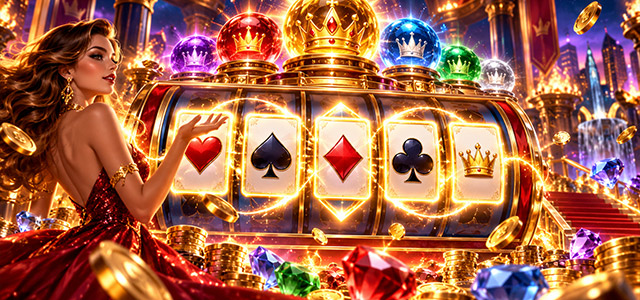
In the world of slot mechanic: Link&Win - five card features and jackp...
Olga Li#GamingInnovations #SoftwareLab
Games Global and Stormcraft Studios announced the release of Immortal Romance ASSEMBL’EM on 30 September 2026, marking the latest extension of the long-running franchise Immortal Romance that originally debuted in 2011. Built on a 5×3 grid with 20 paylines, a 96% RTP, high volatility, and a maximum win potential of 5,000x, the slot introduces a new narrative character alongside the ASSEMBL’EM mechanic.
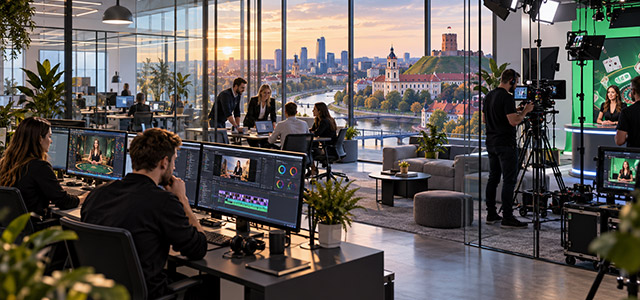
ICONIC21 Establishes New Production Hub and Regional Office in Vilnius
Olga LiLive casino content providers have accelerated studio expansion across Central and Eastern Europe as demand for dedicated and localised production capacity grows. Highlighting this trend, ICONIC21 announced on 1 September 2026 that it will open a new office and studio facility in Vilnius. In the local market context, the Lithuania Gaming Control Authority reported gross gambling revenue of €274.1 million in 2025, a 13% year-on-year increase. The upcoming facility will span more than 1,400 square metres across two full floors, combining studio space with administrative offices, while creating over 350 jobs.