The 2026 FIFA World Cup starts today, June 11: How European countries feel about the promotion of gambling here
#BettingLegislation #GamingInEurope
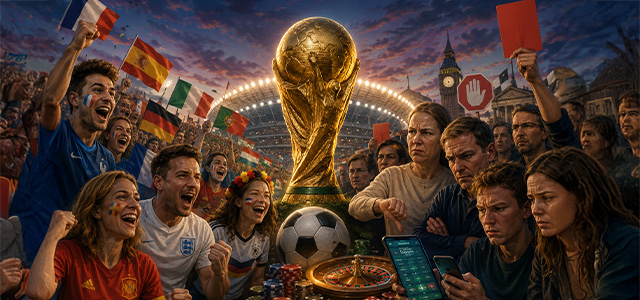
The 2026 FIFA World Cup officially begins today, June 11, running until July 19. Regulators note that throughout the official FIFA match schedule, major football tournaments historically trigger massive spikes in global betting volumes. This surge increases general activity across sportsbooks and drives up interest in the virtual sportsbook sector. In response, gambling regulators across Europe are stepping up enforcement, using the tournament as a critical stress-test for existing advertising laws.
On 19 May 2026, the Dutch Gambling Authority, Kansspelautoriteit (KSA), wrote to all licensees operating in the Netherlands to remind them that it will intensify monitoring of advertising throughout the tournament and will pursue ‘immediate sanctions’ against any operator found to be active in the market without a licence. The Netherlands already operates one of Europe’s stricter advertising regimes. Untargeted gambling advertising (ads served to audiences not specifically opted in) has been banned since 1 July 2023. Sports sponsorship by gambling operators is also prohibited. There is also a specific restriction on wagering on certain in-game events. For example, betting on which player will receive a yellow card remains unlawful under Dutch law.
On 20 May 2026, Belgium’s Gaming Commission, the Kansspelcommissie, issued a reminder to licensees covering bonuses and advertising ahead of the World Cup. Belgium’s gambling advertising rules are also among the strictest in Europe. Under Article 60 of the Gambling Act, online operators can’t offercasino bonuses in any form: no free bets, no gaming credit, no cashback. The Royal Decree of 27 February 2023 bans gambling advertising by default. Since 1 January 2025, gambling logos have also been banned on the front of sports shirts and logo size across all kits is capped at 75 cm². Gambling branding at sports venues, including banners, posters, advertising panels, and pitch-side commercials, is also banned. Still, a recent study by Sciensano found that 52.6% of the Belgian population is exposed to at least one form of gambling advertising every week, while 2.6% of Belgian players currently display risky gambling behaviour.
In February 2026, France’s Autorité Nationale des Jeux (ANJ) published a warning after reviewing operators’ promotional plans and finding marketing budgets had risen by more than 25% year-on-year, a trend operators attributed partly to the tournament. The ANJ asked all licensed operators not to exceed declared budgets and expressed specific concern about FIFA’s introduction of ‘hydration breaks,’ which are mandatory pauses during matches that open additional broadcast advertising slots.
The three countries that have issued explicit warnings lately are not the only ones with strict rules in place. In Italy, the Agenzia delle Dogane e dei Monopoli (ADM) continues to monitor compliance under the Decreto Dignità (2019), which bans gambling advertising almost entirely, covering TV, radio, digital, and sports sponsorship. In Spain, the DGOJ relies on existing laws where broadcast advertising is restricted to a 1 am to 5 am window, and sports sponsorship remains banned. Meanwhile, Sweden's Spelinspektionen remains focused on domestic reforms in 2026, including a credit gambling ban from 1 May and a new self-exclusion framework from 1 August.