Illinois Gambling Bill: Can Fiscal Problems Invoke the Approval of iGaming?
Good times are ahead for the gamblers of Illinois. No one would have guessed it, but the state seems to be on the verge of legalizing internet casinos. Animosity towards gambling is pervasive in America, their laws and tenacious opponents hindering its online expansion, but this positive development is no longer in the realm of wishful thinking, guessing and debating. The bill is in the House of Representatives, and what’s left is for Governor Bruce Rauner to sign it. While he never made any elaborate comments on the issue of either land-based or internet gambling, what little he did say indicated he was not explicitly against the legislation or any potential expansion in the field.
In contrast, former Gov. Quinn wasn’t very supportive of the idea, despite some allegations he had made in the past, which is why many proponents took his defeat on the part of Rauner as a good enough reason to stay optimistic. Still, even the most hopeful among them were taken aback by the sudden proposal of the legislation and such swift progression into the reality they’ve desired for so long. If it does happen, Illinois will become the fourth US state to legalize online gambling to some extent.
iGaming Regulation: Yes, if the Pleases the Land Casino Industry
The bill was passed by the State Senate on Wednesday, 31st of March, 2017, by a hardly believable vote of 42 to 10. That a vast majority of senators was for legalizing online wagering is stunning in itself, but what’s more talked about at the moment, is the fact that this bill has been proposed at all. Not a few months prior, speculations on the subject have settled to a bleak conclusion of ‘’not anytime soon’’.
Someone with a profound knowledge of the industry, and especially the political and economic woes of Illinois may have noticed a small, but potent foretoken – the increasing pressure to approve daily fantasy sports, the prospect of which the land-based operators in the state did not like at all. A serious competition, DFS would have made a significant dent in the revenue of brick and mortar casinos and its impending encroachment on the legal territory might have been what turned the tides to the benefit of online outlets, which are considered a solid counterweight to DFS, as evidenced by the New Jersey situation.
A Possible End to the Unprecedented Budget Crisis?
However, the underlying cause for the legislation is, of course, the ongoing budget crisis – Illinois has been struggling without a budget for the last two years, with over $14 billion in depth, a $400 million education cut, thousands fired from public universities, and no agreement in sight. Terry Link, the sponsoring senator behind the bill, said that, if enacted, it would lead to not only online gambling revenues of up to $150 million a year, but also to a significant increase in earnings from land-based establishments. Further elaborating on his stance, Link revealed how the proceeds will be distributed: the majority of iGaming revenue will be allocated to the State’s pension fund, with a smaller sum of about $10 million going to Gambler’s Anonymous, while land-based casinos will aid the education fund. This was, apparently, not enough to win over a couple of Republican senators, who remain unconvinced by the above mentioned advantages. Despite their objections, Link is certain the approval is at hand.
Illinois Casino Gaming Association praised the bill by calling it ‘’a comprehensive framework for licensed and regulated market’’ that will bridge the budget gap by securing income from tax revenues and licensing fees, while also effectively warding off illegal operators from the state’s online market.
Licensing Conditions for Poker and Casino Applicants
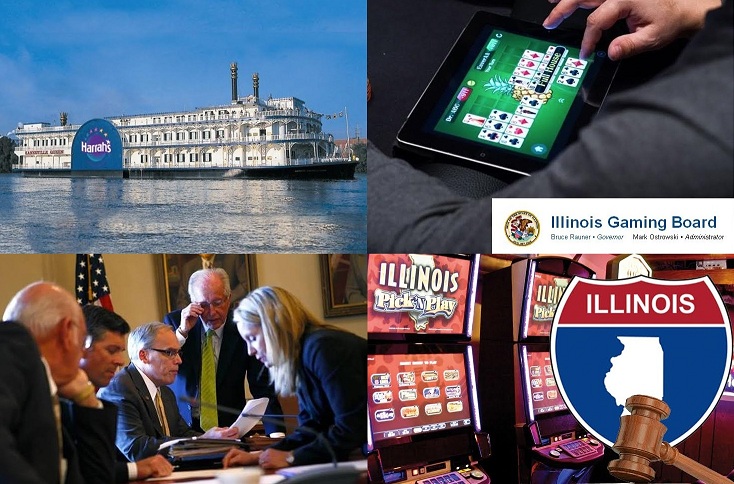
Provided the bill makes it into law, the Illinois Gaming Board, which was created through the Riverboat Gambling Act in 1990 and currently directs gambling and tax collection activities in the state, will have to form a subdivision to specifically manage and oversee virtual games. Encompassing legal directives for online poker, casino games, horse racing and daily fantasy sports, the legislation outlines licensing conditions, taxing systems and other related requirements for each of these categories.
Similar to the regulations of Atlantic City, only terrestrial casinos and horseracing companies licensed by the state will be able to extend their services online. The initial cost is set to $10 million, with a 10% tax on the first $100 million generated during the first five years that the license will be valid. After this period expires, the taxes will be increased to 15% of the gross gaming revenue exceeding $100 million. License holders are allowed no more than two ‘’internet gaming skins’’, both with visible insignias of the company clearly showing the brand and the identity of the owner and all affiliated companies on the US territory.
Only those horse racing operators that have had a minimum of 30 live races during 2016 will be eligible for the license. DFS companies will have to pay application fees between $5000 and $25,000, depending on the revenue generated on a yearly basis.
Current Legal Landscape in Illinois
Illinois has historically been among the American states least interested in solving the issue of online gambling. The activity is currently prohibited by law in all its forms, and there are no websites that can legally offer virtual products or accept wagers. Placing wagers as a player also constitutes a felony, but the law doesn’t differentiate between providers and customers and this is reflected in practice, as well. There is also not a distinction made between games of skill and games of chance, making online poker an equally punishable felony as all other games where money is put at stake.
Land casino industry is well developed, with ten facilities active at the moment, where a wide range of games is available to customers. These are all entirely regulated; however, there’s a catch to this. Since the law prohibits gambling on land, all activities are actually taking place on riverboats in order to bypass the ban. Despite the boats being anchored and attached to land at all times, the machines are never on land and that is enough to avoid criminal charges. The first such establishment opened in 1991, and since then, players have been enjoying slots, table games and video poker legally.
Good Things Come to Those Who Wait
Up until now, the state has never made any serious move towards legalizing iGaming. The closest to approach this goal were Terry Link and Donne Trotter in 2013, when they introduced the Chicago Casino Development Act. Despite offering sensible propositions, the legislation received no more attention than an informal hearing where nothing of importance was concluded.
Even if the House of Representatives doesn’t approve the 2017 Bill, it should still serve as an important milestone towards the Internet gaming regulation for the whole of the US. Considering the immense support, the proposed law has received from all sides and regardless of the circumstances or the reasons why it is a sign for the activists that things are moving in the right direction faster than expected.