A multiplier scales a specified stake, win or feature value. Check exactly what it applies to and whether several multipliers combine.
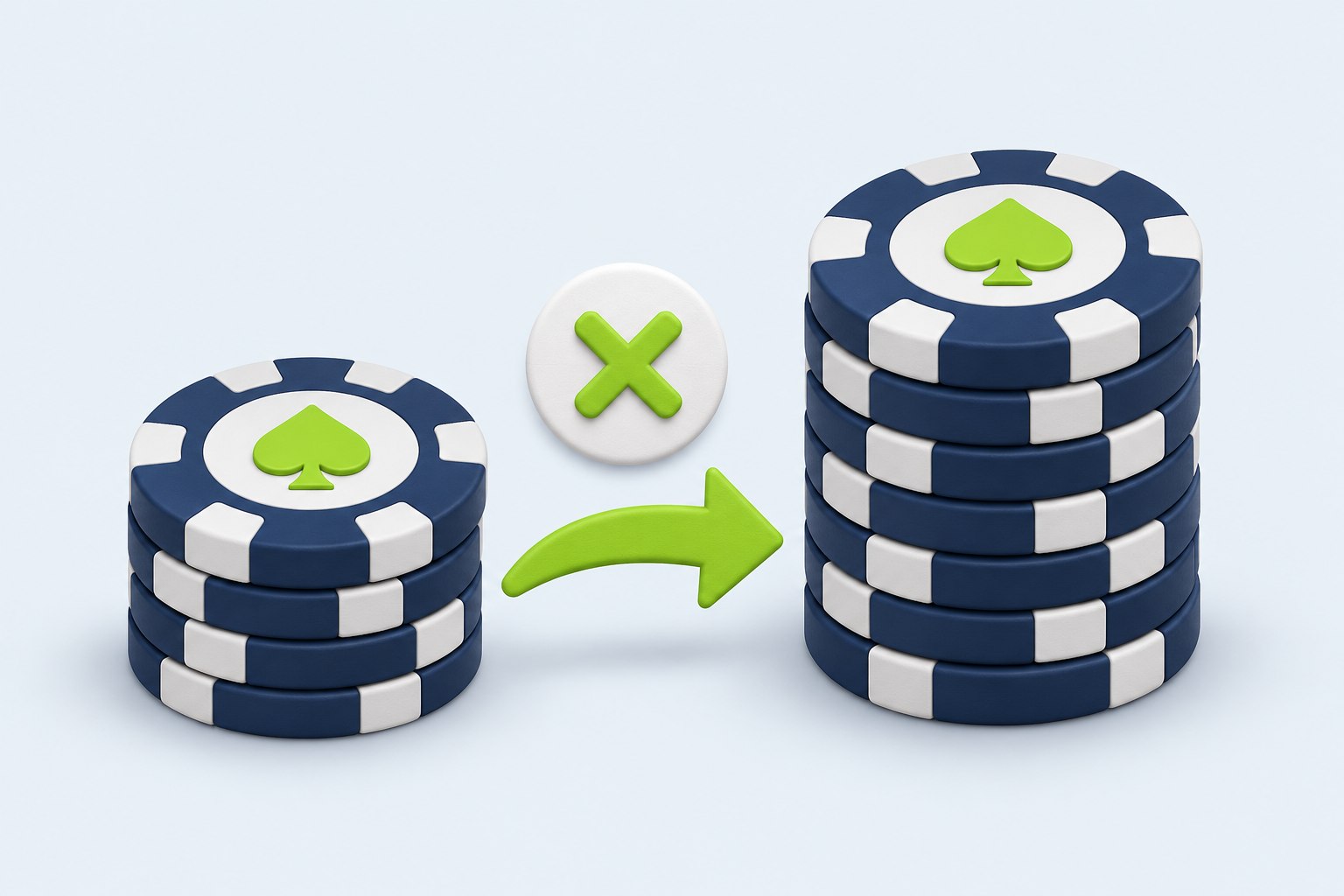
What a multiplier does
A multiplier scales a qualifying value by a stated factor. In casino games, it may increase a particular win, a feature award or another defined amount. A two-times multiplier applied to a $5 award produces $10 under that calculation. The important question is what amount qualifies. A large multiplier has little meaning without its base value and the conditions under which it applies.
The term also appears outside game payouts. A wagering multiplier describes required turnover, while a loyalty-points multiplier changes the rate at which points are earned. Those are different uses of the same mathematical idea. A ten-times wagering requirement does not multiply a bonus into ten times as much withdrawable money, and doubled reward points do not necessarily double a cash balance.
Stake multipliers and win multipliers
A game can display prizes as multiples of the selected stake. If a $0.50 round returns 20 times the total stake, the resulting payout is $10. If the multiplier applies to a line stake or a separate side bet instead, the same number produces a different amount. Check the unit beside the display and the paytable's definition of the qualifying wager.
Also distinguish payout multiples from profit odds. A total return of two times the stake includes the original wager and therefore represents one stake of profit. A payout described as two-to-one profit returns two stakes of winnings plus the original stake. Interfaces and game descriptions use different conventions, so the wording should be resolved before comparing two apparently similar awards.
Combining multiple multipliers
When several multipliers affect one result, the game defines how they combine. Two two-times multipliers might multiply to four times, add to a different factor or be subject to a rule that uses only one. A progressive feature multiplier might rise after each cascade but reset on the next paid spin. None of these behaviors should be assumed from the multiplication symbol alone.
For a hypothetical base award of $3, a combined six-times factor produces $18. The calculation is straightforward only after the applicable factor is known. Check whether the factor applies to the whole round or just one winning combination. A multiplier attached to a particular wild or wheel segment may leave other simultaneous wins unchanged, even when the screen emphasizes one large number.
Limits, features and headline prizes
A game may impose a maximum payout expressed in currency or as a multiple of stake. Reaching that cap can limit further feature awards or end the feature according to its rules. Consequently, multiplying every visible number together may produce an amount the game is not designed to pay. Read the maximum-win conditions alongside the rules for multipliers and retriggers.
Large advertised multipliers also need probability context. A possible 10,000-times result does not mean that the average return is large or that ordinary wins are frequent. The complete distribution includes all smaller results and losses. A multiplier's maximum value cannot be used by itself to calculate RTP, expected value or the likelihood of leaving a session ahead.
Interpreting a multiplier correctly
Before accepting a feature purchase or placing a special bet, identify the amount at risk and the value the multiplier scales. A low base-stake setting can still produce a costly purchase if its price is itself a large stake multiple. Keep price multipliers separate from potential prize multipliers so a game-control label does not conceal the full amount committed.
If settlement looks wrong, record the stake, base award, applicable multiplier and any cap. These details allow the calculation to be checked without relying only on a final animation. Multipliers are useful mathematical shorthand when their base, scope and combination rules are clear. They are not independent promises of profit, and a large factor should not become a reason to increase a wager beyond an existing spending limit.