Casino terms from A to Z
Casino Glossary
69 terms
American Roulette
American roulette traditionally uses 38 pockets: 1–36, zero and double zero. Standard bets generally have a 5.26% house edge, with exceptions for particular wagers and zero-settlement rules.
Ball
The roulette ball is the small sphere whose final resting pocket identifies the winning number in a physical roulette round.
- Synonym:
- Pill
Basket Bet
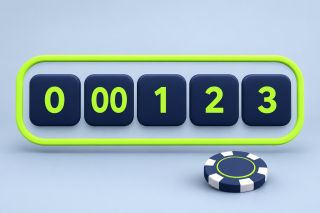
A basket bet usually means the American roulette five-number wager on 0, 00, 1, 2 and 3, normally paying 6:1 profit; check the table because the name can be used differently.
Black Bet
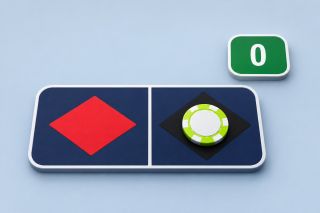
A black bet in roulette backs the 18 black numbers and normally pays even money. Zero pockets are not black and are handled under the table’s rules.
- Antonym:
- Red Bet
Carré
Carré is the French roulette term for a corner bet covering four numbers in a two-by-two block on the layout and normally paying 8:1 profit.
Chameleon Strategy
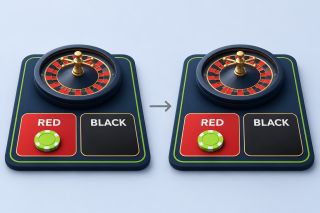
Chameleon strategy is an informal roulette label for copying another player’s wagers, often after noticing that player winning; copying alone does not change the wheel probabilities or create an advantage.
- Synonym:
- Coat-tail
Cheval
Cheval, usually expressed as à cheval, is the French roulette term for a split bet covering two permitted adjoining numbers on the betting layout and normally paying 17:1 profit.
- Synonym:
- Split Bet
Choppy Game
A choppy game is informal gambling language for a short run of frequently alternating results, such as red, black, red and black in roulette; it is not a predictive game state.
Coat-tail
To coat-tail is to copy another players wagers or betting style, often because that player has recently been winning. Copying a result-driven choice does not transfer luck or establish an advantage, and it is different from a formally offered back-betting feature.
- Synonym:
- Chameleon Strategy
Colonne
Colonne is the French roulette term for a column bet, covering one of the three twelve-number columns on the standard layout and normally paying 2:1 profit.
- Synonym:
- Column Bet