Super Stud is a family of stud-poker variants with an enlarged starting hand and an early discard. The high or high-low format, discard procedure and betting structure must be checked in the particular table’s rules.
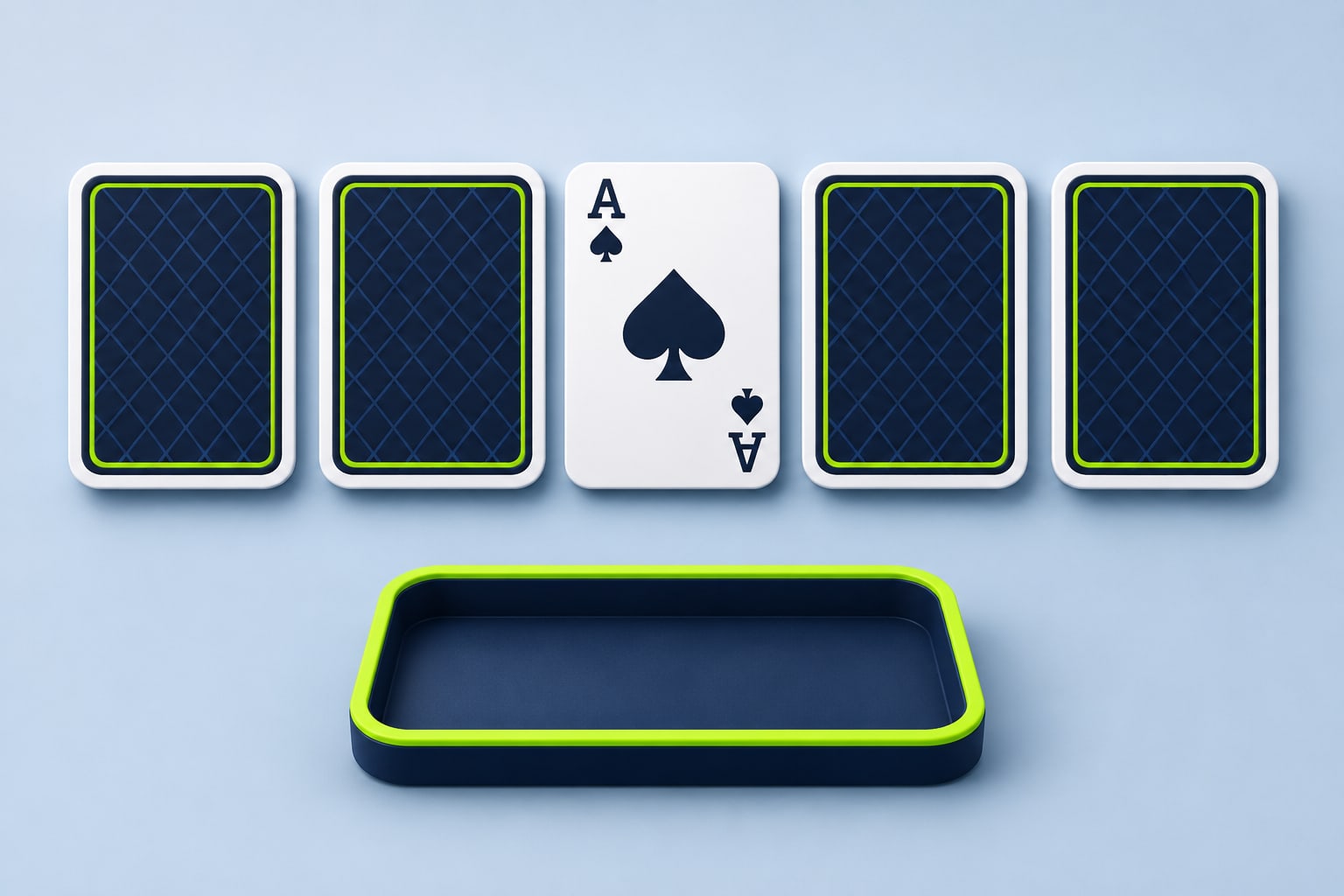
Visual explainer
Super Stud’s extra cards come before the discard
Example: the opening procedure published by Phenom Poker. Other Super Stud variants may use different rules.
1 · Start with five cards
2 · Discard two hidden cards
3 · Continue with three
Check the full variant for high-only or high-low settlement and the betting structure. The name alone does not specify them. Related: Seven Card Stud Poker Game · House Rules.
A family of variants, not one universal format
Super Stud modifies the opening of a stud-poker hand by giving players more starting cards and requiring an early discard. The name can appear in high-only, high-low and other stud formats. It should not be defined as exclusively pot-limit or exclusively high-low without identifying a particular ruleset. A game listing may add a qualifier such as eight-or-better or a betting abbreviation that changes how it is played. Read the complete name and table rules together. The word super describes the altered opening structure; it does not promise a stronger final hand, a larger prize or an advantage over other participants.
The enlarged starting hand
One published format, described by Phenom Poker, begins with four face-down cards and one face-up door card. After the opening betting round, continuing players discard two face-down cards without receiving replacements. They then hold the familiar stud arrangement of two hidden cards and one exposed card. The face-up card is not available to discard under that ruleset. This is a concrete example rather than a universal claim about every private or casino game using the name. Check the timing of the discard, which cards may be discarded and the procedure if a player fails to act before the table's timer expires.
How the later streets work
After the initial reduction, the hand can continue through the ordinary stud sequence specified by the variant. In a standard seven-card stud progression, fourth, fifth and sixth street add exposed cards, while seventh street adds a hidden card. Betting takes place between the relevant deals, and the final five-card hand is selected from the cards held. Players do not share a central community-card board in the same way as in Texas hold'em. Exposed cards provide public information, but they do not reveal the whole hand. The applicable rules govern exceptional situations such as an insufficient number of cards remaining in the deck.
High and high-low change the objective
In a high-only format, the best qualifying high poker hand determines the showdown winner. A high-low version can divide the pot between high and low hands, subject to its qualifier and settlement rules. Phenom's Super Stud eight-or-better format, for example, uses a qualifying low, while its other named formats have different objectives. Do not assume that the same three-card selection is desirable in every version. As an illustrative decision, retaining a high pair pursues a different possibility from keeping three distinct low ranks. Neither choice can be evaluated properly without knowing the variant, exposed cards, price of continuing and possible opponents' hands.
Betting limits are a separate rule
A fixed-limit table prescribes bet sizes, while a pot-limit table constrains the maximum wager by the pot calculation. A cap can impose another ceiling on a participant's exposure in one hand. These rules affect the financial commitment but are not determined merely by the name Super Stud. Before sitting down, identify the ante, bring-in, betting units and any cap, along with which exposed card starts the action. A small opening forced bet does not describe the maximum amount a hand can cost. Later betting rounds and raises can add to the commitment even if the original cards were attractive.
Explain a hand with its exact rules
A useful Super Stud hand history states the variant, betting structure, starting cards, exposed door card and discarded cards. It should also distinguish information known at the time from cards revealed later. Saying a player started with five cards and made a strong hand leaves out the decision that defines the variant. For beginners, the safest educational sequence is to learn ordinary stud dealing first, then add the specific opening discard and winning objective. The extra starting choice adds complexity rather than certainty. Understand the table's rules and spending limits before treating the unfamiliar name as simply another version of a familiar poker game.
Related glossary terms
Sources and further reading
- Synonym:
- Caribbean Stud Poker