Caribbean Stud Poker is a casino table game in which a fixed five-card hand competes against the dealer, with an ante, a raise-or-fold decision and a qualifying dealer hand.
KeyToCasinos • Visual explainer
Ante and raise are separate stakes
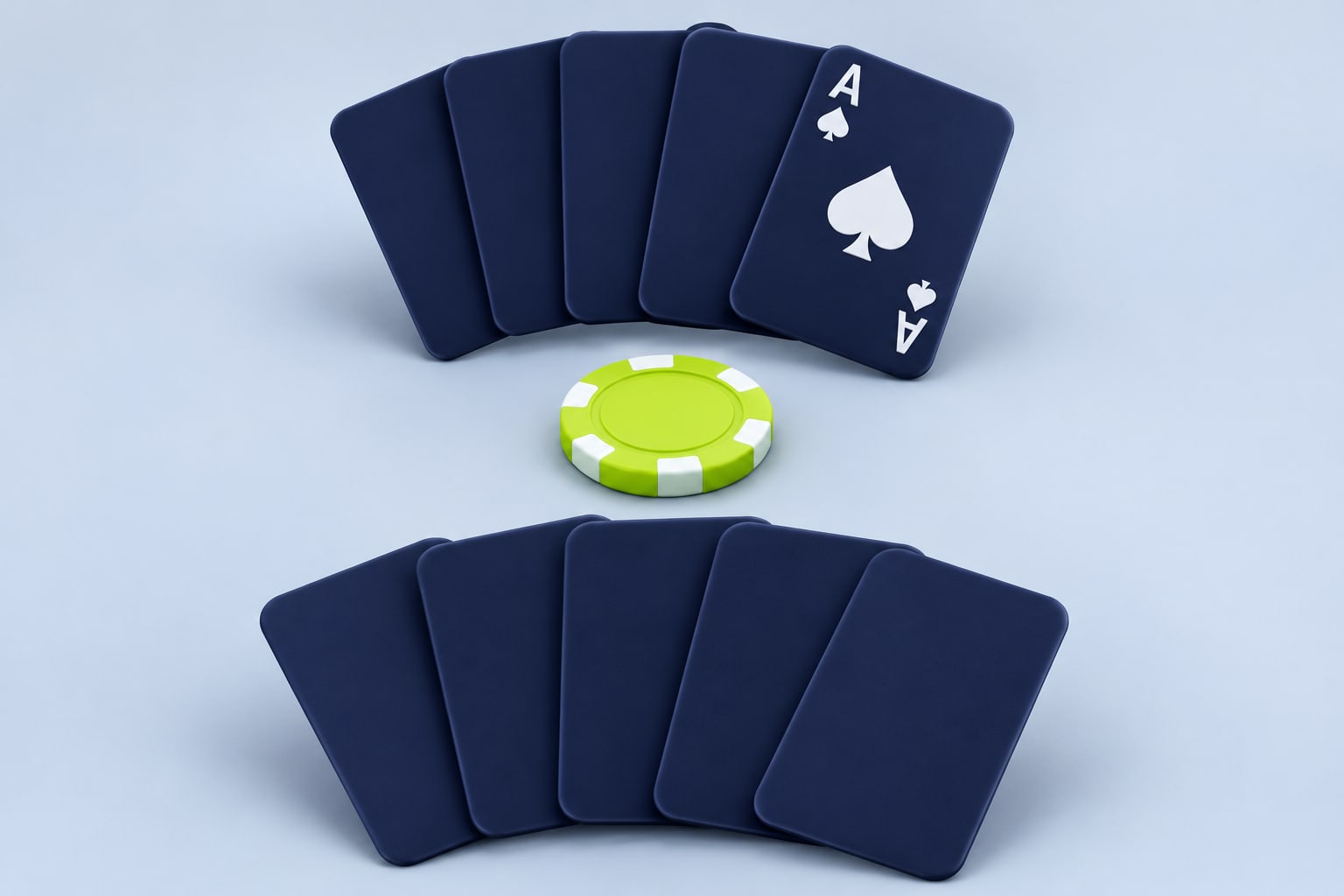
Illustration using the standard Caribbean Stud raise of twice the ante.
Start the hand
$5 ante
This is the opening stake.
Choose to continue
+$10 raise
The raise is additional to the ante.
Total committed
$15
Both wagers can be lost if the dealer qualifies and wins.
If the dealer does not qualify under standard rules, the ante wins even money and the raise is returned. Folding loses the ante only. Check the game’s exact rules. Related: Paytable · Bet.
How the game differs from ordinary poker
Caribbean Stud uses familiar poker hand rankings, but its betting structure belongs to a casino game played against the house. You do not compete for a shared pot with the other people at the table. Their chips do not become your winnings, and bluffing cannot persuade the dealer to fold. The dealer follows the published rules. In the standard game, each participant receives five cards and keeps that hand without drawing replacements. This makes the word stud useful: the hand is dealt, assessed and compared, rather than rebuilt through a draw. Games with exchanges or additional decisions need their own rules and should not automatically be treated as the same product.
Ante, cards and the decision
A round begins with an ante. After the cards are dealt, the player can inspect their own five cards and the dealer's exposed card. The standard choice is to fold, losing the ante, or raise by twice the ante. A $5 ante therefore requires a further $10 to continue, making the total main-game exposure $15. The raise is additional money, not a replacement for the original bet. Decide whether that possible total fits your limit before placing the ante. The size of the table minimum alone can give an incomplete impression of what one completed hand may cost.
What dealer qualification means
The dealer normally needs ace-king high or a stronger poker hand to qualify. When the dealer does not qualify, the usual settlement pays the ante at even money and returns the raise. If the dealer qualifies, the hands are compared. A winning player receives the ante payout and the applicable raise payout; a losing player loses both wagers. Equal hands normally push under the stated comparison rules. Qualification is a condition of settlement, not a separate player prediction. A strong player hand does not force the dealer to qualify, which is why a promising deal can produce only the ante win.
Read the raise paytable separately
The raise may pay different amounts for a pair, a straight, a flush and stronger hands. Check that schedule before playing, including whether the displayed figure means profit or total money returned. For an illustrative 2:1 profit payout on a $10 raise, the profit is $20 and the returned raise stake is another $10. That calculation is separate from the ante. Do not apply the largest displayed multiplier to every chip on the table. A jackpot side bet can have a different stake, qualifying condition and payout schedule again. Its existence does not increase the main game's ordinary payout.
Strategy and the limits of advice
The useful strategic question is whether continuing with a particular hand is worth the extra raise under the exact rules. It is not whether the table feels lucky. Published strategies distinguish clear hands from closer ace-king decisions, where the dealer's exposed card can matter. A chart for another casino poker variant may be wrong even when the cards look familiar. Strategy can reduce avoidable mistakes, but it does not make a losing expectation disappear. Claims that simply raising every hand will recover folded antes ignore the additional stakes placed at risk and the hands that lose both bets.
What to check in an online version
Open the rules panel and confirm the raise multiple, dealer qualification, tie treatment, raise paytable and any optional side bet. Check whether a displayed stake is the ante only or the combined commitment. In a live game, follow the decision timer and avoid relying on another player's visible result. In a software game, a practice mode can help explain the buttons without proving anything about future real-money results. Finally, separate the game's return from the casino's withdrawal process. Winning a hand credits the game balance; withdrawing that balance can still involve verification, payment limits and any applicable bonus conditions.
Related glossary terms
Sources and further reading
- Synonym:
- Super Stud Poker, Viking Poker