Third street is the opening stage of seven-card stud, when each player has three cards: two concealed cards and one exposed card. The name refers to the number of cards held, not to a third betting round.
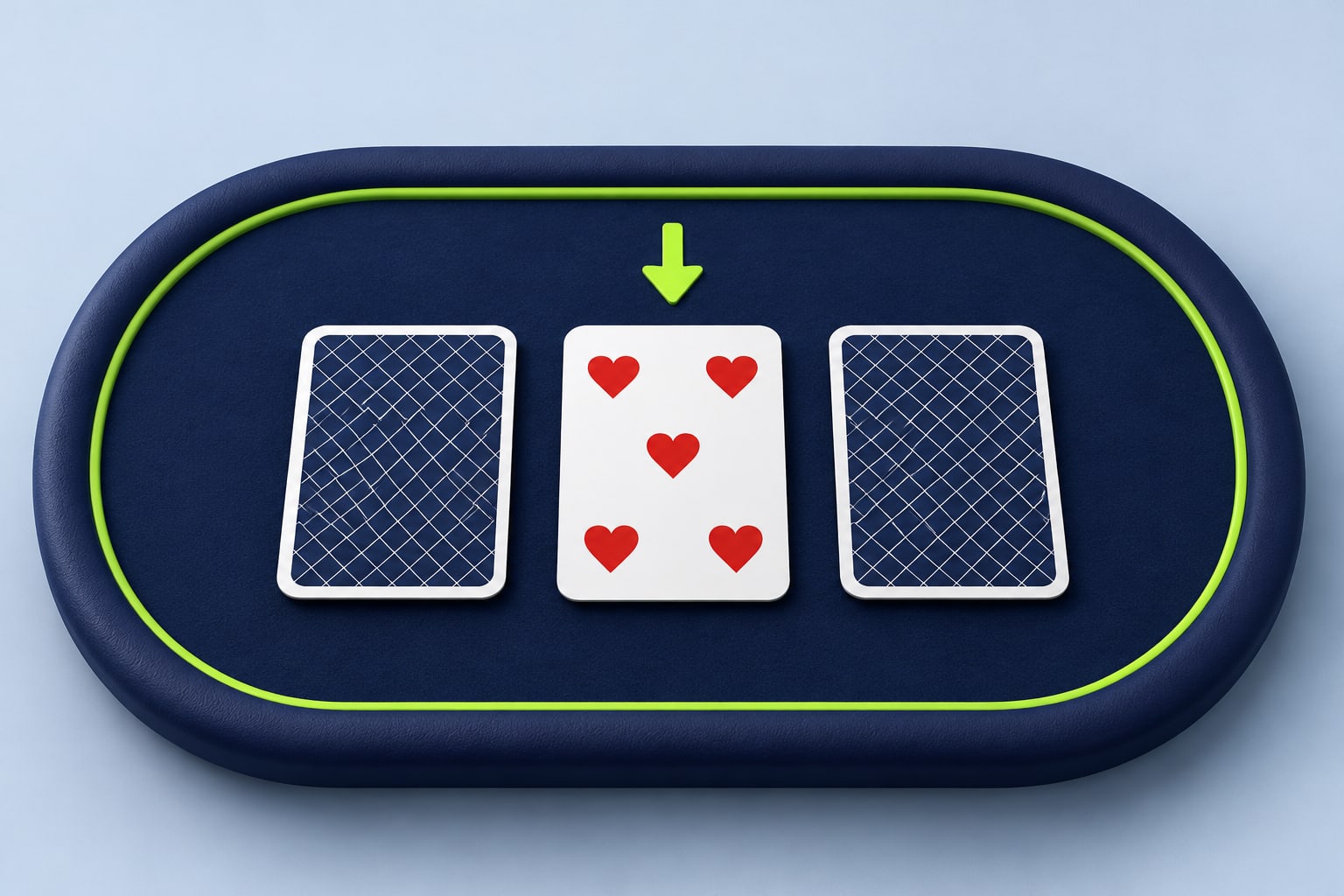
Visual explainer
Third street is the first betting stage
In standard seven-card stud, each player starts with three personal cards.
Cards held
3
Two concealed plus one exposed.
Betting stage
1st
Third street does not mean three betting rounds have occurred.
Standard stud-high bring-in procedures depend on the exposed cards; variants differ. Related: Door Card · Seven Card Stud Poker Game.
Why the first stage is called third street
Seven-card stud begins by giving each player three cards rather than dealing a shared flop. Two cards are concealed and one is visible to the table. This initial stage is called third street because the player has reached three cards. It is still the first betting stage of the hand. Later streets add further cards and betting decisions for players who remain. Confusing the number with a count of betting rounds can make a hand history difficult to follow. When someone says they folded on third street, they normally mean they left at this opening stage, before receiving the fourth card, not after participating in three completed rounds of betting.
The exposed card and the opening action
In ordinary high-hand seven-card stud, the lowest exposed card generally determines who must post the bring-in, subject to the game's detailed rules. The bring-in is a forced opening amount, distinct from the ante contributed before the deal. A player may be able to complete the opening wager to the full permitted amount. Action then proceeds around the table. These procedures differ from the blinds and button structure familiar from hold'em. Do not transfer the same opening-order assumptions between games. Other stud variants, including low-hand forms, can use different bring-in conventions, so identify the exact game before interpreting which player should act first on third street.
An example of visible and private information
Imagine one player has two concealed queens and an exposed seven, while another shows a queen. The first player knows about their own pair and can also see that one additional queen is already elsewhere. Opponents see the seven but do not automatically know about the concealed pair. Third street therefore combines private knowledge with visible information from every seat. The face-up cards can help describe which ranks remain potentially available, but they do not reveal every hidden card or establish the next card to be dealt. A clear hand discussion records both the player's own three cards and the relevant exposed cards, rather than describing only an attractive starting combination.
Understanding the cost of continuing
The ante already committed to the pot does not by itself justify calling every opening wager. Continuing can lead to additional bets on later streets, and fixed-limit structures commonly use larger betting increments in the later stages. A player should therefore understand the table's stake schedule before entering the hand. The bring-in amount and the full small bet are also different values, so a call after a completion may cost more than a call of the original bring-in. Read the current action carefully. The term third street names the stage; it does not tell you how much is outstanding, whether the action has been raised or what future betting will cost.
Distinguishing the deal from later streets
After third-street betting, a remaining player ordinarily receives a fourth exposed card. The rules determining the first action can then depend on the visible hand rather than on the same low-card bring-in procedure. Further cards continue to build each player's individual hand. The usual seventh card is concealed, and the best five-card combination determines the high-hand result at showdown. These later stages explain why an opening pair is only a starting position, not a completed entitlement to the pot. A strong third-street holding can be overtaken, and a drawing hand can fail to improve. Keep the current three-card information separate from cards that might arrive later.
Using third street in analysis
When reviewing a stud hand, specify the variant, stakes, ante, bring-in, visible cards and action before discussing a decision. That context is more useful than saying a player should always call with a particular three-card pattern. A folded exposed card remains information about a card unavailable to be dealt normally from the remaining deck, but remembering it does not eliminate uncertainty. Practice reading example deals without money to become comfortable with the terminology. If the rules or betting amount are unclear at a live table, ask before acting. Third street is the foundation of the hand's information and betting sequence, not a separate side bet or a prediction of the final result.