
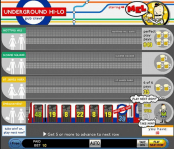
Underground Hi-Lo
High-Low Arcade · IGT2.6
- Max Win
- x252
- Advantage
- 2.41%
Casino games
High-low arcade games ask you to call whether the next card or number will be higher or lower. This page shows the chances behind each call and what a fair payout would be, so you can see the cost in any game.
By Game Type
We have collected more than 161 Arcade Games in our database and subdivided them into different types. Here you may see a full list of High-Low Arcade games. Click Free Play button to start the game demo.
A high-low call is a bet on a known starting value. If the starting card is low, the next card is likely to be higher. If it is high, the next card is likely to be lower. A good game shows the payout for each call, so you can see how the price changes with the odds.
You can test any game with a little arithmetic. Fair odds are one divided by the chance of the call. A call with a 50 percent chance is fair at a total return of 2. If the game pays less, the difference is the house edge.
The table uses a simple model, in which the next card rank is one of 13 equally likely ranks and the ace counts as 1. Real games vary in how they treat aces, decks and ties.
Of the 33 games with a known house edge. Lower is better for you: it is what a game keeps of every bet over time.
The table uses 13 equally likely ranks, with ace low and king as 13. Fair total return is what a winning higher call would return at fair odds, with a tie counted as a loss.
| Starting rank | Chance next is higher | Chance next is lower | Chance of a tie | Fair total return for a higher call |
|---|---|---|---|---|
| 2 | 84.6 percent | 7.7 percent | 7.7 percent | 1.18 |
| 3 | 76.9 percent | 15.4 percent | 7.7 percent | 1.30 |
| 5 | 61.5 percent | 30.8 percent | 7.7 percent | 1.63 |
| 7 | 46.2 percent | 46.2 percent | 7.7 percent | 2.17 |
| 9 | 30.8 percent | 61.5 percent | 7.7 percent | 3.25 |
| 11 (jack) | 15.4 percent | 76.9 percent | 7.7 percent | 6.50 |
| 12 (queen) | 7.7 percent | 84.6 percent | 7.7 percent | 13.00 |
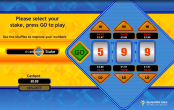
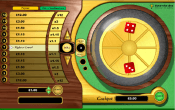
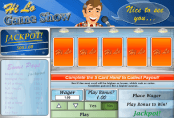 Progressive


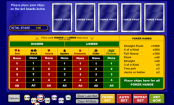


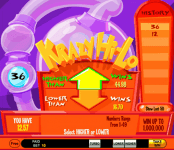
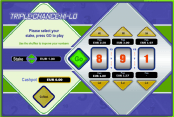

Check how the game treats ties. In this model a tie has a 7.7 percent chance on every call. If a tie loses, that share goes to the game. If it returns your stake, the game is kinder. This rule changes the edge more than most players expect.
Compare the payout shown for each call with the fair return in the table. A call with a 75 percent chance should return about 1.33 in total at fair odds. If the game pays noticeably less, that gap is your cost on every call.
Streaks do not make a game safer. Each extra call carries its own edge, so staking a win again pays that cost again. Taking a win and stopping is the simple way to limit the cost, and cash out options exist for that reason.
Side bets on a suit, a colour or an exact value usually have a bigger edge than the main call. Avoid a long run of calls without a plan. Set a stake limit, a number of rounds and a time limit before you start.
Looking for casinos that offer High-Low Arcade games? Click here for the full list. Use the filters above the list to select the casinos that are right for you.
By Targeted Bonus
Looking for the best bonuses that can be wagered on the High-Low Arcade? The full list is available here. Use the filters above the list to select the bonuses that fit you best.
High-low games ask one question again and again. Will the next card, number or symbol be higher or lower than the current one? You see a starting value, make your call, and the game reveals the next value. A right call pays, a wrong call loses the stake. Many games let you keep going and build a streak.
The next value is chosen by a random number generator. It does not depend on what came before, so a long run of high values does not make a low value more likely.
Payouts depend on the odds of your call. If the current card is a low one, betting higher is likely to win and pays little. If it is a high one, betting higher is unlikely and pays more. Most games show the payout for each choice before you call.
Some games add a tie rule. A tie may lose, push or pay. Others let you bet on a colour, a suit or an exact value as well. In a streak game you can usually cash out after any win, or risk the winnings on the next call for a bigger prize.
The edge is the gap between the real chance of your call and what the game pays. It is usually small on the main calls, and it is higher on side bets and on ties. Because every call is a separate bet, the cost builds up with each step you take.
Streaks do not reduce the edge. Each extra call carries it again. If you want to limit the cost, take a win and stop, rather than doubling up.
The filter bar above the list narrows games by software provider, house edge range, maximum win and release date. Tick free play to show only games with a demo. Show game options opens the features that suit this type, such as the kind of card or symbol used. Press the Free Play button to practise the calls and see how streaks pay.
Each game page shows the house edge, the maximum win, the main parameters, the best casinos and the best value bonuses for that game. If you like fast arcade play, see vintage arcade as well.
Arcade games like this are often excluded from bonus wagering, or they count at a low rate. A game that lets you stake and cash out many times can use up a bonus very fast, so many terms cap the stake. Check the rules before you accept an offer. Current deals are on the bonus list.
Fast rounds make it easy to lose track. Set a budget and a time limit first.
Only by the odds. Betting with the likelier outcome wins more often but pays less.
No. Each draw is independent.
Each step carries the edge again, so a long streak is costly. Cash out if you are happy with the win.
Yes, where a demo is offered. Use the Free Play button.