
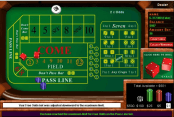
Casino games
Craps games
Craps is a dice game with many possible bets. The pass line bet has a house edge of about 1.41 percent, and the odds bet behind it has none. Most other bets in the middle of the table cost much more.
- 28 games
- 1.31% typical house edge
Craps: Pass or Don’t Pass
Craps is an extremely popular dice game, which you can find in the Table Games Group of our website. It constitutes about half of all games in this subgroup so that it is quite common in different casinos reviewed by our team. You can select from about thirty Craps options online, developed by a wide range of software providers, such as Microgaming, IGT, Playtech and Rival.
Where the odds come from
Craps uses two dice, so the totals are not equally likely. A 7 can be made six ways out of 36, while a 2 or a 12 can be made only one way. Every bet in craps is built on these chances, and the payouts are set against them.
The point numbers are 4, 5, 6, 8, 9 and 10. Once a point is set, the shooter rolls until the point repeats or a 7 appears. A 6 or 8 is more likely to repeat before a 7 than a 4 or 10, which is why their odds payouts are smaller.
Online craps may be RNG or live, and some versions simplify the table to a few clear bets. The rules and chances are the same as at a land table. If you are new, a free demo is a good place to learn the layout.
Craps, step by step
- Choose your betsTotals, single numbers, pairs or combinations
- The dice are rolledTwo or three dice, depending on the game
- The result settles each betTotals and combinations are checked
- Winning bets are paidRare combinations pay most
- The edge depends on the betSimple bets usually have the lowest edge
Craps in our database
Games listed28
Typical house edge1.4%median, so RTP about 98.6%
House edge
Of the 18 games with a known house edge. Lower is better for you: it is what a game keeps of every bet over time.
Providers with most games
- Microgaming 2
- World Match 2
- IGT 2
- Realtime Gaming 1
- Nucleus Gaming 1
- BetSoft 1
Dice totals, chances and payouts
The table shows how often each total comes up and what the odds bet and a place bet pay when it is the point.
| Total | Ways to roll (of 36) | Chance on one roll | Odds bet pays | Place bet pays |
|---|---|---|---|---|
| 2 | 1 | 2.78 percent | Not a point | Not applicable |
| 3 | 2 | 5.56 percent | Not a point | Not applicable |
| 4 | 3 | 8.33 percent | 2 to 1 | 9 to 5 |
| 5 | 4 | 11.11 percent | 3 to 2 | 7 to 5 |
| 6 | 5 | 13.89 percent | 6 to 5 | 7 to 6 |
| 7 | 6 | 16.67 percent | Not a point | Not applicable |
| 8 | 5 | 13.89 percent | 6 to 5 | 7 to 6 |
| 9 | 4 | 11.11 percent | 3 to 2 | 7 to 5 |
| 10 | 3 | 8.33 percent | 2 to 1 | 9 to 5 |
| 11 | 2 | 5.56 percent | Not a point | Not applicable |
| 12 | 1 | 2.78 percent | Not a point | Not applicable |
Search Filters
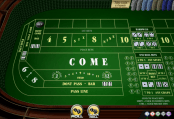
Craps
Craps · Amaya2.7
- Max Win
- x34
- Advantage
- 0.55%
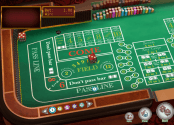
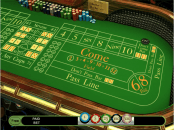
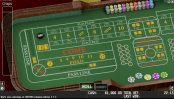
Craps
Craps · World Match2.5
- Max Win
- x30
- Advantage
- -
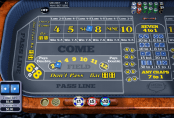
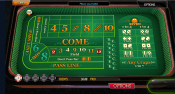
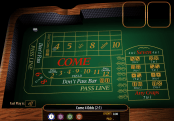
Craps Privee
Craps · World Match2
- Max Win
- x30
- Advantage
- -
Craps
Craps · Blue Gem Gaming1.9
- Max Win
- x34
- Advantage
- 1.40%
Choosing bets and playing craps with care
The odds bet is the only bet in the casino with no house edge, because it pays at the true odds. It can be placed only behind a pass line or don't pass bet once a point is set. Taking odds lowers the average cost of your total stake, so it is worth using if the table limits allow it.
Keep to the line bets, with odds, if you want the lowest cost. Pass and don't pass both cost about 1.4 percent. Place bets on the 6 and 8 are close at about 1.5 percent, but the 5 and 9 cost about 4 percent and the 4 and 10 about 6.7 percent.
Treat the one roll proposition bets as pure entertainment. Any Seven, Any Craps, the horn and the hardways pay big for rare results and cost far more than the line bets. The layout is crowded, so make sure you understand a bet before you place it.
The dice have no memory. A hot or cold streak does not point to the next roll, and betting systems that raise stakes after wins or losses do not change the edge. Decide a stake per roll that suits your budget, and remember that craps can move fast.
There are only slight differences between releases on this page. One of them is the size of payouts, which can vary a little. You can receive from x30 to x34 credits if your bet wins. The RTP is generally high, but it also can range from 98.6% up to 99.73%. Do not hesitate to roll dice in one of the reviewed casinos for free or for real money, and try to win a lot.
Rules and Table Layout
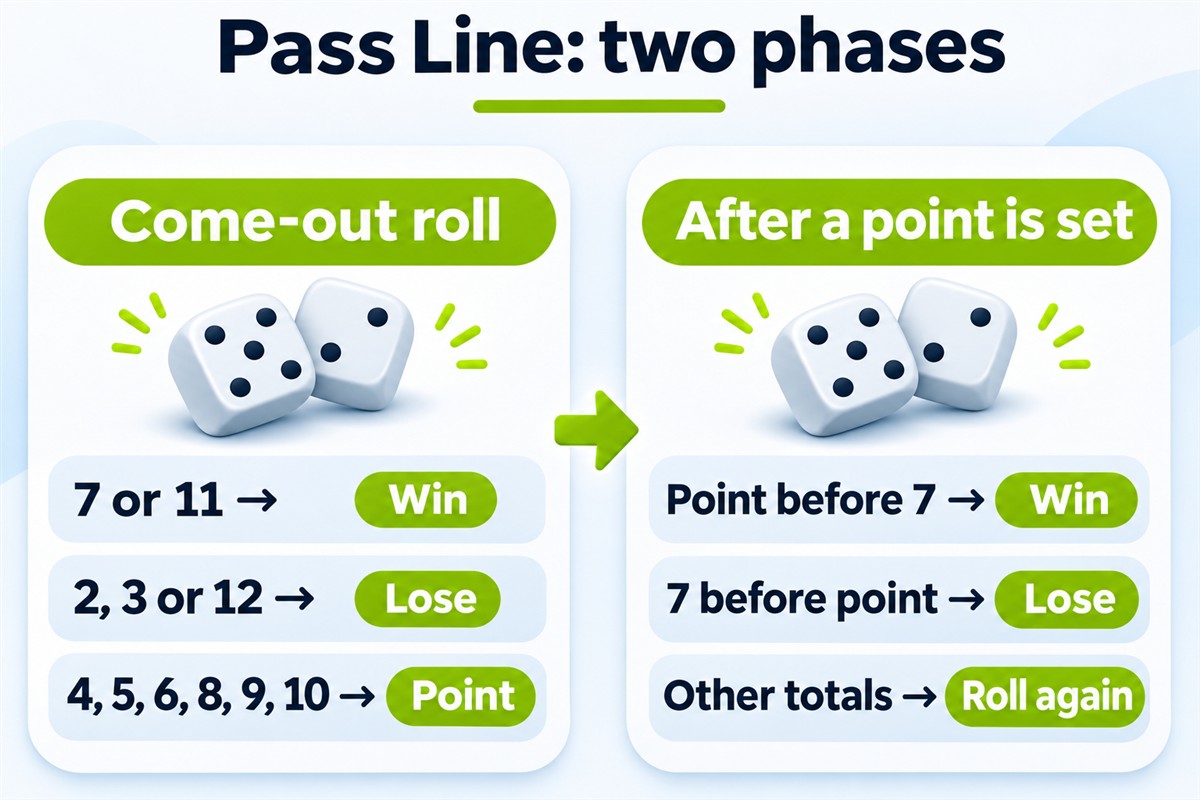
Craps is an ancient gambling game, played with the help of two dice. It consists of two phases: The Come Out phase and Point phase. The Come Out phase is the initial roll of dice, and you need to score the total of 4, 5, 6, 8, 9, 10 to continue playing and establish the Point. If you score 2, 3, 7, 11, 12 the game is over. Once you make the point, the puck with the inscription “On” is put on the field with the point number. Dice will roll until the Point or a 7 appears.
There are main and side bets in a Craps game. Some of them can be placed during the first phase, others during the second phase. If you are in Come Out phase, you can place the following bets:
Pass Line bet (a bet that 7 or 11 will be rolled on the Come Out roll, or that the Point will be made before a 7);
Don’t Pass bet (a bet that 2 or 3 will be rolled on the Come Out roll (12 is a push), or that a 7 will appear before the Point)
If you establish the Point, you will move to the Point phase, and you will be able to place:
Come (same as Pass Line bet);
Do not come (same as Don’t Pass bet).
Odds bets
There are also some side bets, available during two phases:
Field bet (you win if 2, 3, 4, 9, 10, 11, 12 is rolled);
Place to win (you win if a placed number appears before 7);
Place to lose (you win if a placed number does not appear before 7);
Hardways bet (you win if 4, 6, 8, 10 as a pair appears on the next roll);
Any Seven;
Any Craps;
Bet on certain types of Craps.
Strategy to Win
Craps is exciting and beneficial dice game to play if you know some playing strategies. We analyzed a lot of them and came up with the following playing tips:
Stick to Pass/ Don’t Pass, Come/Don’t Come bets, as they have the lowest house advantage;
If you cannot resist the temptation to place side bets, we recommend you try placing 6 or 8, as Field bets have a higher house advantage;
Decide the size of your bet in advance and keep it, as raising or lowering it after a win or a loss does not change the house advantage;
Do not bet on Hardways or Craps bet, as their odds are high, but the house advantage is also extremely high.
Our Summary
Craps is enjoyable table game with high RTP and frequent wins. It is also extremely popular among players due to the variety of bets and high odds for some of them, although the betting system can be confusing at the beginning. Being a game of chance, Craps gives an opportunity to try one’s luck and intuition, which make it even more exciting to play. If you like this type of gaming content, you can also find Sic Bo and Casino Dice interesting.
How a round of craps works
Craps is played with two dice. A round starts with the come-out roll. If you bet on the Pass Line, a 7 or 11 wins at once and a 2, 3 or 12 loses. Any other total (4, 5, 6, 8, 9 or 10) becomes the point. The dice are then rolled until either the point repeats, which wins the Pass Line, or a 7 appears, which loses it. Don't Pass is the opposite bet. It loses on 7 or 11 at the come-out, wins on 2 or 3, and pushes on 12 in most games. After a point is set, it wins if a 7 comes before the point.
Bets and house edge
- Pass Line and Come: about 1.4% edge.
- Don't Pass and Don't Come: about 1.4% edge.
- Odds: no house edge. This bet is added behind a Pass or Come bet once a point is set, and it pays true odds.
- Place 6 or 8: about 1.5%. Place 5 or 9 is about 4%, and Place 4 or 10 about 6.7%.
- Field: roughly 2.8% to 5.6%, depending on how the 2 and 12 pay.
- Hardways: about 9% to 11%.
- Any Seven, Any Craps and the other one-roll proposition bets: the highest edges on the table, from about 11% to over 16%.
The numbers show a simple plan. Make the line bet, add the odds bet and leave most of the middle of the table alone. The odds bet is the only bet in the casino that carries no edge, so it lowers the average edge on the line bet.
Strategy pointers
Don't Pass has a slightly lower edge than Pass, but betting against the shooter does not make you win more often. Dice have no memory, so streaks do not predict the next roll. Betting systems that raise bets after wins or losses do not change the edge. Choose a bet size you can keep, and learn one or two bets well before adding others. The table layout looks busy, but the demo shows each bet as you place it.
Using the list
Use the filter bar above the list to narrow the games by software provider, house edge range, max win, release date, free play and live dealer. "Show game options" opens the choices belonging to the games, for example the odds multiple allowed. Press Free Play to learn the layout before betting. Each game page shows the house edge, max win, parameters, best casinos and best value bonuses for that game. If you like dice games with simpler bets, see Sic Bo.
Playing with a bonus
Craps often counts for little towards wagering, because low-edge bets can be used on both sides. It may be excluded. Read the terms first, and use the bonus list to compare offers. Decide on a limit before you roll.
Frequently asked questions
What is the best bet in craps?
Pass or Don't Pass with the odds bet behind it.
Is the odds bet always available?
Not in every game. Check the rules for the odds limit.
Why avoid proposition bets?
They pay well but lose more often, and carry the highest edge on the table.
Can I practise first?
Yes. The Free Play button opens a demo of most games.
Frequently Asked Questions
What is the best bet in craps?
The pass line with the odds bet. The line bet costs about 1.41 percent, and the odds bet has no edge.
Why is a 7 the most common total?
Six of the 36 dice combinations make a 7. That is more than for any other total.
What is a point?
If the come out roll is 4, 5, 6, 8, 9 or 10, that number becomes the point. The shooter then rolls until the point repeats or a 7 appears.
Is don't pass a better bet than pass?
It costs slightly less, about 1.36 percent against 1.41 percent. You win a little less often, since you bet against the shooter.
Can I beat craps with a system?
No. Each roll is independent and the house edge on each bet stays the same, whatever system you use.