Pocket cards are a player’s private cards, usually dealt face down; in Texas hold’em they are the two hole cards that can be combined with the shared board.
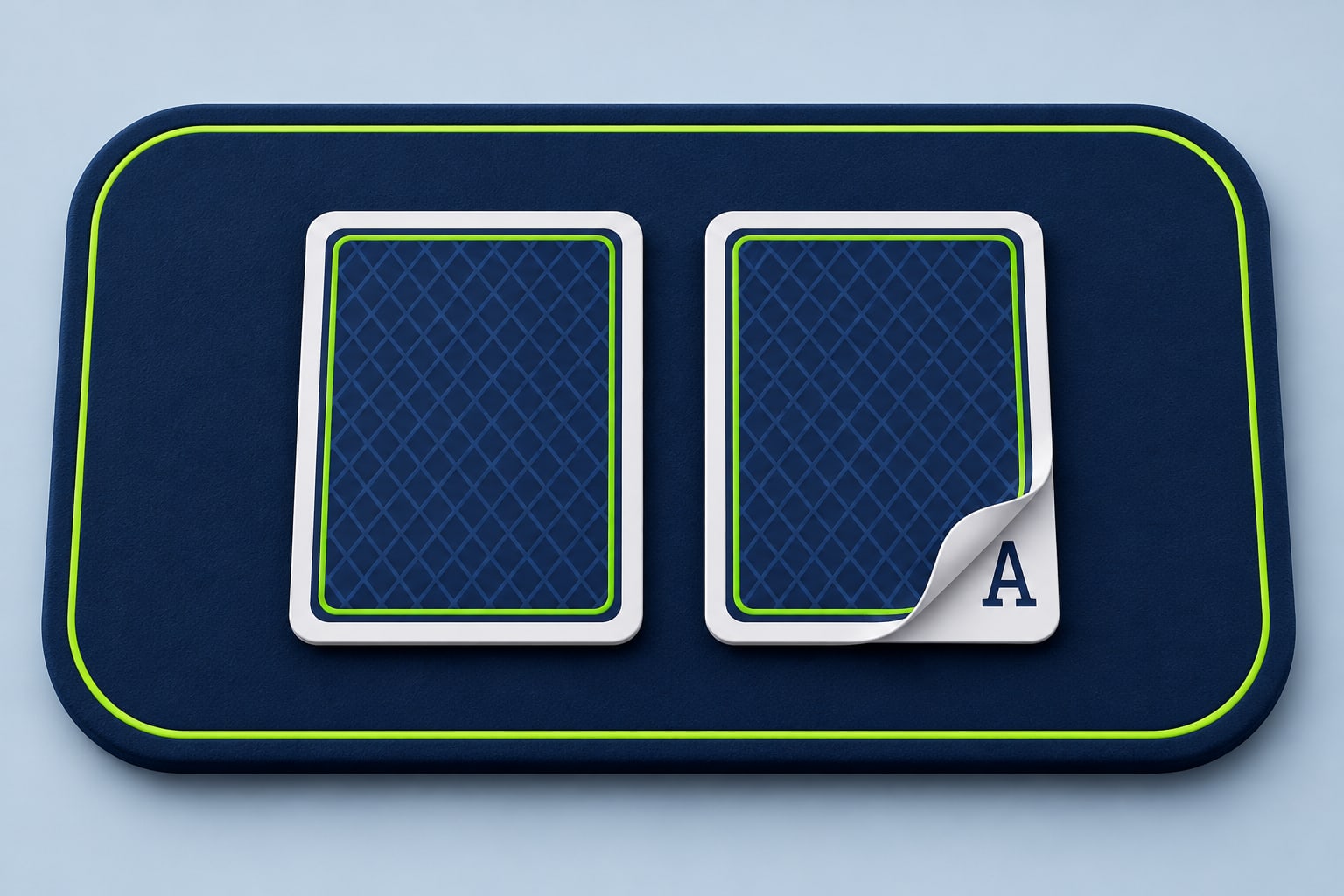
Private cards rather than shared cards
Pocket cards belong to one player's private holding, unlike community cards placed in the middle for all remaining players to use. In Texas hold'em, each player receives two pocket cards at the start of the hand. Hole cards is another common expression for them. The word pocket does not mean that cards should be physically put into clothing or removed from the playing surface. At a live table they should be handled according to the room's procedures and kept protected. In an online game, the interface displays your private cards to you while ordinarily keeping opponents' holdings concealed until a later authorised reveal.
How hold’em uses the two cards
Standard hold'em gives each player two private cards and eventually five community cards. The final hand is the best five-card combination available from those seven, using both pocket cards, one or neither. A player can therefore play the board when the shared five cards already provide their best hand. Pocket aces are powerful starting cards, but their eventual value depends on the board and opposing holdings. Do not treat the private pair as a separate prize that automatically beats a stronger five-card combination. The rules compare completed poker hands, not the attractiveness of the initial two-card deal or the nickname attached to it.
Other variants use different requirements
Private cards appear in several poker variants, but the number dealt and the rules for using them differ. In standard four-card Omaha, for example, players receive four private cards and must use exactly two with exactly three community cards. That differs from hold'em's flexible combination rule. Stud combines concealed and exposed personal cards rather than the same shared-board structure. Before applying an explanation of pocket cards, identify the actual game. A correct decision in one variant can rest on a hand that is not even legally constructible in another. The name private or pocket describes visibility and ownership, not a universal rule for building the final hand.
Pocket pairs and unpaired holdings
Two private cards of the same rank form a pocket pair in hold'em. Two different ranks form an unpaired starting hand, which may be suited or offsuit. Suited means both cards share a suit; it does not mean they already make a flush. Likewise, connected ranks may offer straight possibilities without constituting a completed straight. These labels describe features of the starting holding and potential ways it could develop. The value of those possibilities depends on position, opponents, stack sizes and the price of entering or continuing in the hand. A neat-looking starting combination is not a guarantee of improvement or a reason to ignore the betting context.
Protecting and revealing the cards
At a live table, keep private cards secure and visible to the dealer as the rules require, while avoiding exposing their faces to other players. Follow the room's instructions on showing cards, folding and showdown order. Revealing cards early can affect the action or trigger a ruling, so do not assume that a casual display has no consequence. In online play, use the site's own show or muck controls where offered and understand what the selected action reveals. The practical goal is to preserve the information boundaries and proper handling of the hand, not to obtain or exploit private information belonging to someone else.
Using the information without overconfidence
Your pocket cards are only part of the evidence available during a hand. The board, position, previous actions and wager sizes help frame what opponents might hold, but usually do not reveal their exact cards. Review decisions using what was known at the time rather than importing a later showdown into an earlier choice. A strong starting pair can lose after sound play, and a weak holding can occasionally win without validating every decision made with it. Keep real-money stakes within a fixed budget and avoid treating a rare premium pair as permission to risk money reserved for other purposes. Private cards create possibilities; they do not remove uncertainty.