The flop is the first three community cards revealed together in games such as Texas Hold’em and Omaha. It is also the name of the betting stage that follows those cards; the turn and river come later.
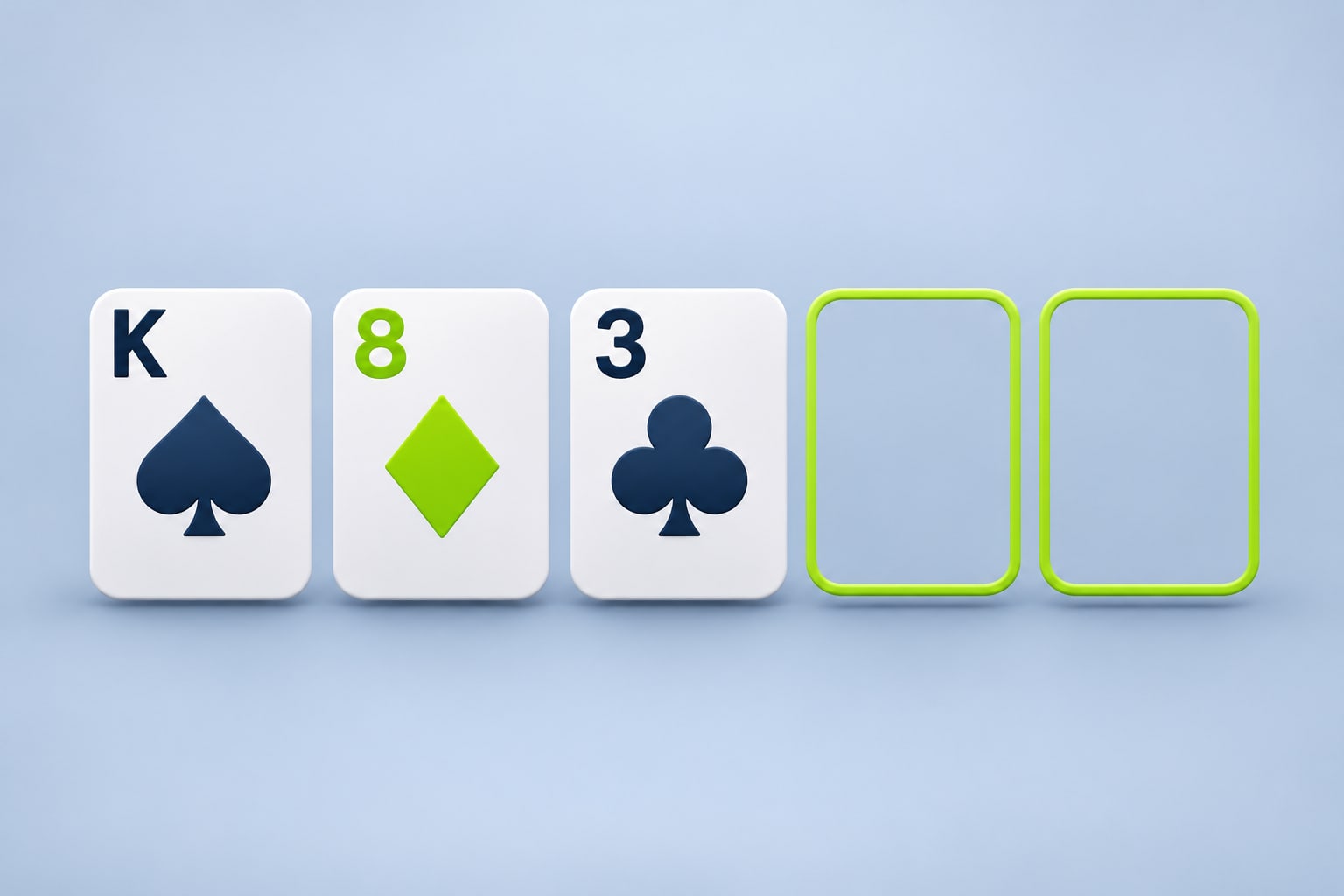
Hold’em card example
Read the flop with your private cards
The flop supplies three shared cards, not three new private cards.
Your hole cards
The flop
You currently have a pair of kings. The 9, 8 and 3 are the other cards in this five-card combination.
The turn and river can change the best hand. A pair at this stage does not establish what an opponent holds or who will win. Explore: Texas Holdem · Turn · River.
The first three shared cards
The flop is the first group of three community cards revealed together in games such as Texas Hold'em and Omaha. These cards are placed face up and can be used by the eligible players according to the game's hand-construction rules. The word also describes the stage of play and its associated betting round. It does not mean the first three private cards dealt to one person, and it is not the complete five-card board. The fourth community card is the turn and the fifth is the river. Keeping those stages separate makes hand histories, strategy explanations and live commentary much easier to follow.
Private cards interact with the shared board
In Hold'em, each player begins with two private cards, while the flop supplies three shared cards. A player holding a king and a nine on a king-eight-three flop has a pair of kings at that stage. Another player may connect with the same board differently, so the flop must be assessed against possible opposing hands as well as one's own. The final hand is normally the best valid five-card combination after all relevant cards are available. A good-looking flop does not guarantee a winning showdown. Later community cards and further betting can change both the strongest possible hand and the cost of continuing.
Omaha uses the same flop but different construction rules
The three-card flop is also used in ordinary Omaha, but a final Omaha hand must contain exactly two private cards and exactly three community cards. That requirement prevents a player from simply using any five convenient cards from the combined collection. For example, holding only one card of a suit does not by itself permit a flush when four cards of that suit appear on the board, because two private cards must be used. The shared word flop does not erase this difference. Always identify the poker variant before evaluating what a player has made or which future cards could improve the hand.
Board texture describes visible possibilities
Players often describe a flop as paired, suited, connected, dry or draw-heavy. These terms summarise features of the visible cards rather than establish a fixed result. A paired flop contains two cards of the same rank; a connected flop has ranks close enough to support straight possibilities. Three cards of one suit create different flush possibilities from three different suits. Such observations can help organise thinking, but they do not reveal an opponent's private cards. Avoid treating a descriptive label as an automatic instruction to bet or fold. The actual ranks, suits, betting action and valid hand rules still need to be considered together.
The flop is not a completed promise
A player can make a strong hand on the flop and still be overtaken, or hold an incomplete draw that never improves. Suppose a player has four cards toward a flush when private cards and flop are considered together. That is a draw, not yet a five-card flush. The number of suitable cards remaining and the number of future cards matter when calculating its chance, and some apparent improvements may also strengthen an opponent. A flop result should therefore be described precisely: made pair, two pair, draw or another valid category. Calling every promising start a winning hand obscures the uncertainty that remains.
Casino variants can use the flop for a different decision
House-banked games such as Casino Hold'em also use a three-card flop, but their betting structure differs from player-versus-player poker. A product may ask for a fixed fold-or-call decision after the flop rather than allow open-ended betting against other players. Optional side bets can also evaluate a specified combination involving those first community cards. Read the exact game rules before transferring a poker-room strategy or expectation to a casino table. Flop identifies a familiar set of shared cards, while the named game determines what decisions follow, which wagers remain at risk and how the eventual hand is paid.