A don’t-pass bet is a craps wager that wins on a come-out two or three, loses on seven or eleven, and then backs seven before an established point. Twelve commonly pushes.
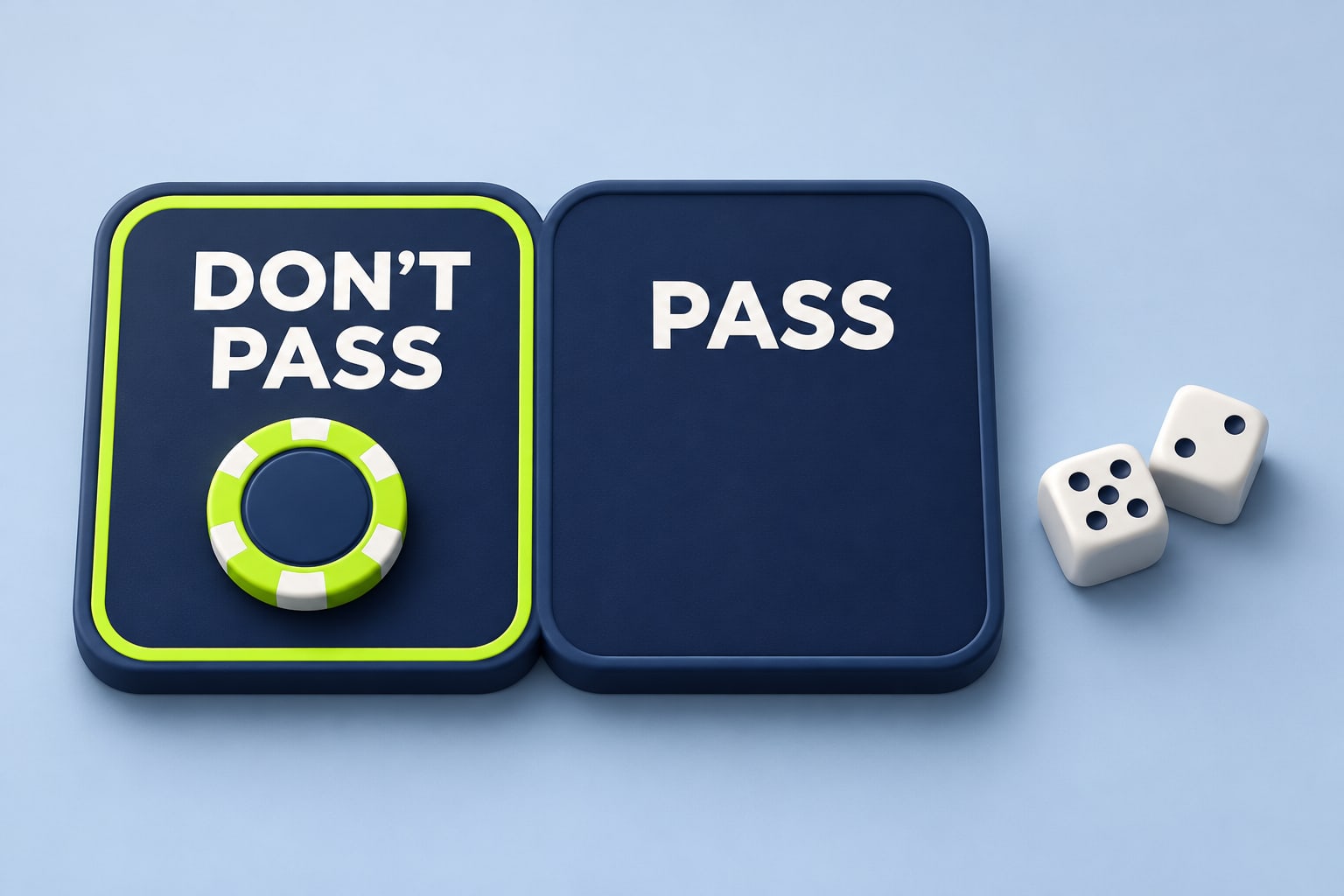
Visual explainer
A seven changes meaning after the come-out
Standard don’t-pass illustration using a bar-12 layout. Some tables bar 2 instead.
2 or 3: win. 7 or 11: lose. 12: push. 4, 5, 6, 8, 9 or 10: establish a point.
Seven before eight wins. Eight before seven loses. Other totals leave this bet unresolved.
Example: 8 → 5 → 10 → 7. The first roll sets the point; the final seven wins the established don’t-pass bet.
Read the layout’s barred total. Related: Pass Line Bet · Disk or Puck.
The opposite side of the point contest
A don’t-pass bet is placed on the don’t-pass line before the come-out roll in craps. It is often described as betting against the shooter, but more precisely it backs the outcome opposite to making the point once a point exists. The casino still accepts and settles the wager. The label wrong-way betting is table slang, not a judgment about the player. A don’t-pass bettor is not cheating or interfering with the dice. The wager has its own published rules, and those rules differ from simply reversing every pass-line result because one come-out total is normally barred.
The come-out stage
Under the common bar-twelve version, a come-out two or three wins the don’t-pass bet, while seven or eleven loses it. Twelve is a push: the stake is returned or remains available according to the table procedure, without profit or loss on that decision. Four, five, six, eight, nine or ten establishes the point. Some layouts bar two instead of twelve, so read the marking rather than assuming the same convention everywhere. This initial stage is essential. A seven can lose a new don’t-pass bet before a point exists even though seven is the desired result later in the cycle.
After a point is established
Suppose the come-out roll is eight. The don’t-pass wager now wins if seven appears before another eight, and loses if eight appears first. Other totals do not settle that point contest. A sequence of five, ten and three leaves it unresolved; a subsequent seven wins the established bet. If eight appears instead, the stake loses. This is different from a one-roll wager on seven, which would need seven on the very next throw. The established don’t-pass bet can survive many intermediate rolls. Track the point marker and the exact wager rather than treating every roll as a new come-out decision. A dealer can clarify the active point before you interpret the result.
Payout and a worked example
The ordinary don’t-pass base wager pays even money when it wins. A successful ten-unit base bet earns ten units of profit and returns the ten-unit stake, for a total of 20 units coming back. A push returns only the stake. Those amounts should not be confused with any separate odds wager behind the line. If the point is four and the player has only the ten-unit base wager, a seven before four still produces ten units of profit on that base bet. The fact that seven is more likely than four after the point does not change the base payout.
Laying odds is a separate wager
A table may allow an additional odds bet behind an established don’t-pass wager. This is commonly called laying odds because more is risked than can be won. The amount and payout depend on the point and the table’s permitted limits. Keep the base stake and odds stake separate in any calculation. The additional bet does not erase the initial come-out risk or make the overall session risk-free. Nor is it identical to an independent lay bet that may involve a commission. Similar language can hide different wager rules, so identify the exact betting position before comparing costs or expected returns.
Understanding the advantage and the etiquette
The barred come-out result is part of what preserves the casino’s advantage on the base wager. A favourable point contest after the come-out does not mean the original bet had no house edge. Players should evaluate the complete wager from placement through settlement. At a shared table, don’t-pass betting is a normal option; there is no need to personalise the outcome or celebrate someone else’s loss. Focus on the rules, the accepted stake and an affordable spending limit. The term explains which side of the point contest is backed, not a method for predicting the dice or guaranteeing that a losing session will recover.