Laying the odds in craps is an additional true-odds wager behind an established don’t-pass or don’t-come bet. It backs seven to appear before that wager’s point and risks more than the profit it can win.
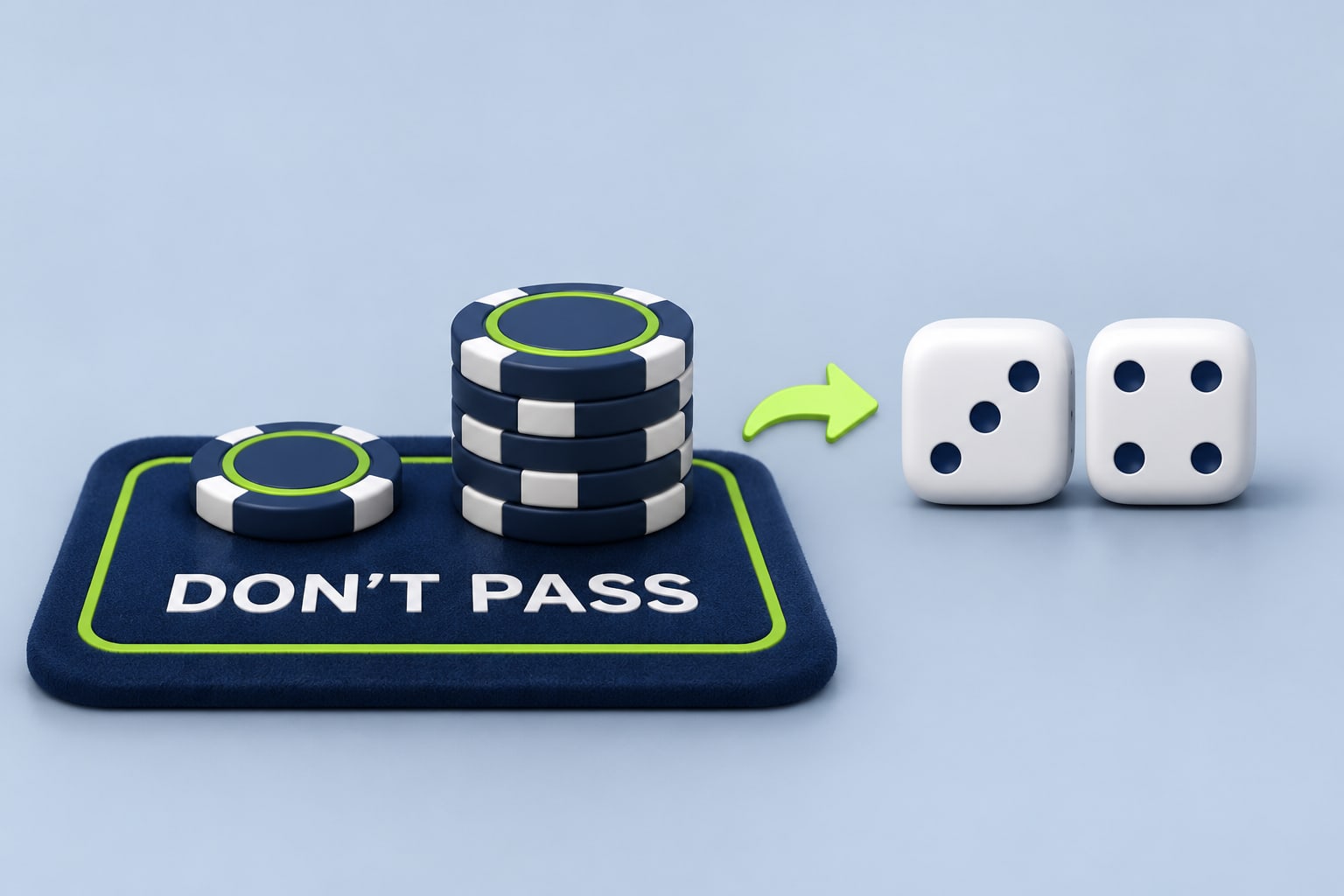
Visual explainer
Laying odds: risk more to win less
Standard odds behind an established don’t-pass or don’t-come bet. Here, 7 must appear before that bet’s point.
Against 4 or 10
Risk $20 to win $10
Profit ratio 1:2. Winning return including stake: $30.
Against 5 or 9
Risk $15 to win $10
Profit ratio 2:3. Winning return including stake: $25.
Against 6 or 8
Risk $12 to win $10
Profit ratio 5:6. Winning return including stake: $22.
If that point appears first while the odds are working, the entire odds stake loses. The lower profit reflects 7 being more likely than each individual point.
These are odds attached to a qualifying base wager, not a standalone lay bet with commission. Related: Taking the Odds · True Odds.
The additional wager follows an established point
The original don't-pass wager first goes through its come-out rules. Once a point exists, the player may be allowed to add an odds wager backing seven before that point. A don't-come wager can similarly establish its own number and support laying odds under the table rules. The additional wager is distinct from the base stake, even though both then depend on the same contest between seven and the relevant number. Laying odds is therefore not a separate prediction that seven must occur on the very next throw. Other totals can leave the wager unresolved while the dice continue to be rolled.
Why the profit is smaller than the stake
Seven has more combinations on two fair six-sided dice than any single point number. Consequently, an odds wager backing seven must risk more than it stands to win if it pays at mathematically fair odds. Against four or ten, the profit rate is one to two; against five or nine it is two to three; against six or eight it is five to six. The original odds stake is returned as well when the wager wins. These ratios describe the profit on the additional odds component, not the separate even-money payment on a winning don't-pass or don't-come base wager.
A complete settlement example
Suppose a ten-dollar don't-pass wager has established four as the point, and the player lays twenty dollars in odds. If seven appears before four, the base wager earns ten dollars profit and the odds wager earns another ten dollars. The thirty dollars staked is also returned, making fifty dollars received and twenty dollars net profit. If four appears first, both stakes lose, for a thirty-dollar loss. This example assumes ordinary rules and no separate charges. It shows why quoting the ten-dollar odds profit without mentioning the twenty-dollar odds stake can conceal how much additional money was exposed to the losing outcome.
Fair odds do not make the combined play risk-free
The additional odds component has zero house edge when it pays the exact true odds without a fee. That statement describes its expected value; it does not mean the stake cannot be lost. The underlying base wager still has its own house advantage. Adding odds can reduce the house-edge percentage measured against the combined amount wagered, while increasing the dollars exposed in a particular decision. A smaller percentage and a larger potential loss can therefore occur together. Read both measures rather than assuming the lowest percentage automatically matches a person's spending limit or tolerance for fluctuations during a session.
Laying odds is different from a lay bet
A standalone lay bet also backs seven against a selected number, but it normally uses a commission structure and does not require the same established base wager. Laying odds behind don't pass or don't come is a separate category. Confusing the two can lead to an incorrect fee or expected-value calculation. A table's odds limit is another distinct rule: it controls how large the additional wager may be relative to the base bet, sometimes expressed through the amount that can be won. Ask how the advertised multiple applies to the intended point and stake instead of assuming every table uses the same convention.
Check the specific wager before the next roll
At a busy table, several players can have different don't-come numbers alongside the shooter's main point. The odds wager must be associated with the correct base bet and number. Confirm the amount, location and working status with the dealer before the dice are thrown if anything is unclear. An online layout should show the same relationship through its wager details or history. Nothing about laying odds makes a seven overdue after a long run without one. Use the terminology to understand settlement and exposure, and keep the total amount at risk within the limit chosen independently of recent wins or losses.
Related glossary terms
Sources and further reading
- See also:
- Taking the Odds