The don’t-pass line is a craps wager that usually wins on 2 or 3 and loses on 7 or 11 during the come-out roll, with 12 pushing. After a point is set, it wins if 7 appears before that point.
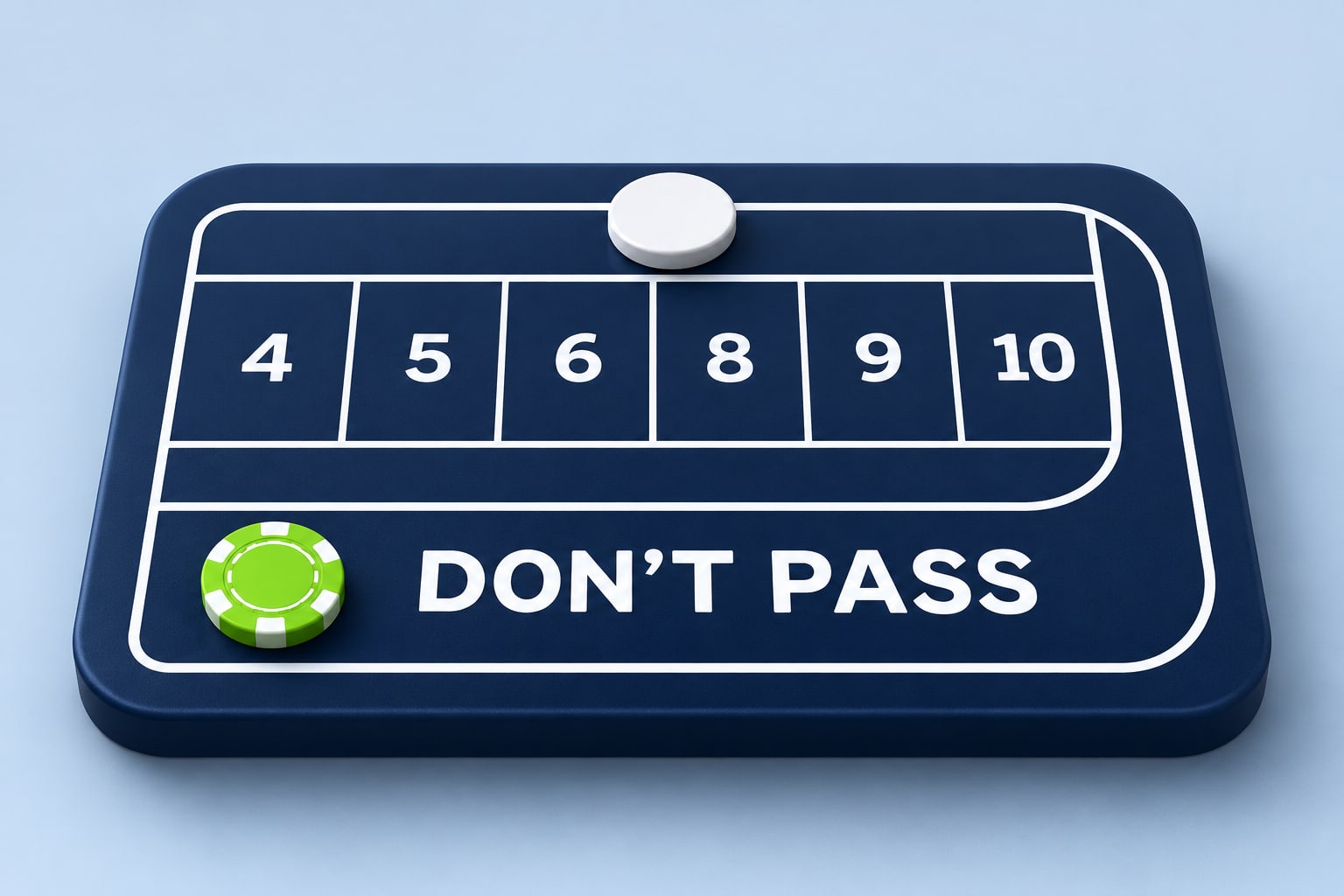
The opposite direction to the pass line
The don't-pass line is a craps wager generally backing the opposite side of the pass-line outcome, with an important come-out exception. It is placed before the come-out roll for the wager. Under the common bar-twelve rules, two or three wins, seven or eleven loses, and twelve is a push. A roll of four, five, six, eight, nine or ten establishes that number as the point. The wager then enters a different phase. Read the table's printed bar rule because some versions bar two instead of twelve. The familiar name is not enough to establish every settlement detail.
Once a point is established
After the point is set, the don't-pass wager wins if seven appears before the point repeats. It loses if the point arrives first. Other totals leave the wager unresolved while it remains active. For example, with a point of five, a subsequent nine does not settle the bet; a seven wins it and a five loses it. This is why the bet cannot be described simply as betting on seven on the next roll. During the come-out phase, seven is actually a losing result for don't pass. The phase of the wager is central to understanding the same dice total's different consequences.
Why a barred number is necessary to the comparison
The standard pass line wins on seven or eleven and loses on two, three or twelve during its come-out roll. Don't pass does not reverse every one of those outcomes exactly, because its barred number pushes instead of winning. That exception supplies the house's mathematical advantage under the conventional schedule. A push ordinarily returns or leaves the stake without profit or loss for that completed attempt, according to table procedure. It is not a winning even-money payout. When comparing published house-edge figures, check how pushes and resolved decisions are counted so that two percentages are being measured on the same basis.
Laying odds behind the wager
Once a point exists, a player may be allowed to lay odds behind the don't-pass wager. This is an additional stake backing seven before the point, paid at the true reverse ratios under standard rules. More is risked than can be won because seven has more combinations than any individual point number. For example, laying odds against four conventionally risks two units to earn one. The added odds component is different from a standalone lay bet that may charge commission. Check maximum odds, permitted increments and placement instructions. A fair odds payout does not make the extra money risk-free or remove the original flat wager's expected cost.
Reading the layout without social pressure
Don't-pass players are sometimes described informally as betting against the shooter. That phrase describes the wager's direction and should not be treated as a personal contest with the person rolling. Several players can have different interests in the same result, and each should understand their own wagers. Place chips only in the correct area and clarify any requested odds with the dealer before the roll. If the table's working or removal rules are unclear, ask while betting is open. Do not move chips during a live roll or assume that procedures for a pass-line contract bet apply identically to every don't-side wager.
Keep the two phases separate
The most useful way to read don't pass is as a come-out rule followed, when necessary, by a point-versus-seven rule. Record which phase is active before interpreting a result. A seven can be bad for the wager at the beginning and good for it after the point, which explains much beginner confusion. The bet can still lose several times in succession despite its relatively modest conventional house edge. Avoid increasing stakes because a sequence seems due to reverse. Use the exact rules and a predetermined spending limit; the opposite side of a popular bet is still gambling with uncertain short-term results.