The come-out roll is a craps roll made when the shooter has no established point. In standard craps it can settle pass-line bets immediately or establish a point for subsequent rolls.
Craps · standard Pass Line
The come-out roll has three routes
This diagram concerns a Pass Line wager before a table point exists.
Roll 7 or 11
Win
The Pass Line bet wins at even money. This decision is complete.
Roll 2, 3 or 12
Lose
The Pass Line bet loses. These totals do not establish a point.
Roll 4, 5, 6, 8, 9 or 10
Point set
The decision continues: repeat that number before 7 to win.
A come-out roll can occur several times during one shooter’s turn. Other bets have different settlement rules. Explore: Point · Pass Line Bet.
The roll made before a point exists
The come-out roll is a roll in craps made when the shooter does not currently have an established point. It begins a new pass-line decision. It can be the shooter's first roll, but it is not restricted to the beginning of that person's entire turn with the dice. A shooter who makes a point returns to a new come-out stage and can continue rolling. This distinction matters when following a table history: a long turn can contain several come-out rolls and several different points. Identify the current stage before interpreting a total such as seven or eleven.
Standard pass-line results on the come-out
For the standard pass-line wager, seven or eleven wins on the come-out roll, while two, three or twelve loses. Four, five, six, eight, nine or ten establishes that number as the point. Once a point exists, the pass-line decision continues until that point repeats or seven appears. Those later rules differ from the come-out rules. A seven on the come-out is therefore not the same event as seven-out after a point has been established. Other wagers can have their own settlement conditions, so do not assume that every chip on the table wins or loses with the pass line.
Follow a sequence from one stage to the next
Imagine the shooter rolls eleven on a come-out. A standard pass-line bet wins, and the next roll is still a come-out because no point was established. Suppose the next result is eight. Eight becomes the point. A later three does not settle that pass-line decision, while a later eight before seven wins it and returns the game to another come-out. This example shows why the stage must be tracked as well as the sequence of totals. Counting rolls alone does not identify the current rule. The same shooter can pass through several stages without changing the person holding the dice.
The puck communicates the shooter point
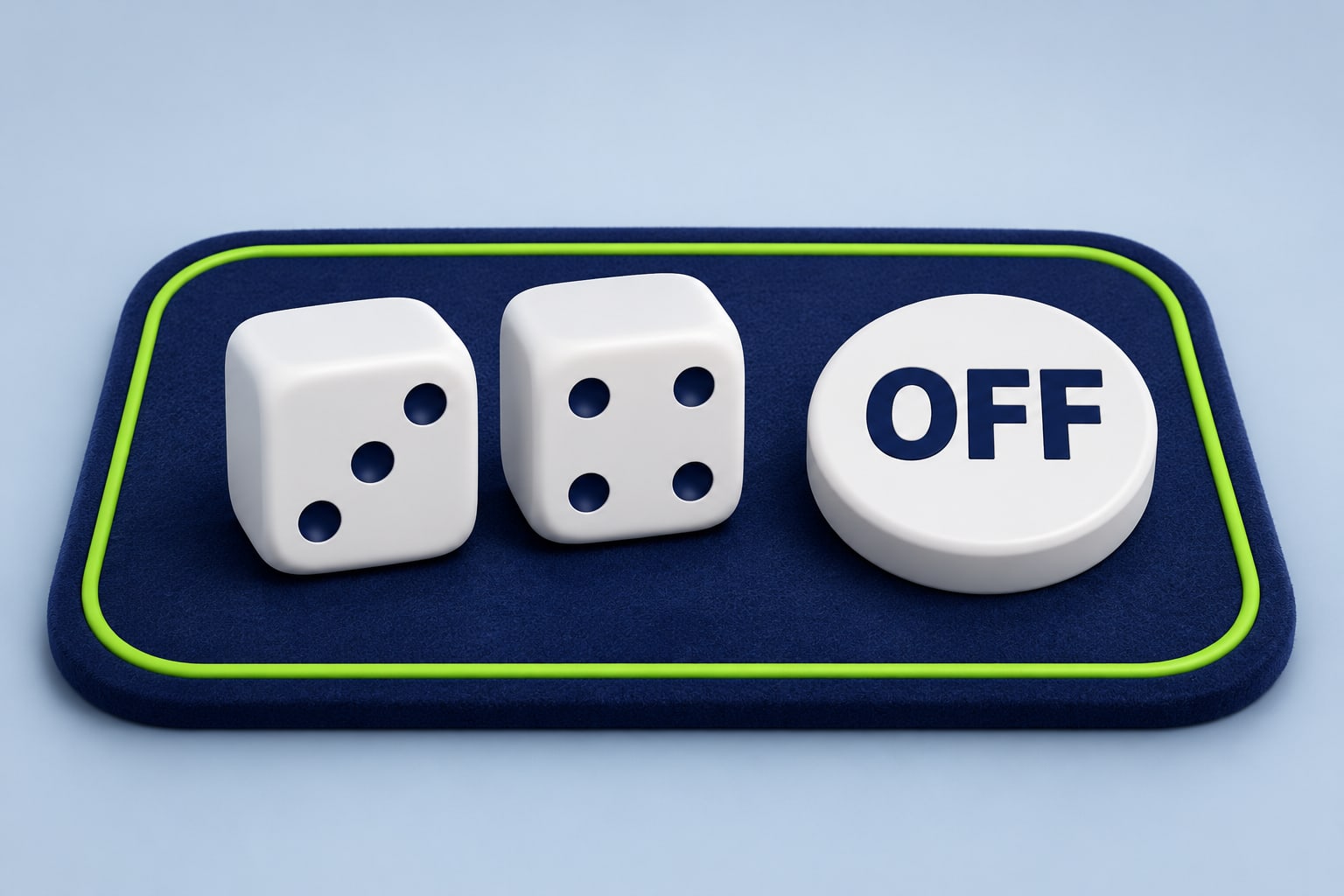
A standard craps table uses a puck or marker to show whether the shooter point is off or on. During the come-out stage it is commonly displayed with Off visible. After a point is established, the marker is placed at that number with On showing. This provides a useful visual reference, but it does not explain every separate wager's working status or any individual come-bet point. If the table is unfamiliar, ask the dealer what the marker means before placing a bet. In an electronic game, the interface may communicate the same information through text or a highlighted number instead of a physical puck.
Existing wagers may have separate working rules
Some bets can remain on the layout across a change of stage, and the rules can specify whether they are working on the come-out. For example, odds associated with an earlier come bet can have a working status distinct from the new pass-line wager. The exact default and any permitted player instruction should be checked at the table. Do not assume that Off on the shooter-point puck means that all money on the layout is protected from loss. List each active wager and its rule. This is particularly important when several points and additional bets are being tracked at once.
A new stage does not reset the probabilities
The come-out label changes how particular wagers are settled; it does not make fair dice favour a particular total because a previous point was won or lost. A new pass-line decision also does not erase the player's earlier spending. Keep the session budget separate from the table's sequence of rounds. Crapless craps and other variants can use different come-out and point rules, so verify the named game before applying the standard description. The term is a timing marker within craps. Understanding that timing prevents settlement errors, but it is not a method for forecasting the next roll or recovering losses.