A Don’t Come bet in craps starts after the table’s come-out roll. On its first roll it normally wins on 2 or 3, loses on 7 or 11, and pushes on 12; after establishing a number, it wins if 7 appears before that number.
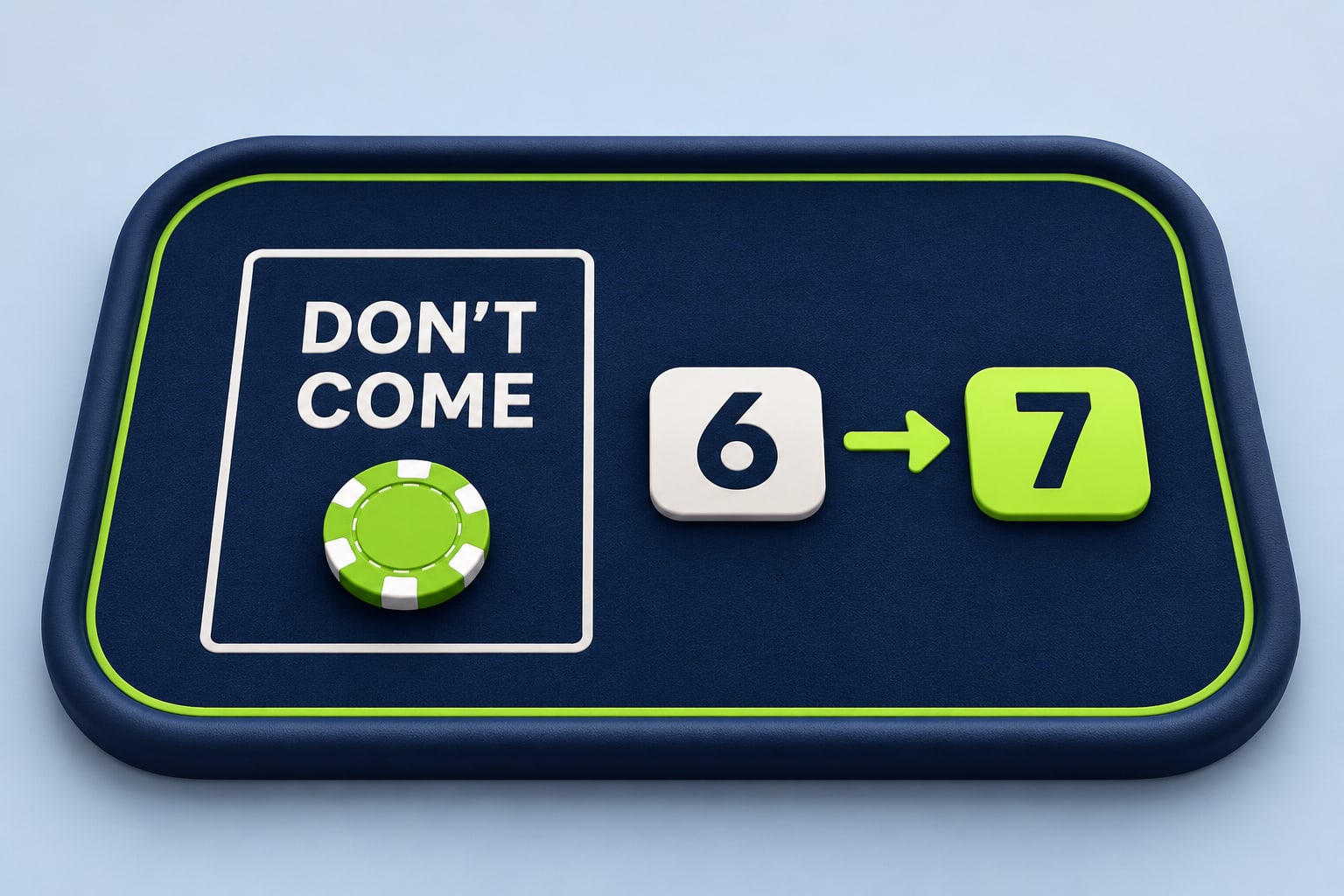
Craps · bar-twelve example
Don’t Come: identify the stage first
A newly placed Don’t Come bet and an established one can react differently to the same roll.
First roll
2 or 3 wins
7 or 11 loses; 12 pushes under the common bar-twelve rule.
First roll is 5
Move to 5
The bet now has its own number. Unrelated totals do not resolve it.
After moving to 5
7 before 5 wins
A 5 before 7 loses. A 7 is no longer the first-roll losing outcome.
Some tables bar 2 instead of 12. Confirm the actual rules and distinguish this wager from the table’s Pass Line point. Explore: Come · Come Out Roll.
A wager with its own starting roll
The Don't Come bet is a craps wager made while the table already has an established Pass Line point. It works much like a Don't Pass bet, but its starting roll occurs later in the shooter's hand. The next roll after placement is the Don't Come bet's own initial decision point. This timing matters because the same roll can settle different wagers in different ways. A seven can win an established Don't Come bet while losing a newly placed one. Identify whether the wager is still in the Don't Come area or has already moved to a number before deciding its result.
The first roll has special outcomes
Under the common bar-twelve rule, a new Don't Come wager wins even money on two or three, loses on seven or eleven, and pushes on twelve. A push returns or preserves the stake according to the table's procedure without creating a win. Some rules use a different barred craps total, so check the layout and house instructions. Any of four, five, six, eight, nine or ten establishes the wager's number. The dealer then moves or records the bet accordingly. Calling Don't Come the exact opposite of Come without mentioning the barred total would omit an important part of the rules.
After a number is established
Once the Don't Come wager has a number, it wins if seven is rolled before that number and loses if that number arrives first. Other totals normally leave it unresolved. For example, a ten-unit Don't Come bet that has moved to six earns ten units of profit if seven appears before six. If six appears first, the ten-unit stake loses. The shooter's Pass Line point can be something else entirely. Making that other point does not automatically settle the Don't Come bet on six; the wager continues according to its own number and the applicable rules.
Laying odds is a separate addition
After a Don't Come number is established, a player may be allowed to lay odds behind the flat wager within the table's limits. These additional odds pay at the true ratio for seven appearing before the selected number under standard fair-dice rules. Against six or eight, for example, six units of odds risk earn five units of profit when they win. The flat Don't Come bet still pays even money. Keep the two portions separate when calculating exposure and settlement. An odds addition can increase the amount at risk substantially even though its own payout ratio is mathematically fair.
Working status and removing the bet
Don't Come odds commonly remain working during a new come-out roll, unlike the usual default for Come odds. House procedures and accepted instructions still control the actual status. Also distinguish the ability to remove a wager from the value of doing so. An established Don't Come flat bet has survived an unfavorable opening stage and is then more likely to win than lose, although it can still lose. Removing and later starting again is not a way to retain that favorable stage for free. Ask for the exact options before acting, and give any permitted instruction while betting is open rather than after the result.
Understanding the edge and the table context
Under the standard bar-twelve rules, the full Don't Come wager has the same overall mathematical structure as Don't Pass, including the initial outcomes and later number decisions. The published house edge is approximately 1.36% per wager made when pushes are included in that basis. A different denominator or variant can produce a different quoted figure. This does not promise a small loss in an individual session; results remain variable. The wager is sometimes called betting against the shooter, but it is simply an accepted option under the game rules. Understand its sequence, stake and settlement without treating the social nickname as either a guarantee or a prohibition.
Related glossary terms
Sources and further reading
- Antonym:
- Come