Viking Poker is an alternate name associated with Caribbean Stud Poker in European casino terminology. It should be treated as an alias whose actual table rules must be checked, not as proof of a separate universal poker variant.
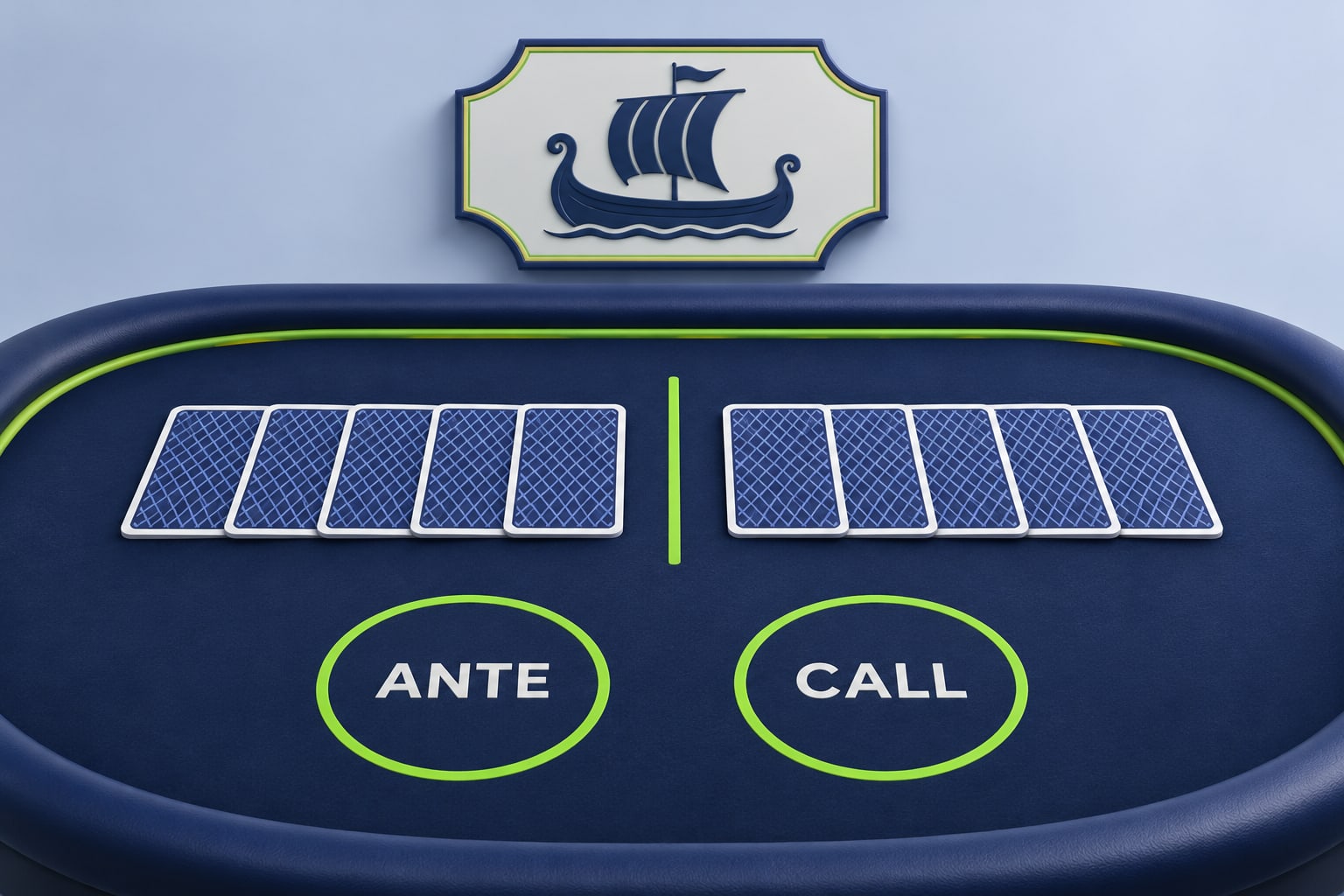
Visual explainer
Viking Poker: check the rules behind the alias
Where Viking Poker means standard Caribbean Stud, the following structure is typical. The table’s actual rules control.
1 · Ante and deal
2 · Fold or raise
3 · Qualification and settlement
If the dealer qualifies, compare the hands and apply the posted paytable. Do not import Casino Hold’em’s pair-of-fours qualification into this game.
A regional name does not establish a separate universal rulebook. Related: Caribbean Stud Poker · Paytable.
An alias rather than a complete rulebook
Viking Poker is a name used in casino terminology for Caribbean Stud Poker, particularly in descriptions of European casino games. The alias helps a reader recognize a familiar game under a different label. It does not establish that every product using Viking in its title must follow the same rules. Casino names, themes and software branding can overlap. If an actual table or online game carries the label, read its own instructions before assuming the connection. The reliable identification comes from the deal, betting sequence, dealer qualification and paytable. A decorative Viking theme alone is not enough to classify an unfamiliar game.
The usual Caribbean Stud structure
In standard Caribbean Stud Poker, the player makes an ante and receives a five-card hand. The dealer also receives five cards, with one exposed. The player chooses whether to fold or continue with an additional wager, commonly twice the ante. There is no ordinary draw replacing unwanted cards. The dealer needs a qualifying hand, commonly ace-king high or better, before the normal comparison and payout procedure applies. This is a concise description of the familiar game family, not a substitute for the specific table's rules. Optional side bets, special payouts and modified versions must be identified separately rather than silently folded into the alias.
You play against the dealer
The presence of poker hand rankings does not make this the same format as a player-versus-player poker room. In Caribbean Stud, each player's wager is assessed against the dealer under the house rules. Another customer's fold does not transfer their ante into a communal pot for the remaining players to win. That distinction changes the meaning of familiar poker language such as call, raise and fold. A decision to continue is part of the casino game's defined betting sequence. It is not an invitation to begin an unrestricted series of raises against the other people seated at the table or watching the same live feed.
Account for the complete stake
Suppose a fictional round uses a five-unit ante and requires a ten-unit continuation wager. Folding loses the five-unit ante, while continuing exposes a total of fifteen units, subject to the game's settlement rules. The minimum shown beside the ante therefore may not represent the full amount needed to complete a hand. This example concerns stake accounting, not a recommendation to continue with a particular holding. Before joining, check the ante, required additional wager and any optional side bet separately. A modest-looking entry amount can become a larger total commitment once the decision to continue is made.
Dealer qualification and payout are separate questions
A dealer qualifying hand is a condition in the settlement procedure, not automatically a declaration that the dealer wins. If the dealer qualifies, the hands still need to be compared under the game's rankings. If the dealer does not qualify, the ante and continuation wager can receive different treatment. The winning-hand paytable can also affect the continuation award. These distinctions are why a headline such as beat the dealer leaves important details unexplained. Read what happens on a dealer non-qualifier, a player loss, a player win and a tie. Keep the original stake separate from profit when interpreting any quoted payout ratio.
Use the verified rules rather than the theme
When a review refers to Viking Poker, use the alias to locate the corresponding Caribbean Stud explanation, then confirm that the actual game matches it. Check the number of cards, absence or presence of a draw, required wager sizes and complete paytable. Do not import community-card poker strategy or assume that another Viking-themed product is identical. A familiar name does not guarantee a favorable return, and knowing the hand rankings does not remove the risk of losing the full committed stake. The glossary entry is a translation aid: it connects older terminology with the game structure a reader needs to understand before evaluating the offer.
Related glossary terms
Sources and further reading
- Synonym:
- Caribbean Stud Poker, Super Stud Poker