A sixaine is a roulette wager covering six numbers in two adjacent three-number rows on the betting layout. It is also called a six-line, double-street or six-number bet.
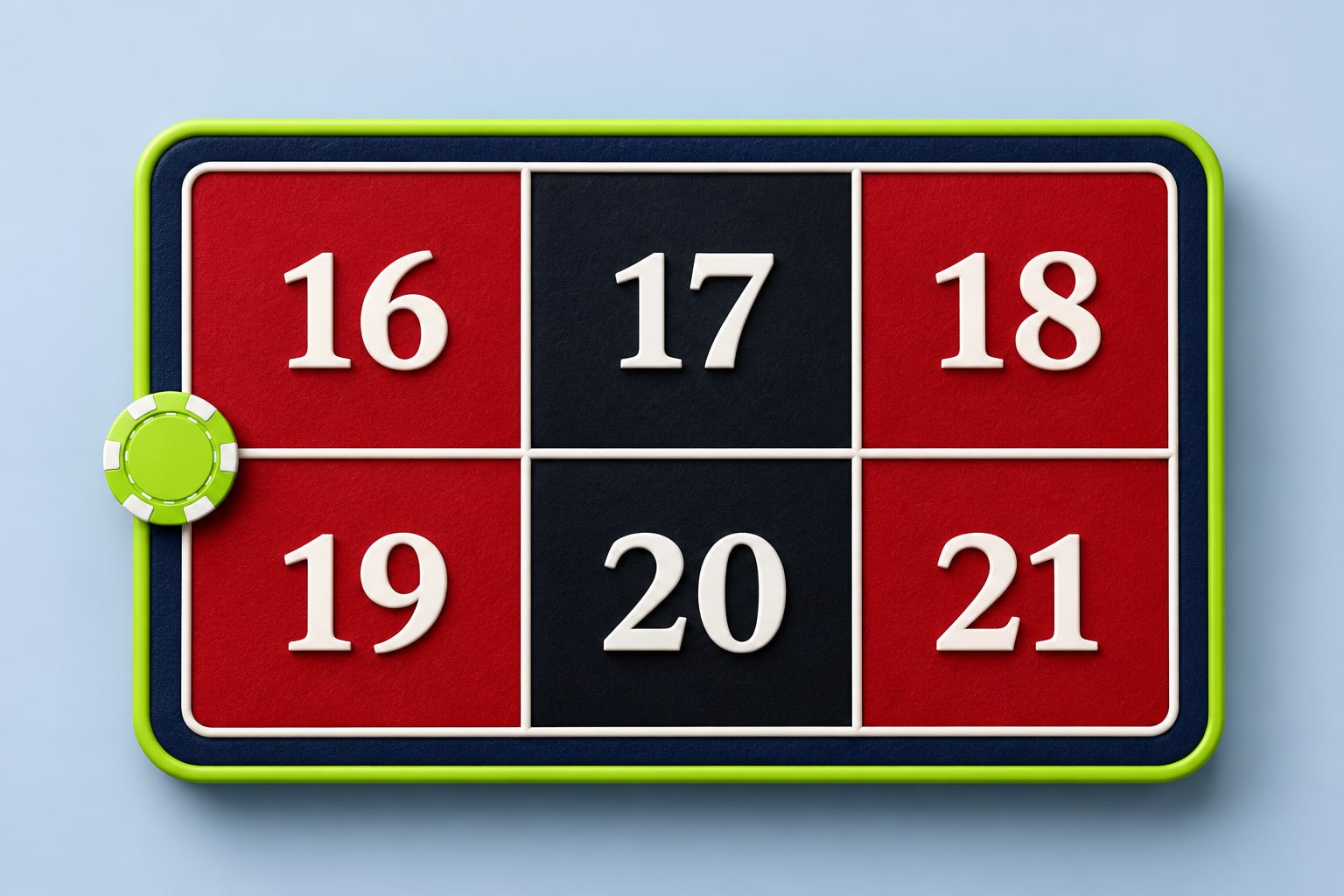
Visual explainer
A sixaine joins two neighbouring streets
Example: 16–17–18 together with 19–20–21.
Two full rows
Standard profit payout
5 to 1
A winning $2 sixaine earns $10 profit and returns $12 including the stake.
One $2 sixaine and two $1 street bets covering these same rows have the same net outcome at standard payouts: +$10 if a covered number wins, or −$2 otherwise.
The line-bet chip position is at the outer edge between the two rows. Fair single-zero chance: 6/37, about 16.22%. Related: Three Number Bet · House Advantage or House Edge.
Identifying the six covered numbers
A sixaine combines two neighbouring streets on the numbered betting grid. For example, the rows containing 16, 17, 18 and 19, 20, 21 form one valid group of six. The connection is determined by the layout, not by whether those pockets sit beside each other around the wheel. A selection of six scattered favourites is not automatically a sixaine. It may require several separate wagers with different costs and payouts. French terminology can vary between help screens, so look for the highlighted coverage and the stated payout rather than relying on the label alone. The essential feature is the two adjacent rows and their six distinct numbers.
Placing the wager accurately
On a conventional physical layout, the chip is placed at the outside edge of the number grid where the two selected street rows meet. This distinguishes the bet from a single street and from a corner wager inside the grid. Online interfaces may highlight the entire group when the pointer or touch control reaches the appropriate position. Check that highlight before confirming the stake. If placing a bet through a dealer, name the intended numbers clearly and inspect the resulting placement while betting remains open. Once the round has closed, a different intention does not by itself change the accepted wager. Accurate placement is part of understanding the term.
Calculating a conventional winning payment
A standard sixaine pays 5 to 1 in profit when one of its six numbers wins. With a two-unit stake, that means ten units of winnings plus the original two units returned, for twelve units received in total. If the result lies outside the covered group, the stake loses. Distinguish a profit quote from a total-return quote when reading software displays. A label showing six times the stake may describe the same conventional settlement if it includes the stake. Special roulette products can alter payments or add features, so the actual game rules remain the final reference. The example here assumes the ordinary six-number payout without modifications.
Why covering six numbers is not an advantage
On a fair single-zero wheel with 37 pockets, six selected numbers cover six of those outcomes. The remaining 31 outcomes lose under the ordinary rules. For a one-unit bet paying five units of profit, the expected net result is six times five minus 31, divided by 37: a loss of one thirty-seventh of a unit. This is a long-run average, not a prediction for the next spin or a promised session loss. A double-zero wheel contains an additional losing pocket for the same six-number group and payout. Broader coverage changes how often a wager wins, but it does not automatically create favourable expected value.
Comparing one sixaine with two streets
Suppose a player stakes one unit on a sixaine covering 16 through 21. Another player splits that same total into half a unit on each of the two underlying streets. At conventional street and sixaine payouts, either arrangement has the same net result for every possible number: five units of profit when a covered number appears, or a one-unit loss otherwise. This equivalence depends on allocating the same total stake and using the stated ordinary payouts. Minimum chip sizes may prevent the split arrangement in practice. Betting one full unit on each street doubles the total exposure, so comparing that with a single one-unit sixaine would be misleading.
Checking limits and repeat-bet controls
An inside-bet minimum may apply to each wager or to a combined layout total, depending on the table. Confirm that rule rather than assuming an outside-bet minimum works identically. Also review whether a repeat button will restore only the sixaine or every previous chip placement. A cluster of recent winning numbers does not make the same group more likely on an independent fair spin. Keep a record of the total money committed to the round and use a limit set before play. The practical purpose of learning sixaine is to recognise six-number coverage and its settlement, not to treat a French name as a special roulette system.