A double row in roulette is a wager covering two adjacent three-number streets, usually called a six-line or double-street bet, and normally paying 5 to 1.
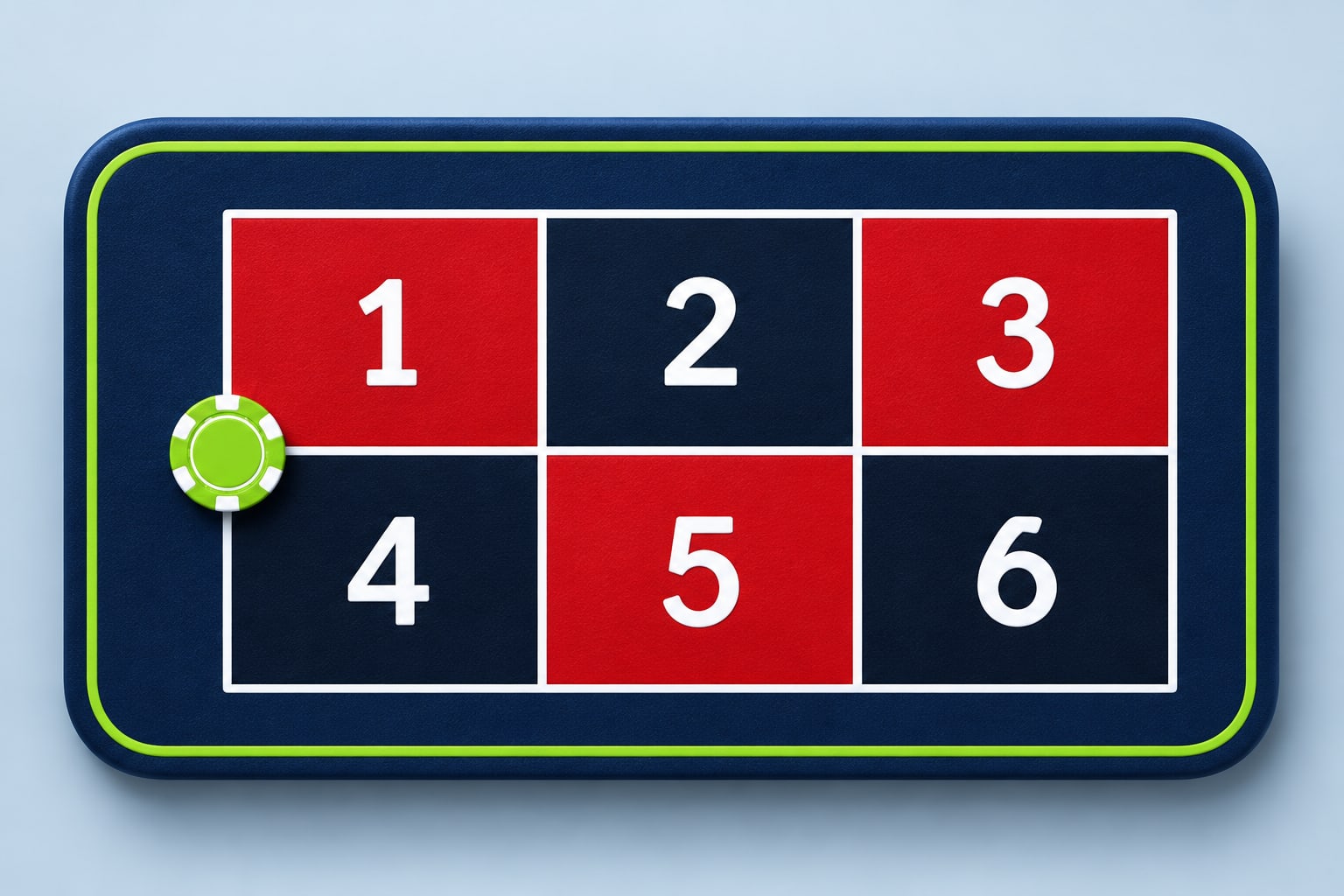
Six numbers on two neighbouring streets
The numbered part of a standard roulette betting layout contains rows of three numbers, often called streets. A double-row wager covers two adjacent streets for six numbers altogether. For example, the streets one-two-three and four-five-six combine to cover one through six. The term double street or six line is more common in many rule books, but the underlying ordinary wager is the same. It does not cover any two rows chosen from anywhere on the table: adjacency is part of this layout bet. Check the interface's highlighted selection so that the six numbers actually covered match the wager you intend to make.
Where the chip belongs
On a conventional felt layout, a six-line chip sits on the outside boundary at the junction between two neighbouring three-number streets. It is not placed in the middle of six separate number boxes. A chip in a different junction can instead represent a split, corner or another wager. Orientation varies between physical tables and digital screens, so use the game's displayed selection rather than copying a position from an illustration without checking. At a live table, ask the dealer to clarify the location before play closes. Online, inspect the highlighted numbers and total stake before confirming, especially when a small screen places several betting targets close together.
Understanding the five-to-one payment
A standard winning double row pays five units of profit for each unit staked, with the original stake returned separately. A two-unit winning wager therefore produces ten units of profit and twelve units returned in total. If the ball lands outside the covered six numbers, the two-unit stake loses. A display showing a six-times total return and a rule stating five-to-one profit can therefore describe the same settlement. Always check which convention is being used. The payment applies to one six-number wager; it is not six individual straight-up bets, which would require their own stakes and would settle under a different payout schedule.
Probability depends on the wheel
On a standard single-zero wheel, six covered pockets out of thirty-seven give a winning probability of six thirty-sevenths. On a double-zero wheel, it becomes six thirty-eighths. On a triple-zero wheel with thirty-nine pockets, it is six thirty-ninths, assuming the same ordinary six-number coverage. The payout can remain five to one despite those different probabilities. This is why identifying the wheel is necessary when comparing expected return. With the standard payout, the house edge is about 2.70%, 5.26% and 7.69% respectively for those examples. These are long-run mathematical properties, not promises that a particular session will lose exactly that percentage.
Coverage is not the same as an advantage
Covering six numbers makes a hit more likely than covering one number on the same wheel, but the winning payment is correspondingly smaller. The ordinary single-zero double row and straight-up wager share the same house edge under their standard payouts. Different betting arrangements can change the frequency and size of results without removing the zero's mathematical effect. Placing several double rows also increases the total amount wagered and can create overlapping coverage. Count the complete stake, including any chips added elsewhere, before comparing a winning payment with the session's cost. A result that pays one chip may still leave a net loss across all wagers on that spin.
Checking variants and keeping control
Special roulette versions can alter payouts, add multipliers or change available bets, so do not assume that every product using a familiar layout follows the ordinary schedule. Read the exact game's rules and verify the covered numbers before playing. A recent absence of those six numbers does not make a double row due on an independent fair spin. Increasing the wager after losses changes exposure, not the number of covered pockets or the base probability. Keep stakes within a limit chosen beforehand and avoid using an apparently broad area of the layout as a reason to overlook the total amount at risk on each spin.