A side count is a separate tally of selected cards, often aces, maintained alongside a blackjack counting system’s main count.
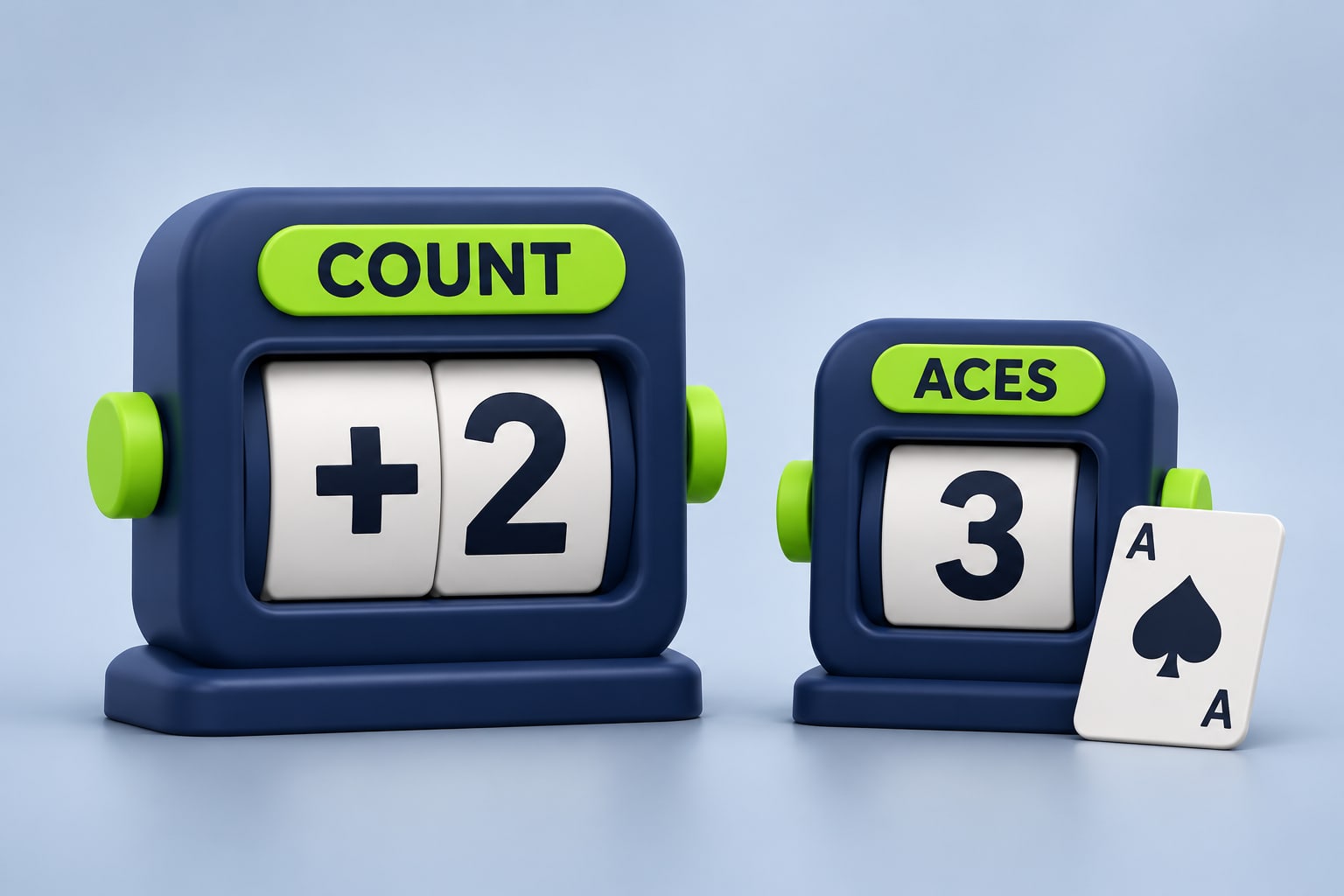
Visual explainer
Keep the ace tally separate
A simple card-inventory example: six decks contain 24 aces. Two decks’ worth of cards have been dealt, including five aces.
Start
24 aces
6 decks × 4 aces per deck.
Seen
5 aces
These have already left the undealt cards.
Remaining
19 aces
24 − 5 = 19 aces in the four decks remaining.
Four decks would contain 16 aces at the starting average. This remaining shoe has 3 more than that benchmark; it does not identify the next card.
A side count is separate information. How to use it depends on the primary system; do not simply add these three aces to an unrelated running count. Related: Card Counting · Blackjack.
A second tally
A side count is an additional record of selected cards kept separately from a blackjack system’s primary running count. Aces are a common subject, but the term is not limited to them. The main count compresses card information into a particular set of values; the side count retains an extra detail that would otherwise be lost or mixed into that total. It is therefore a second measurement, not another wager. The useful question is what information the chosen strategy needs and how it uses that information. Simply recording more numbers does not automatically make a counting approach accurate or profitable.
Why aces receive separate attention
An ace has different roles in blackjack. It can count as one or eleven in a hand and is necessary for a two-card blackjack. Some counting systems assign it a negative value with high cards; others treat it as neutral in the primary count. Norm Wattenberger explains that an ace-neutral approach can use a separate ace tally for betting information while keeping the principal playing count distinct. That is a feature of a defined system, not a universal adjustment. A side count cannot be added casually to any method without checking how the original values and decision rules were designed.
Seen cards versus remaining cards
Suppose a fresh six-deck shoe contains 24 aces. If seven aces have been observed leaving the shoe, 17 remain somewhere in the undealt portion, assuming the starting composition is known and no relevant cards were missed. The raw number 17 is not enough to say whether aces are unusually plentiful: the number of cards remaining also matters. Seventeen aces in a nearly full shoe and 17 aces in a much smaller remainder describe different concentrations. This example explains the bookkeeping only. It is not a betting instruction, and it does not identify the location of any particular ace or the next card to be dealt.
Integration depends on the system
QFIT’s technical guidance distinguishes an ace-neutral primary count from one that already counts aces in the high-card group. The adjustments and strategy tables differ. Applying the wrong correction can double-count information or distort the estimate. A side count may track cards seen, cards remaining or deviations from an expected quantity, depending on the method. Keep those conventions explicit. If one note says three aces, ask whether that means three have appeared or three are estimated to remain. The same spoken number can imply opposite information when the underlying bookkeeping convention is not stated.
Practical limitations
Maintaining an extra tally adds mental work while the player is also following the deal, the main count and ordinary playing decisions. Missed cards, uncertain deck estimates or an incorrect reset can undermine the result. A side count also depends on a game structure in which the remaining composition is meaningful. A fresh shuffle or a different dealing process may remove the information carried from previous rounds. Published simulation results apply to their stated rules, penetration, bet sizes and strategy assumptions. They should not be treated as a personal forecast or as proof that a particular online table can be beaten.
What a side count does not promise
A side count does not reveal hidden cards, prevent losing hands or guarantee a favourable game. It is an analytical technique for retaining information within a defined card-counting framework. It also differs from a casino side bet, which is a separate wager with its own conditions and payout. When reading a strategy description, identify the main system, the cards being tracked, the reset point and the authorised use of the extra tally. Without those details, the phrase is incomplete. Keep financial limits separate from technical study: greater counting complexity is not a reason to risk more money or continue after planned spending has been reached.