A deck is a set of playing cards used by a game. A standard deck contains 52 cards in four suits, but casino variants may combine several decks, remove ranks or add a joker.
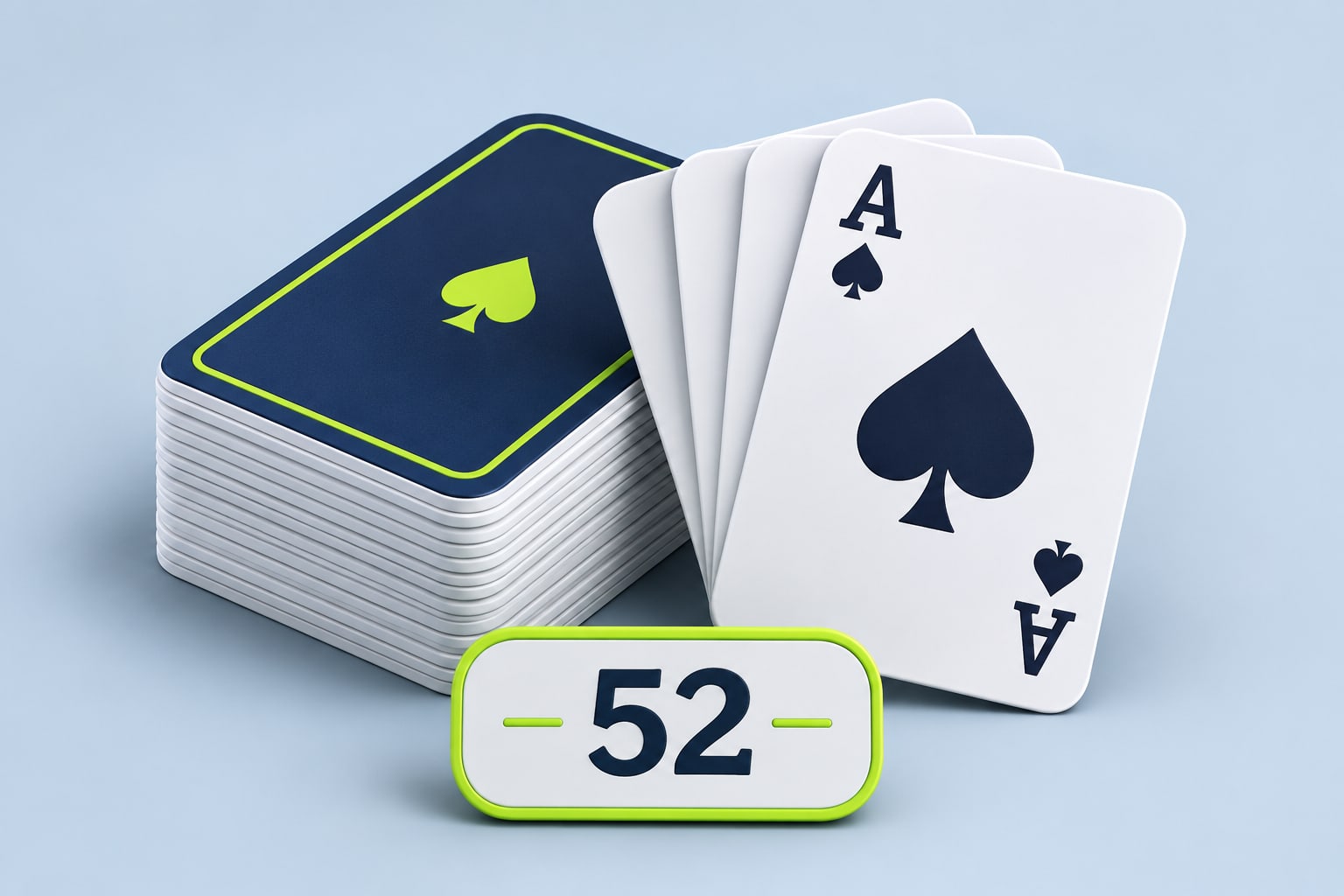
The set of cards used for play
A deck is the set of playing cards from which a game deals its hands. The familiar standard deck contains fifty-two cards: thirteen ranks in each of four suits. The ranks run from ace through ten and then jack, queen and king, while the suits are clubs, diamonds, hearts and spades. Each rank-and-suit combination occurs once in a single standard deck. Packaging may include extra jokers or advertising cards, but those cards are not automatically part of the game. The rules determine which cards are actually included before dealing begins. Hearts and diamonds are conventionally red, while clubs and spades are black. Colour alone does not identify a suit, since each colour includes two separate suits.
One deck and several decks are different models
A game can use one standard deck or combine several decks into a larger set. In a multiple-deck blackjack game, more than one physical card with the same rank and suit can therefore appear legitimately. The shoe is the device or container from which cards are dealt; it is not itself a fixed number of decks. A statement that a game uses a shoe should be followed by the actual deck count if that information matters to the analysis. Similar-looking table layouts can use different numbers of cards and different reshuffling procedures, so appearance alone is insufficient.
Variants can add or remove cards
Some games alter the standard composition. Pai gow poker commonly uses fifty-two cards plus one joker, with the joker's permitted role defined by the particular version. Other poker variants remove selected ranks, and some casino games use their own specialised decks. A joker is not automatically fully wild simply because it is present. These changes affect possible hands and probabilities, so a strategy or odds table designed for an ordinary fifty-two-card game may not apply. Identify the exact card set and any special ranking rules before assuming that a familiar hand has its usual significance.
Dealing changes what remains until a reset
In a physical deck dealt without replacement, a card already dealt is no longer among the remaining cards until it is returned and the set is reset or reshuffled. This is different from a model that independently selects from a complete set on every event. The distinction matters when describing probabilities, but it does not by itself reveal the order of unseen cards. Knowing that one ace has appeared is not the same as knowing the next card. Shuffling, cut-card procedures and continuous-shuffle equipment can change when cards re-enter play, so the actual dealing process must be understood.
Digital card games also need explicit rules
A video poker screen can represent a standard deck even though there are no physical cards. The software's stated rules determine how the initial hand and replacements are selected. Multiplayer poker software likewise manages a virtual card set according to its game rules. A card animation is a presentation of that process, not evidence that every digital game uses the same deck count or replacement mechanism. Read the help information and variant name. Multiple-hand video poker can also use separate replacement processes for the displayed hands, which should not be interpreted simply by counting all visible cards as one shared physical deck.
Deck count is only one part of the game
The number and composition of cards can affect probabilities, but they do not alone establish whether a game is favourable. In blackjack, payout rules and available player actions matter alongside deck count. In video poker, the paytable and hold decisions are central. In poker variants, hand construction and ranking can change the comparison. Record those features together when assessing a game rather than choosing solely from the words single deck or standard deck. The term identifies the card set; it does not guarantee predictable results, validate a betting system or make an unaffordable wager appropriate.