The muck is the pile of discarded cards in poker. To muck a hand means to discard or surrender it, often without showing it, subject to the game’s showdown and house rules.
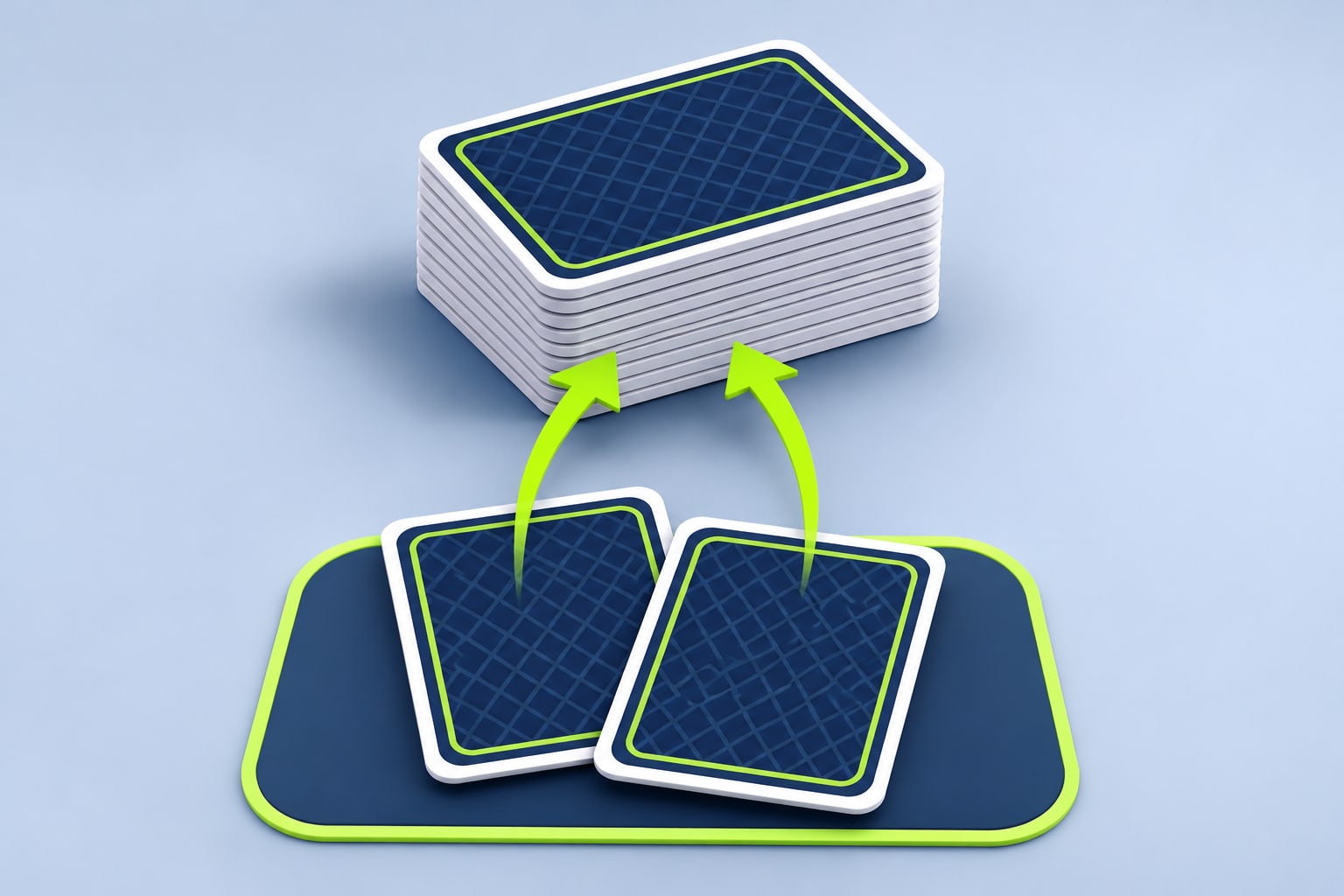
Visual explainer
Face-down cards are not automatically mucked
Card position and card status answer different questions.
Live concealed hand
Folded hand
Muck pile
1 · Keep live cards identifiable
2 · Follow the showdown procedure
3 · Ask for a ruling if disputed
Touching the muck is not presented here as an automatic universal ruling. House rules and the official decision apply. Related: Face Down · House Rules.
A pile of cards and an action
Muck has two closely related meanings in poker. As a noun, it refers to the collection of discarded cards that are no longer in active play. As a verb, it means discarding a hand, commonly without exposing it to the table. A player may muck when folding or when conceding a losing hand at showdown where the rules permit. The word does not describe a hand-ranking category or a special wager. Context usually makes clear whether someone is referring to the physical discard pile or the action of giving up cards. In either case, the status of the hand follows the applicable game and house rules.
Folding before showdown
When a player folds, the player gives up the right to win the pot with that hand under the ordinary rules. Moving cards toward the dealer or discard area can communicate that action, but clear verbal declarations and proper procedure reduce ambiguity. A player should not release cards casually while still intending to call, raise or claim a pot. Chips already committed are not automatically returned because the hand is discarded. For example, a player who has contributed ten units and then folds has surrendered that claim to the pot; mucking is not a cancellation of the earlier accepted wagers or a request for a refund.
Mucking at showdown
At showdown, some games allow a player with a losing hand to discard it without showing, while other circumstances require cards to be exposed. The order of showing, all-in situations and tournament procedures can affect what is required. Do not assume a universal right to hide cards in every game or situation. If a player wants to claim a pot, the hand must be presented in the manner the rules require. An opponent's spoken description is not a substitute for reading the cards. Keep the hand protected until the result is clear and the dealer has completed the appropriate procedure.
Contact with the pile can create a dispute
Careless handling can make it difficult to identify which cards belong to a player. Once cards become mixed with discards, reconstructing the original hand may be impossible. Rules differ on when a hand is considered dead and whether clearly identifiable cards can be recovered in a particular situation. It is therefore misleading to promise that any contact is always reversible, or that touching the pile has one identical result in every cardroom. Ask the dealer or floor staff to apply the local rule. Do not reach into the discard pile to retrieve cards or rely on a memory of how another venue handled a different incident.
Online show and muck controls
Online poker software can offer settings that automatically muck losing hands or allow selected cards to be shown after certain actions. The exact controls and the information available in hand histories depend on the platform and rules. A display preference does not change the cards that were dealt or the mathematical ranking of the hand. Before enabling an automatic option, understand when it applies and whether a completed showdown remains available through the site's history tools. A player should also distinguish a routine muck button from a fold action during a live betting decision. Similar-looking controls can have different consequences at different stages of a hand.
A practical distinction to remember
The muck contains cards outside active hands; the undealt portion of the deck serves a different function even if a dealer later gathers everything for a new deal. A discarded card does not normally become available for a player to pick up simply because it would improve the hand. When discussing a hand afterward, state whether the player folded, conceded at showdown or accidentally released the cards. Those descriptions explain the event more precisely than saying only that the hand was mucked. Clear handling and accurate terminology help preserve the integrity of the deal without turning a procedural mistake into a supposed poker strategy.