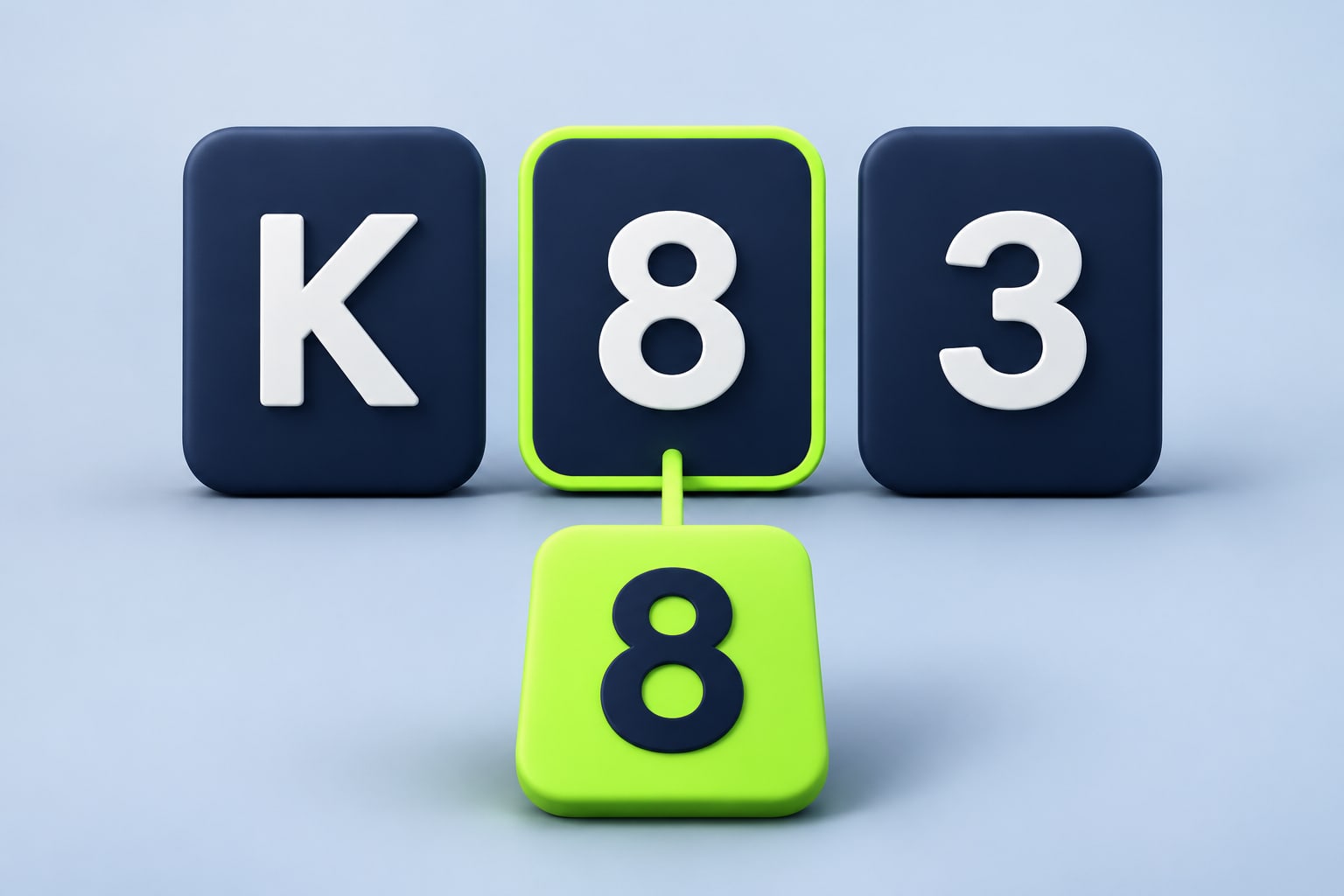
Middle pair usually means pairing the middle-ranked card of a three-card flop in a community-card poker game, such as holding an eight on a king-eight-three flop.
Visual explainer
Middle pair depends on the flop
Texas Hold’em example: three distinct board ranks. Compare each private holding with the same flop.
Top pair
Middle pair
Bottom pair
A pair of eights is middle pair on K–8–3. On 8–5–2, pairing the eight would instead make top pair.
These labels describe the flop. Later cards, kickers and the complete legal five-card hands determine the final comparison. Related: Top Pair · Draw.
Identify the board before using the label
On a king-eight-three flop with three different ranks, an eight in a player's hand makes a pair with the middle board rank. That is a straightforward example of middle pair. A king makes top pair and a three makes bottom pair. The description depends on the board, so a pair of eights is not inherently a middle pair in every hand. It can be top pair on one flop, bottom pair on another, or a pocket pair unrelated to the shared cards. Show the board and relevant private card whenever the distinction matters to an explanation.
Hand category and relative strength
Middle pair is still a one-pair poker hand unless other cards create a stronger combination. The label describes where the paired rank sits on the board; it is not an extra category between one pair and two pair. Standard hand rankings determine what beats it at showdown. A higher pair, two pair, three of a kind and stronger combinations can all defeat it. However, an opponent does not necessarily hold one of those hands. The useful question is how the complete holding compares with the plausible opposing holdings, not whether the phrase middle pair sounds strong or weak in isolation.
The kicker can decide a comparison
Suppose two players each pair the eight on a king-eight-three board and neither improves to a stronger hand. Their other cards may matter when the best five-card hands are compared. An ace kicker can beat a queen kicker when those cards remain part of the final five-card combinations. Later community cards can change which kickers play or can make the best hands identical. Avoid declaring a winner from the paired rank alone. First construct each legal five-card hand, then compare the pair and the remaining cards in descending order under the rules of the specific poker variant.
Later cards can change the description
A middle pair on the flop can improve to two pair or three of a kind, remain one pair, or become less competitive as additional cards arrive. An overcard on the turn changes the relationship between the paired rank and the full board, while a straight or flush completion can strengthen an opponent. The original label may still be used when recounting the flop decision, but it should not replace a fresh assessment of the final board. Distinguish the hand held at the time of a decision from the hand eventually shown. Hindsight can make a reasonable earlier choice look obviously wrong or right when it was neither.
There is no automatic call or fold rule
The price of continuing, the number of opponents, position, betting history and possible future action all affect a middle-pair decision. A small bet from one opponent in one situation is different from a large raise against several active players in another. A pair may sometimes be ahead, sometimes have useful improvement possibilities and sometimes be badly behind. These are reasons to analyze context rather than instructions to continue whenever improvement is possible. Apparent outs can also be unsafe if the same card improves an opponent more. Count what a card actually accomplishes before treating it as a winning out.
Use precise language in notes and reviews
A useful hand record includes the private cards, flop, turn, river, stakes and action sequence. Instead of writing only that middle pair lost, record which rank was paired and how the final hands were formed. This makes the note useful for later review and avoids confusing a board pair with a pocket pair between two board ranks. In Omaha, remember that the final hand must use exactly two private cards and three community cards, which can change the analysis. The expression is a convenient description of a position within a particular board, not a universal strategy recommendation or a promise about how often that hand should win.