A draw is either the act of receiving replacement cards after discarding in a draw-poker game, or an unfinished hand that needs further cards to reach a particular combination.
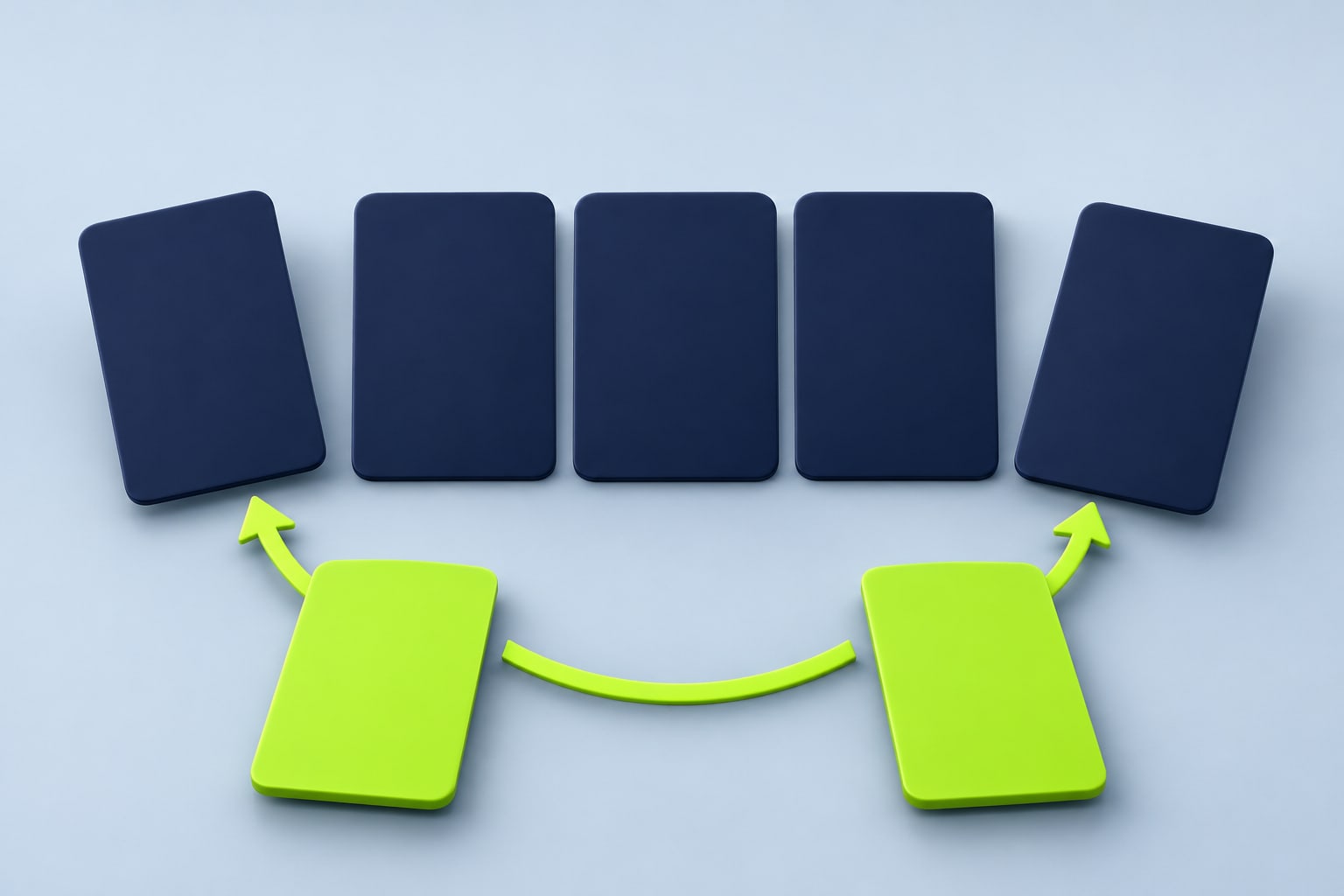
Visual explainer
Draw can mean an action or an unfinished hand
The same word describes different stages in different games.
Video poker: replace cards
In an ordinary single-deck draw, the five original cards are unavailable.
Hold’em: wait for a shared card
Flop: K♥ · 6♥ · 2♣.
This is a flush draw. The player cannot discard and replace the private cards.
For the video poker example, 13 − 4 = 9 hearts remain among 52 − 5 = 47 undealt cards. One replacement completes a flush with probability 9/47 ≈ 19.15%.
The video poker example illustrates the draw mechanics and probability; it is not a paytable-specific hold recommendation. Related: Video Poker · Paytable.
The action and the hand description
The word draw has two related meanings that are easy to confuse. In five-card draw or standard video poker, it is a game action: keep selected cards and receive replacements for the others. In a phrase such as flush draw, it describes potential: the cards do not yet make a flush, but a later card could complete one. A player can have a draw in Texas hold'em even though they cannot discard their private cards and request replacements. The game determines how new cards arrive. Always identify that game before interpreting instructions to draw or discussions of drawing odds.
The usual video poker sequence
A standard video poker hand begins with a stake and five dealt cards. The player marks the cards to hold, then uses the draw control to replace the unheld cards. The resulting five-card hand is assessed against the paytable. In the ordinary single-draw format, that replacement is the final decision stage; an unsuccessful result does not give another free attempt. Some variants add special redraw or bonus features, but those must be specified separately. Check the hold markers before confirming, because a mistaken selection can discard a card that the intended strategy would have kept.
Replacement cards and the remaining deck
In a conventional single-deck video poker hand, the five initially dealt cards leave 47 undealt cards. Replacement cards are drawn from that remaining set, so discarded initial cards are not ordinarily shuffled back for the same draw. If four held cards are hearts and the fifth initial card is another suit, nine hearts remain among the 47 cards. Drawing one card then completes a flush with probability 9/47, before considering the value of any other outcomes. This example depends on the stated deck and rules. Wild cards, extra cards or special replacement mechanics require their own calculation.
A draw is not a promised improvement
Receiving replacements can improve a hand, leave its paying category unchanged or produce no award. Keeping more cards is not automatically safer, and drawing more cards is not automatically more ambitious in a useful mathematical sense. The relevant comparison is the expected return from each legal hold under the paytable. A made low-paying hand can sometimes be worth breaking for a more valuable draw; in another situation, chasing a rare top prize can be the weaker choice. A strategy chart earns its value by making those comparisons consistently, not by predicting which replacement cards will appear next.
Draws in community-card poker
In hold'em or Omaha, players describe straight draws and flush draws while waiting for later shared cards. Betting can continue before those cards arrive, so the price of pursuing the draw matters. A completing card may also improve an opponent, meaning the apparent out is not always a winning out. Omaha additionally requires exactly two private cards and three community cards for the final hand, which can change whether a supposed draw exists at all. Do not transfer a probability or hand description from one format without checking its card-use rules and the number of cards still to come.
What to record when checking a result
For a disputed video poker draw, keep the game title, paytable, original five cards, held cards, replacement cards and stake denomination. For a poker hand, keep the relevant hand history and betting sequence. Those details distinguish a selection error, a misunderstanding of the rules and a genuine settlement question. The fact that a draw missed does not by itself indicate unfairness, just as a successful draw does not validate every decision that preceded it. Treat the draw as one stage of a defined game, and assess its quality using the information available before the unknown cards were revealed.
Practice with the interface before staking money if hold and draw controls are unfamiliar. Knowing which button confirms the final selection prevents an interface mistake from being mistaken for a bad draw.