A roulette line bet, also called a six-line or double-street bet, covers six numbers in two adjacent rows of three and normally pays 5:1 profit.
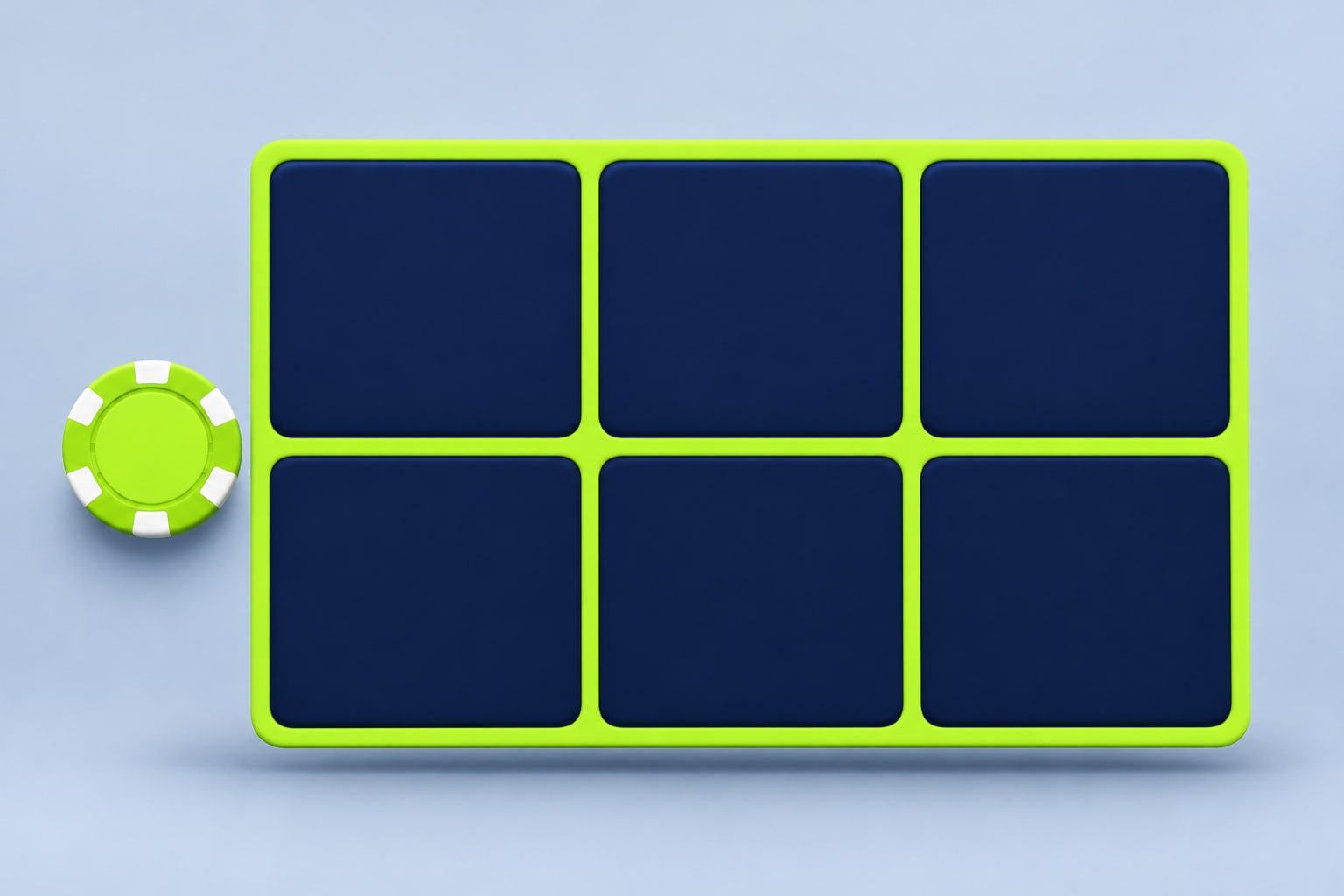
Six numbers arranged as two streets
A standard line bet covers two neighboring three-number rows on the roulette layout. For example, the rows 1, 2, 3 and 4, 5, 6 form a line covering 1 through 6. Another valid example combines 16, 17, 18 with 19, 20, 21, covering 16 through 21. The term six-line emphasizes the number of covered outcomes, while double street emphasizes that two streets are joined. This is a layout-based group, not a selection of six consecutive pockets around the physical wheel. The wheel order and the numbered grid are different arrangements. A player asking for six neighbors around a wheel position is therefore requesting a different type of coverage. Always identify the exact six numbers when a label or table orientation is unfamiliar.
Where the chip belongs
The conventional placement is on the outside edge of the numbered grid at the junction between the two selected streets. A chip centered inside a number box is a straight-up wager; one on a shared internal border can be a split; one at a four-box junction can be a corner. Small movements can therefore change the accepted bet. Digital layouts often highlight the six covered numbers when the correct line position is selected. Use that preview rather than judging the chip's artwork alone. A $2 denomination means a $2 total line wager if one line chip is placed. It does not mean $2 on each of six numbers. Repeated taps can add more chips, however, and a repeat command may restore other positions from the prior round as well.
Payout with a six-number example
A conventional line bet pays 5:1 profit. If you place $3 on the line covering 1 through 6 and the result is 5, you receive $15 profit and the original $3 stake, for an $18 total return. A result of 7 loses the entire $3. The payout applies to the accepted line wager, not separately to every covered number. Covering the same six outcomes with six $1 straight-up bets would cost $6 and return $36 when one wins, producing $30 net profit after all stakes. That alternative has the same proportional standard return when compared at equal total stakes, but different chip denominations and table limits may affect what you can actually place. Compare the complete wager cost before comparing the headline payout amounts.
Probability and expected return
On a fair single-zero wheel, a line wins on 6 of 37 pockets, approximately 16.22%. It loses on the other 31. For one unit staked, expected profit is (6 × 5 − 31)/37, or minus 1/37 unit. The resulting house edge is approximately 2.70%. On a double-zero wheel, six winners and 32 losers produce (6 × 5 − 32)/38, or minus 2/38, approximately 5.26%. The broad coverage makes a line more likely to win than a single-number wager, but the smaller payout offsets that higher hit rate in the standard model. Zero and double zero are not included in an ordinary six-number line. The fact that a group is near the top of the layout does not automatically extend it into green pockets.
Overlapping lines and practical checks
Two line bets can overlap. A wager covering 1 through 6 and another covering 4 through 9 both win when 4, 5 or 6 lands. They cover nine distinct numbers, not twelve, because three are shared. Their combined total stake still includes both chips. This distinction matters when estimating coverage or checking bonus restrictions that refer to the proportion of the wheel covered. Write down the unique outcomes and the return on each if a combination is complex. A recent absence of any of those numbers does not improve their next-spin probability. Check standard versus variant payouts, inside-bet minimums and total round limits before playing. Keep the entire combination within a fixed budget, and stop at the planned limit rather than adding another line to chase a missed sector.