En plein is the French roulette term for a straight-up wager on one number. On a conventional roulette table it pays 35 to 1 profit if that exact number lands.
Visual explainer
En plein selects exactly one pocket
Conventional roulette example: one straight-up bet on 17.
Highlighted coverage: 17
Standard profit payout
35 to 1
A winning $2 stake earns $70 profit and returns $72 including the stake.
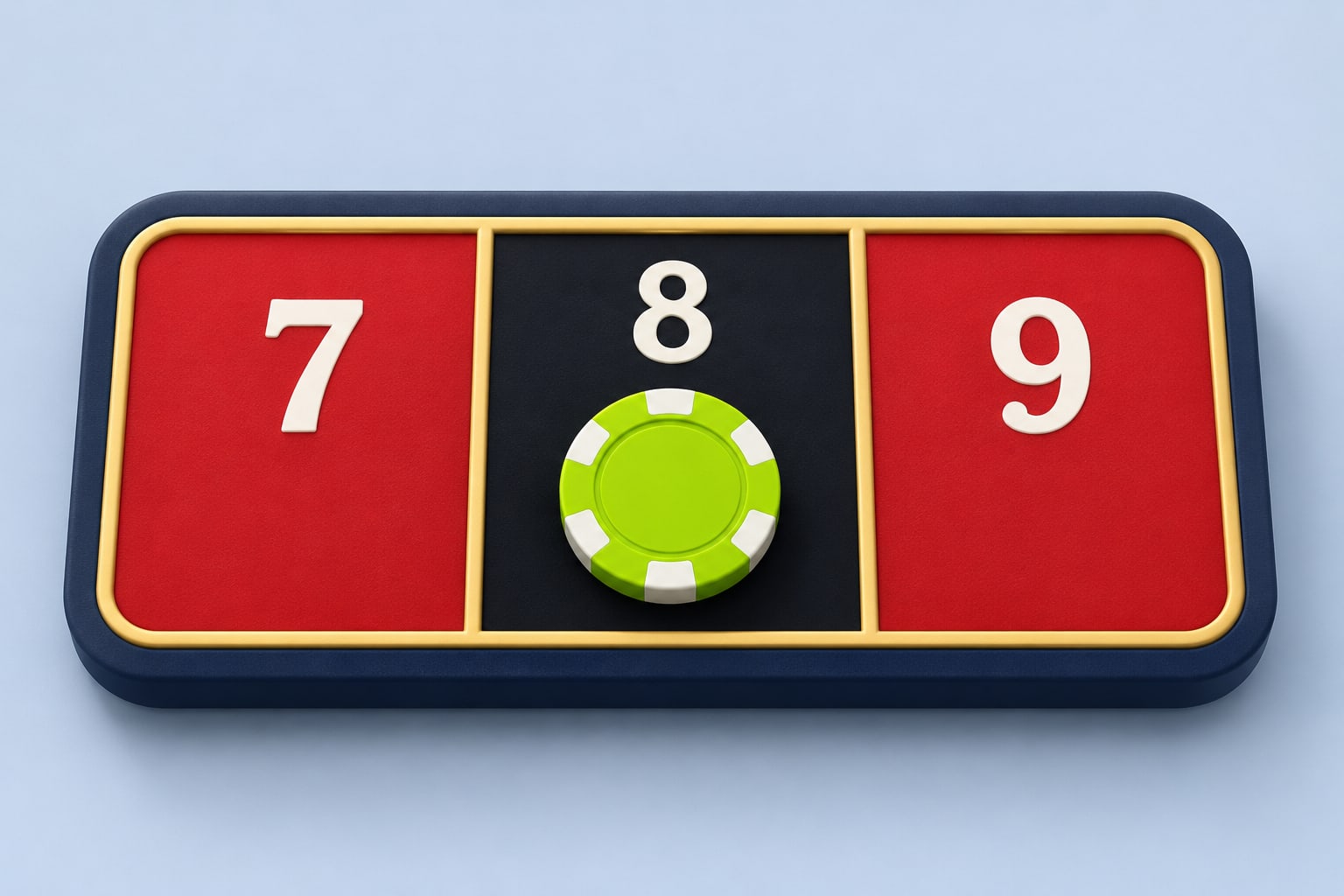
A result of 16 or 18 loses this bet even though those boxes share the same row. A chip on a boundary can identify a different wager.
Layout excerpt, not wheel order. On a fair single-zero wheel the chance is 1/37, about 2.70%; special variants may pay differently. Related: Single Number Bet · Split Bet.
One number, one qualifying outcome
An en plein wager selects one specific numbered pocket. If the ball settles in that pocket, the wager wins; if another pocket wins, the wager loses. The term is equivalent to straight up in ordinary roulette terminology. It does not mean every bet placed on a French-style layout, and it does not describe a group of neighbouring numbers. A wager on eight, for example, is not also a bet on seven or nine simply because those boxes sit beside it on the betting grid. Identify the exact selected number before betting closes, especially when several chips or overlapping bets are visible on the same layout.
Placement inside the number box
The chip belongs within the chosen number's own betting area rather than on a shared boundary. A chip on the line between two numbers normally indicates a split, while a chip at another intersection can cover a different group. Online interfaces often highlight the selected area, which helps distinguish an en plein bet from nearby alternatives on a small screen. At a live table, ask the dealer to clarify an ambiguous placement before the result rather than relying on where the chip seemed to be intended. The layout position communicates the wager, so the covered outcome must be clear when the bet is accepted.
Profit and returned stake
The conventional payout is thirty-five units of profit for every unit staked, with the original stake also returned. A two-unit winning en plein wager therefore earns seventy units of profit and returns seventy-two units in total. If the selected number does not land, the two-unit stake is lost. A display describing thirty-six for one can represent the same total return, while thirty-five to one describes profit. This wording distinction matters when checking the balance after a win. It also explains why a winning animation can display a larger number than the profit calculation without necessarily indicating an extra bonus or a different payout schedule.
The wheel changes the probability
On a standard single-zero wheel, a particular number has one chance in thirty-seven on each fair spin. With a thirty-five-to-one profit payout, a one-unit wager has an expected net result of thirty-five thirty-sevenths minus thirty-six thirty-sevenths, or a loss of one thirty-seventh of a unit. That is approximately 2.70 percent of the stake. On a standard double-zero wheel, one selected pocket has one chance in thirty-eight, while the normal payout remains the same, producing an expected loss of approximately 5.26 percent. Additional-zero and special variants require their own calculation. The French name for the wager does not establish which wheel configuration is in use.
Several straight-up bets remain separate stakes
A player can place en plein chips on several different numbers. Each chip covers its own number, and the total amount at risk is the sum of all those stakes. If three one-unit straight-up bets are placed and one selected number wins, the winning bet earns thirty-five units of profit while the other two lose, giving thirty-three units of net profit overall. If none of the selections lands, all three units are lost. Compare alternatives using the same total stake. Covering more numbers increases the chance that one selection wins, but it also increases the amount committed unless the stake per number is reduced.
The name does not create a system
En plein describes coverage and payout, not a prediction method. A number that has not appeared recently is not due on an independent fair wheel, and repeatedly backing a favourite number does not change its chance on the next spin. Table limits also apply separately from the meaning of the term: a casino can restrict the amount accepted on an individual number. Special multiplier games may replace the conventional payout structure, so read their own rules rather than assuming thirty-five to one in every product. Use the phrase to identify the bet accurately, then assess the actual wheel, stake, payout and spending limit before deciding whether to play.