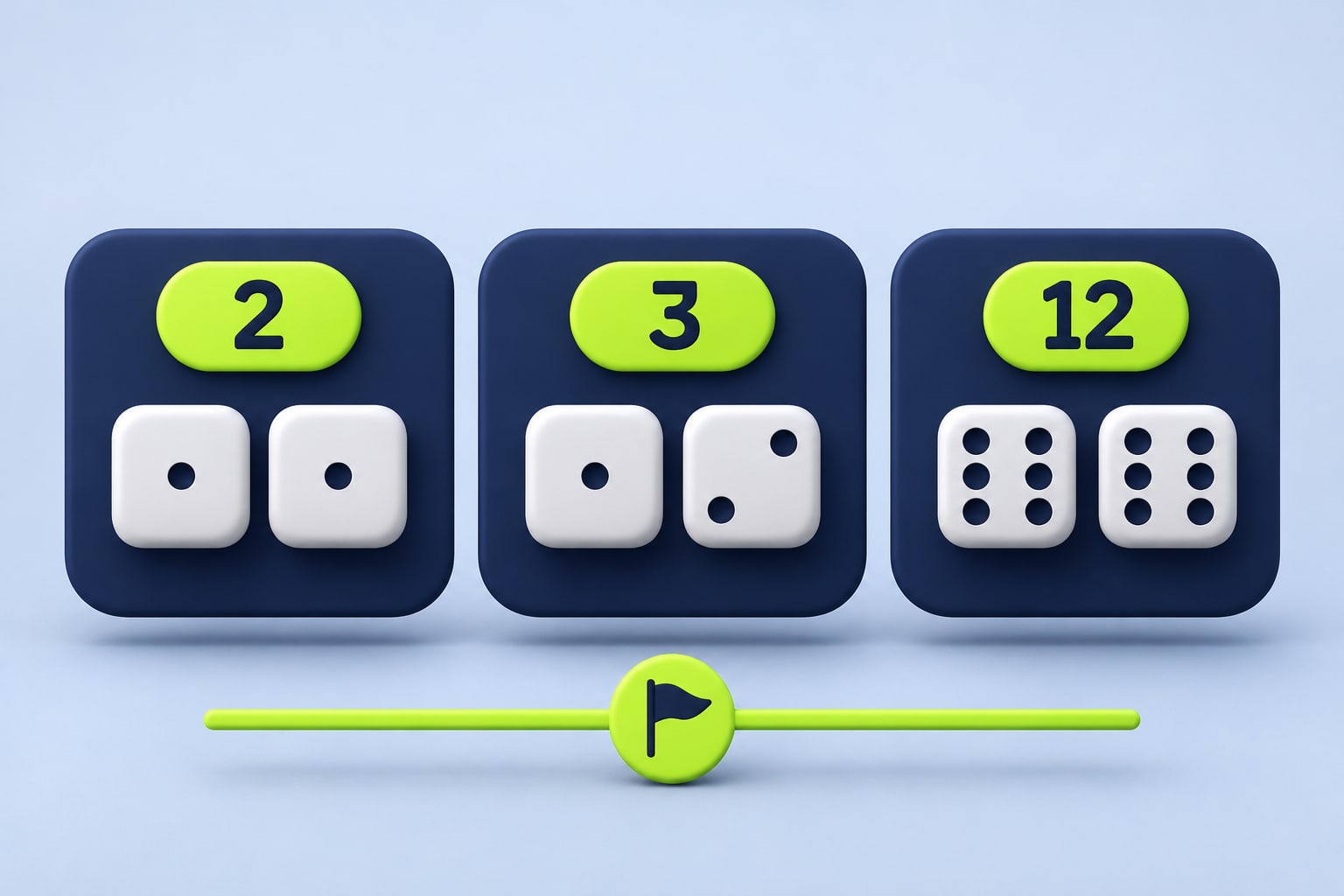
Crapping out usually means rolling 2, 3 or 12 on the come-out roll in standard craps, losing a pass-line bet; it is different from sevening out after a point is established.
The come-out context matters
Crapping out is a table expression tied to the beginning of a standard craps decision. On a come-out roll, a total of two, three or twelve is called craps and loses a pass-line wager. The same numbers can appear later, but their meaning for an existing pass-line bet changes once a point has been established. It is therefore incomplete to describe any roll of two, three or twelve as an event that ends every wager. Identify the phase of the game first. The point marker, dealer announcement and rules display help distinguish an initial come-out decision from a roll made while a point remains active.
Why this is not sevening out
Sevening out normally means rolling seven after a point has been set, before repeating that point. This resolves the pass-line decision as a loss and ordinarily ends the shooter's turn with the dice. Crapping out on the come-out roll does not normally end the shooter's turn in the same way: the shooter can make another come-out roll. A seven on that next come-out would be a natural winner for the pass line, rather than a seven-out. The words sound similar because both can describe a loss, but confusing them obscures the crucial timing rule that determines what actually happens to the wager.
A short sequence of rolls
Suppose a shooter begins with a three. A pass-line wager loses, and a new come-out decision follows. The shooter then rolls an eight, establishing eight as the point. A twelve on the following roll does not, by itself, lose that established pass-line wager; the point is still eight. If eight appears before seven, the pass-line wager wins. If seven appears first, it loses and the shooter has sevened out. This example separates three different uses of the dice without requiring a complicated betting layout. The same total can have very different consequences depending on which wager is active and which stage has been reached.
Other wagers can settle differently
A pass-line loss does not imply that everybody at the table loses. In standard rules, don't-pass wagers win on come-out two or three, while twelve commonly pushes; some rule sets use a different barred total. A field or proposition wager has its own winning numbers and payout. A player could therefore receive a payment on a roll that another player describes as crapping out. Read each wager independently instead of assigning a single winning or losing label to the whole table. Where a digital game changes the usual rules, its help screen takes priority over a shorthand description borrowed from conventional casino craps.
The dice probabilities behind the term
With two fair six-sided dice, two has one ordered combination, three has two and twelve has one. Together they occupy four of the thirty-six equally likely combinations, giving a probability of one ninth for one roll to show one of those totals. That fraction describes the dice result; it does not mean a pass-line wager loses once every nine complete decisions, because other totals start a point phase that can later win or lose. It also does not guarantee a tidy pattern in a short sequence. Several come-out craps results can occur close together, or none may appear during a particular session.
Using the expression accurately
When explaining a hand or reviewing a game history, specify both the total and the phase: for example, three on the come-out roll. That is clearer than saying only that the shooter crapped out. Avoid treating a recent result as evidence that the dice are becoming favourable or unfavourable. Independent fair rolls do not remember earlier outcomes, and a stake increase after a loss does not change the rules. Before making another wager, check that it fits the original spending limit and that you understand whether it is a one-roll bet or an ongoing point decision. Clear terminology helps prevent settlement misunderstandings, not future losses.