Twenty-one, or 21, is a common name for blackjack. A total of twenty-one is not always a natural blackjack: the number of cards and the table’s rules determine how the hand is settled.
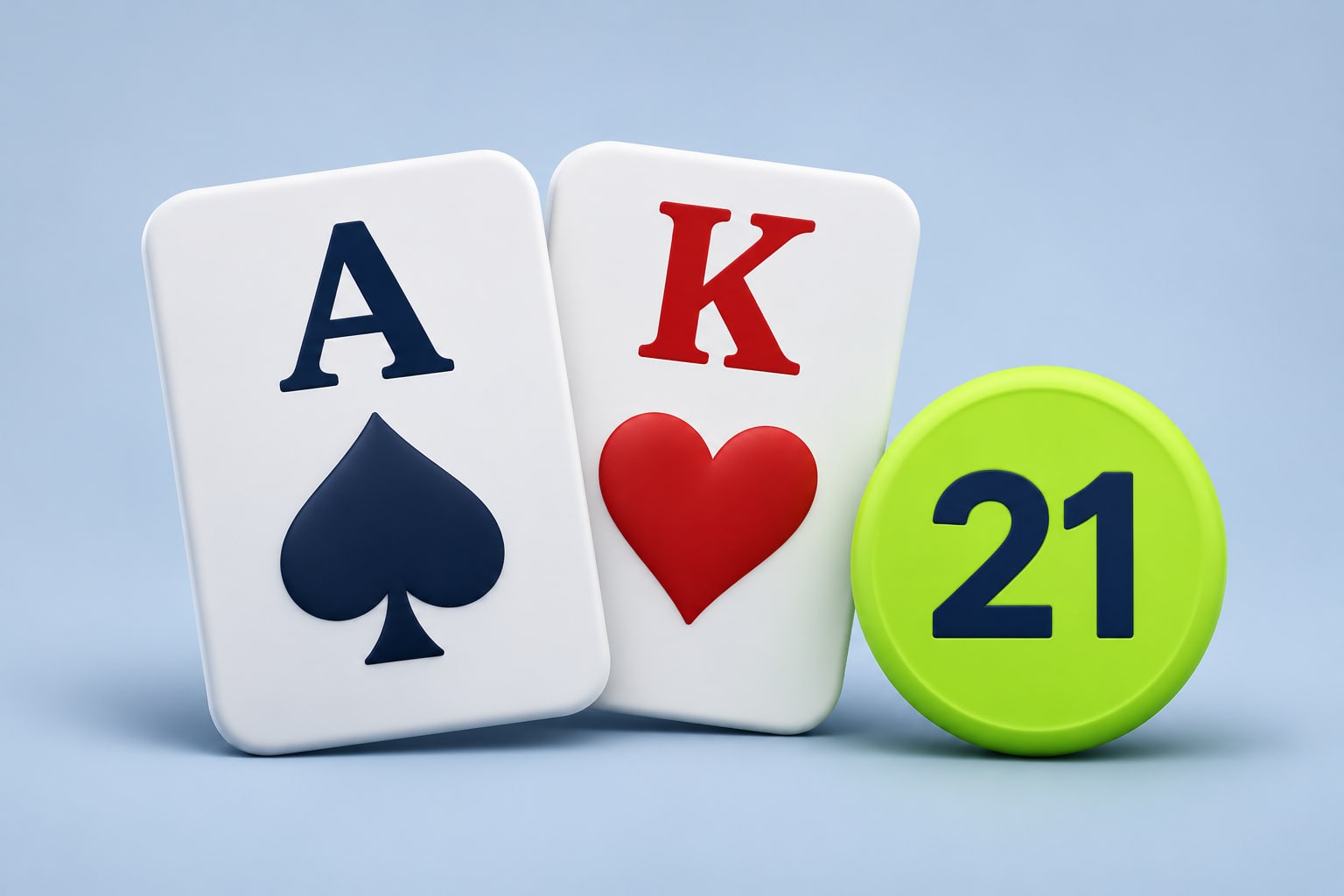
Visual explainer
The same total can have different treatment
In ordinary blackjack, an initial ace plus a ten-value card is a natural; three-card 21 is not.
Initial two-card hand
Natural blackjack under the normal initial-hand definition.
Three-card hand
Ordinary total of 21; not a natural blackjack.
Do not assume equal payouts simply because both totals are 21.
Check natural-blackjack payout, dealer settlement and split-hand rules at the specific table. Related: Blackjack · Face Cards.
A familiar name for blackjack
Twenty-one, often written as 21, is a common alternative name for blackjack. In ordinary casino conversation, asking where to play twenty-one usually means asking for a blackjack table. The name comes from the total that players try not to exceed, but the objective is more precise than simply reaching twenty-one: the player needs to beat the dealer under the table's rules without busting. A lower total can win if the dealer busts or finishes below it. Each player normally competes against the dealer rather than against the other players at the table, even when several people share the same round.
Cards contribute values rather than poker ranks
Numbered cards from two through ten count at their printed values. Jacks, queens and kings count as ten, while an ace can count as one or eleven according to the hand. For example, ace-six can total seven or seventeen; it is commonly described as a soft seventeen while the ace can still count as eleven without busting. Ten-six is a hard sixteen because it has no such flexible ace. These values differ from poker hand rankings. A pair, flush or straight does not automatically have special value in the main blackjack wager, although separately priced side bets may use different combinations.
Twenty-one and a natural are different
An ace together with a ten-value card as the initial two-card hand is normally a natural blackjack. A seven, eight and six also total twenty-one, but that three-card hand is not a natural. This distinction can affect both priority and payment. A natural commonly pays a special rate, while an ordinary winning hand is generally paid at even money. The exact table rules matter, including how a twenty-one made after splitting is treated. Read the displayed blackjack payout rather than assuming that every table pays the same amount whenever the cards add up to twenty-one.
The main decisions change the hand and exposure
Hitting requests another card, while standing keeps the current total. Doubling down adds a further stake in return for a restricted draw, commonly one additional card. Splitting an eligible pair creates separate hands and normally requires another wager. The available choices depend on the rules and the current hand. These are not interchangeable ways to ask for a better total: they involve different costs and restrictions. For example, splitting can leave a player with more than one active stake. Track the total money committed across the resulting hands instead of judging the round only by the size of the original bet.
A simple result shows why twenty-one is not compulsory
Imagine a hypothetical round with a ten-unit stake. You stand on eighteen and the dealer finishes on seventeen. Under ordinary settlement, your hand wins ten units in profit and the stake is returned, even though you never reached twenty-one. If you instead bust before the dealer completes the hand, a later dealer bust normally does not rescue your lost wager. The order of play therefore matters. This is one reason that drawing until twenty-one is not a sensible description of blackjack strategy. Decisions should account for the hand, the dealer's visible card and the applicable rule set.
Check the variant before using a strategy chart
Games marketed with 21 in their names can alter the deck, dealer rules, bonuses or available actions. Even conventional blackjack tables differ on matters such as soft seventeen, surrender and doubling after a split. A strategy chart belongs to a particular set of assumptions, so match it to the actual game before using it. Good decisions do not guarantee a winning session or remove short-term variation. Choose stakes within a planned budget and include possible additional wagers in that plan. Twenty-one identifies the familiar game family and an important total; it does not describe every rule needed to play it accurately. The displayed rules and payout schedule remain the deciding reference for settlement.