Tens or Better is a video-poker variation in which a final pair of tens is the lowest paying ordinary hand; the complete paytable determines the awards, strategy and theoretical return.
What the name identifies
Tens or Better identifies the minimum paying pair in this family of draw video-poker games. A completed pair of tens qualifies for the lowest ordinary payout, as do pairs of jacks, queens, kings and aces. Lower pairs generally do not receive a pair award. The name distinguishes the threshold from Jacks or Better, but it does not specify every other prize. A full house, flush or four of a kind may pay different amounts under different tables bearing the same game name. Open the paytable for the actual version and stake rather than assuming that the threshold alone determines the overall value of the game.
The deal, hold and draw sequence
A conventional single-hand game deals five cards after the wager is placed. The player chooses which cards to hold, then draws replacements for those discarded. The final five-card hand is compared with the paytable. A pair of tens in the initial deal is therefore a potential paying holding, but the game is not necessarily settled until the draw is completed. The choice of cards to keep can affect the expected result. Check the interface carefully before pressing draw, particularly if an automatic hold suggestion appears. Such a suggestion is not a substitute for understanding the game's rules or confirming that the selected cards match the intended decision.
A simple paying-hand example
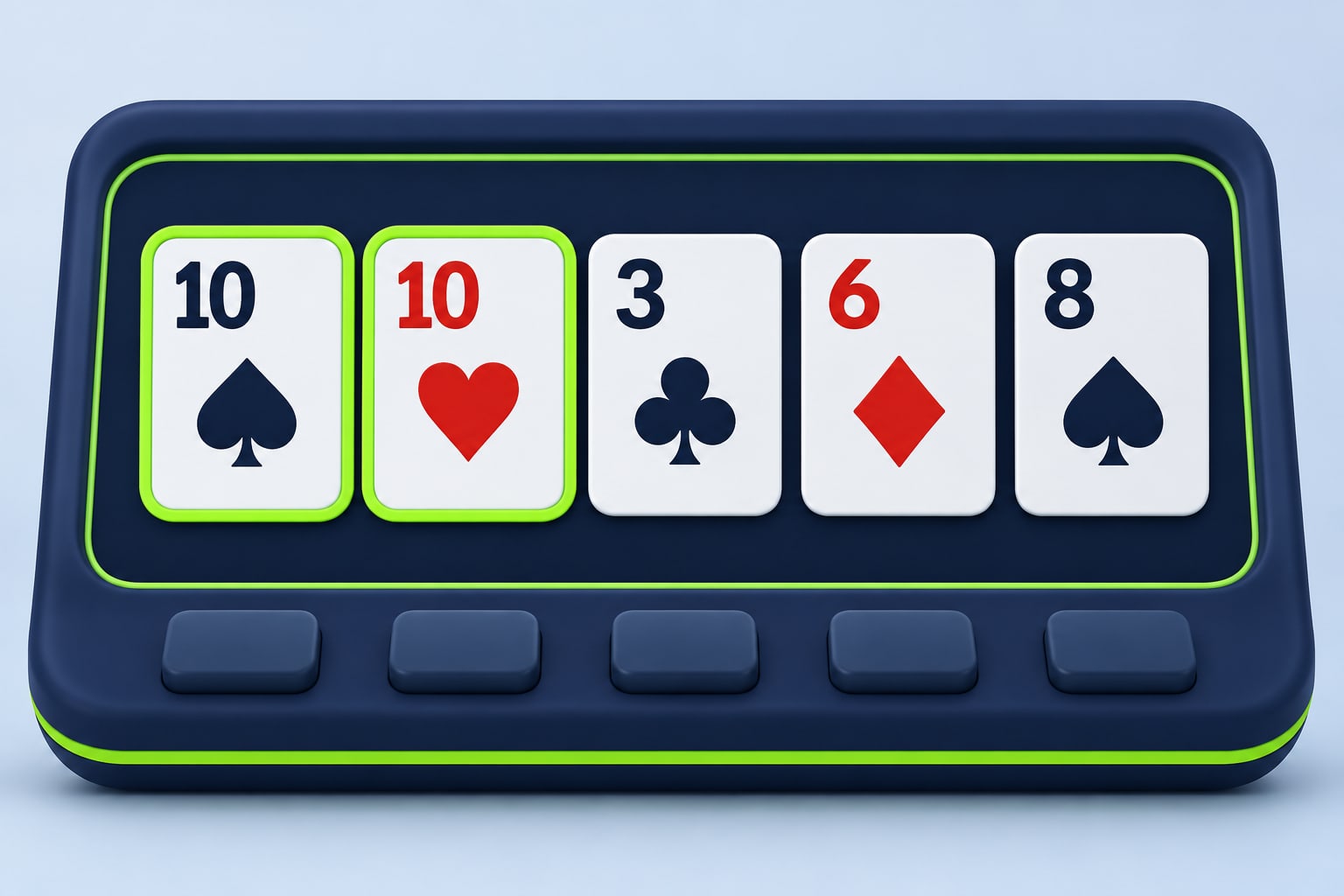
Suppose the final hand is ten of spades, ten of hearts, three of clubs, six of diamonds and eight of spades. The two tens make the minimum paying pair, with no higher combination in the five cards. The award is whatever the selected paytable gives for that category at the current wager. If the pair were nines instead and the remaining cards did not form another winning combination, it would not meet the ordinary pair threshold. This example explains the category, not the amount of a guaranteed cash profit. A lowest-level award may simply return the stake under a particular table's displayed payment convention.
Why a lower threshold does not prove higher return
Allowing tens to pay adds a winning category compared with a table that starts at jacks, but other payouts can be reduced to compensate. The theoretical return depends on the complete schedule and the player's decisions. Comparing only the minimum pair is like comparing two prices while ignoring what is included. Review the awards for two pair, three of a kind, straights, flushes, full houses, four of a kind, straight flushes and royal flushes. Where a published analysis gives an RTP, confirm that the exact paytable and wager conditions match. A percentage calculated for a different schedule should not be transferred to the game merely because the title is identical.
Strategy must match the paytable
Video-poker strategy compares the expected values of possible holds. The lowest paying pair is relevant, but so are potential straights, flushes, royal flushes and other improvements. A holding rule learned for Jacks or Better may therefore need changes in Tens or Better, especially when competing draws and small pairs are involved. Use a strategy resource that names the actual paytable rather than applying an isolated tip such as always holding a paying pair. Even correct decisions do not guarantee a winning session. They describe how to choose between uncertain alternatives under the specified rules, not how to force the replacement cards or avoid short-term losses.
Checking stakes and keeping results realistic
Confirm the denomination, credits per hand and whether displayed awards are credits, cash or multiples of the wager. A royal-flush award can have a special relationship to the selected credit count in some games, so inspect every relevant column rather than assuming all prizes scale identically. Do not raise the stake solely to pursue an advertised maximum if it exceeds the planned budget. Track net results after the cost of each hand, and keep long-run theoretical return separate from the balance shown during a short session. Tens or Better is a rules label that helps identify a paying category; it is not a promise of more profit or more affordable play.