Splitting aces separates an initial pair of aces into two blackjack hands, normally with an additional equal wager. Ace hands often have special restrictions, including one further card per hand and no blackjack premium on a resulting ace-ten combination.
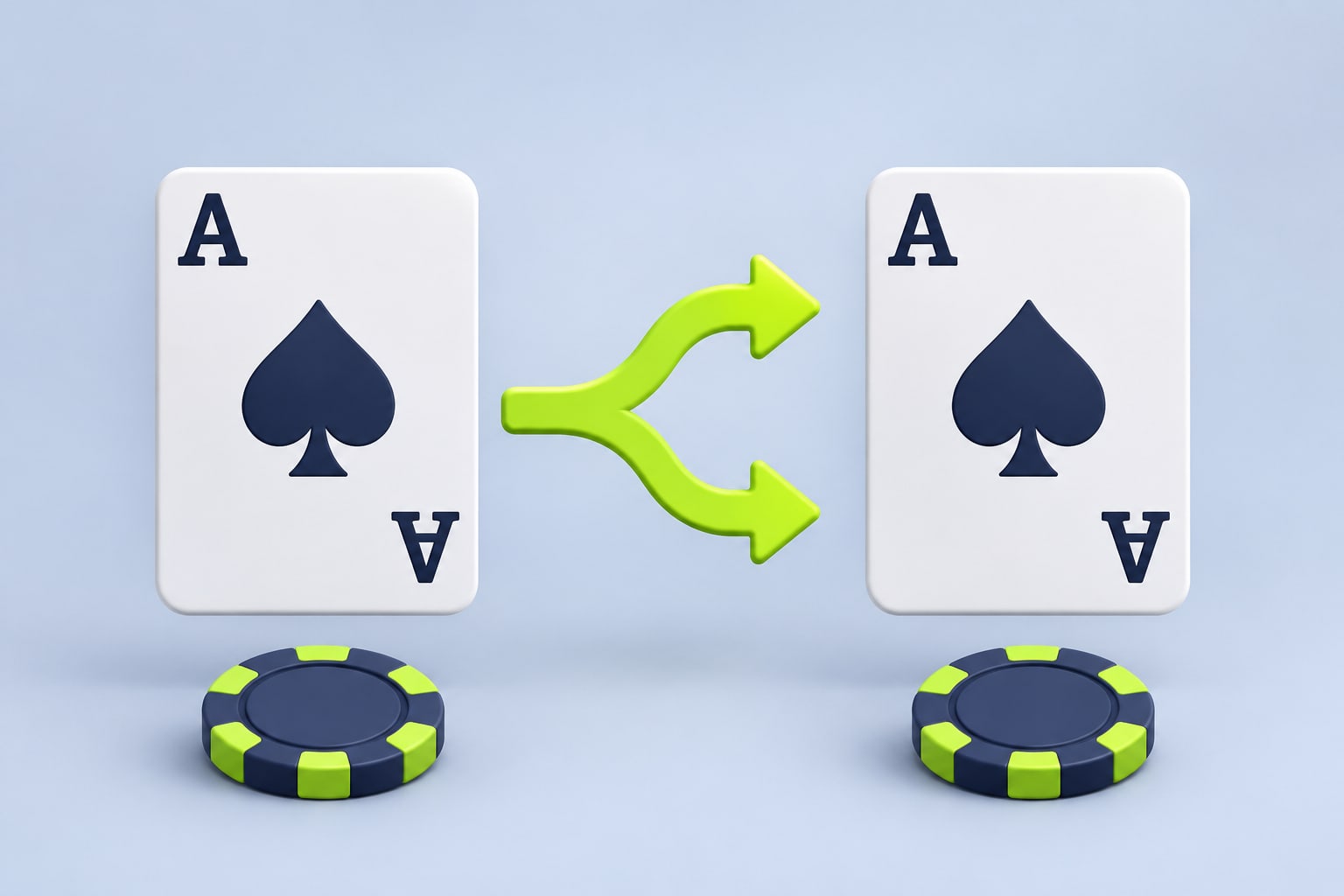
KeyToCasinos • Visual explainer
Split aces: check the special rules
A pair of aces can become two hands, but those hands often have fewer options.
Extra stake
Usually equal
A $10 starting bet normally needs another $10 to split.
Extra cards
Often one each
Many tables allow only one further card per split ace.
Ace + ten
Usually 21
A split ace with a ten-value card usually pays as ordinary 21, not a natural blackjack.
Check whether resplitting aces, hitting or doubling is permitted. Related: Split hand · Resplit.
Why two aces are a special pair
Two aces in one blackjack hand total either 2 or soft 12; they cannot both count as 11 because that would make 22. Splitting gives each ace a separate starting hand instead. With a $10 opening wager, a normal split requires another $10, creating two hands with $20 initially committed. Each ace can then combine with a different new card. This is why ace splitting is a prominent rule in blackjack descriptions. It is not simply a cosmetic rearrangement or a free second chance. The player has created another wager that can lose independently. The permission also has to be offered by the game; a general statement about how aces are valued does not itself establish the available split options.
The one-card restriction
Many conventional games deal exactly one additional card to each split ace and then finish those hands. An ace followed by a five may therefore be left at soft 16 without the ordinary option to hit again. An ace followed by a ten-value card usually makes an ordinary 21, not an original blackjack eligible for a 3-to-2 premium. These restrictions are central to the decision and should not be hidden behind the statement that aces can be split. Some variants permit additional actions, but those need explicit confirmation. Read whether the rule applies only to the first split or to every ace hand created by a later resplit. A disabled hit button can be the intended application of the one-card rule rather than an interface fault.
When another ace arrives
If an ace hand receives another ace, the game may offer resplitting aces, abbreviated RSA. A permitted resplit adds another wager and creates another hand, subject to the overall cap. Without RSA, the ace pair can be trapped under the split-ace restrictions rather than treated like a fresh unrestricted starting pair. Check the exact procedure before assuming that another ace must always be split. A limit described as four hands is different from four additional splits. Availability also depends on enough funds for the extra stake. General resplitting permission for other ranks does not necessarily include aces. The distinction should be stated clearly in any casino review or comparison because it changes what the player can do after the initial ace split.
Understanding the outcome of two hands
Suppose the first split ace receives a nine and the second a ten-value card. The hands finish at 20 and 21. Against dealer 20, the first normally pushes and the second ordinarily wins, assuming no overriding natural or variant rule. On two $10 wagers, that produces $10 profit overall, with the stakes returned according to each result. If the dealer has an original blackjack, both ordinary split totals may lose under conventional rules despite one displaying 21. The exact handling can differ in games that delay the dealer's second card or protect added wagers. Keep original blackjack, split 21 and multi-card 21 separate when interpreting the display. Matching the number 21 does not always mean matching the same hand category or payout.
Making a rule-aware decision
For ordinary blackjack, splitting an initial pair of aces is a standard basic-strategy recommendation, but any guidance must match the particular game and its exceptions. The value of the action depends on the allowed draws, resplits, dealer-blackjack treatment and other conditions. A successful pair of split hands does not guarantee the next split will succeed. It is possible to lose both wagers, and resplitting can increase the total money exposed. Decide on a spending limit before play and choose a starting stake that can accommodate permitted follow-up actions without exceeding it. If reviewing a disputed settlement, preserve each hand's cards, its separate stake and the split-ace rule. Those facts are more informative than assuming that every ace-ten combination should have been paid as a natural blackjack.