A split hand is one of the separate blackjack hands created when an eligible starting pair is divided and an additional wager is placed. Each resulting hand normally has its own cards and settlement, subject to the table's splitting rules.
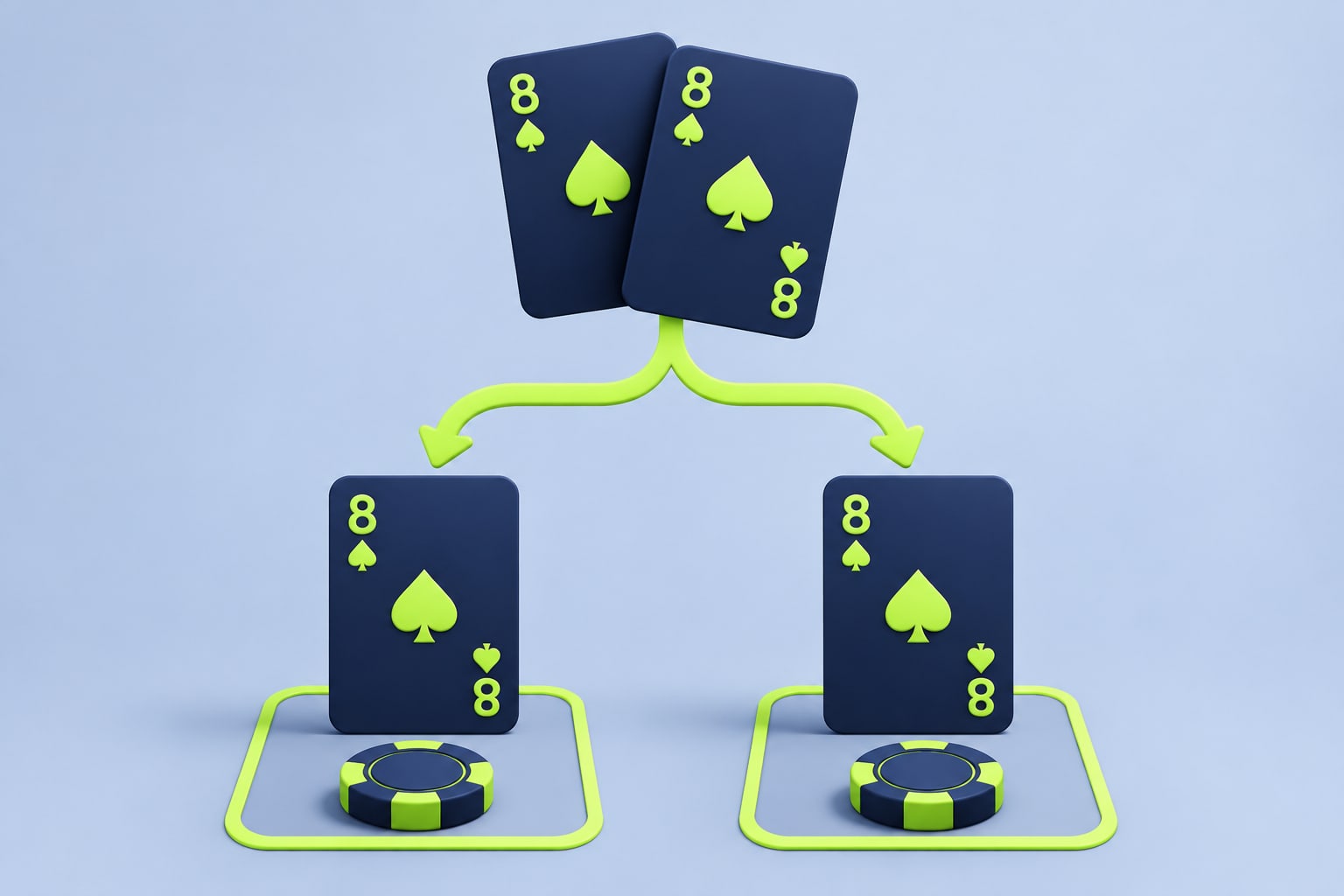
KeyToCasinos • Visual explainer
One pair becomes two separate hands
Example: an eligible pair of eights with a $10 opening stake.
Opening stake
$10
One hand before the split.
After splitting
$20 total
Two $10 hands, each played and settled separately.
Splitting rules vary. Further doubles or resplits can increase the total at risk. Related: Resplit · Splitting aces.
Turning one hand into two
Splitting is an option offered on certain initial two-card combinations. The player separates the cards, places an additional wager normally equal to the first, and plays a new hand from each card. Two eights can therefore become two starting hands of eight rather than one hard 16. The additional money is a real second wager, not a free replacement for the original hand. A $10 opening wager usually requires another $10 to split, creating $20 of initial exposure across the two hands. The dealer or interface keeps those wagers separate. Some games allow any two ten-value cards to be split, while others require matching ranks. A king and queen should not automatically be treated as an eligible pair merely because both count as ten.
Following each hand through the round
After the split, cards are dealt and decisions are made in the order specified by the game. Suppose the first eight receives a three and the second receives a ten. Those hands now total 11 and 18. They do not share their new cards, and one hand's result does not determine the other's. If the dealer eventually finishes with 19, a final player 20 wins while a player 18 loses. With two equal wagers, one ordinary win and one loss can cancel financially, even though neither hand was a push. This distinction matters when checking a statement showing several transactions for one round. Record each hand's final total and wager before combining the results into a net round outcome.
Extra options depend on the table
The split does not necessarily preserve every option available on the original hand. A table may allow doubling after splitting, restrict it to certain totals, or prohibit it entirely. Resplitting may create additional hands when another matching card appears, but there is usually a maximum number of hands. Split aces often receive only one further card each and may be subject to stricter resplitting rules. A ten-value card dealt to a split ace commonly makes an ordinary 21 rather than a premium-paying blackjack. Check these conditions together. A headline saying that splitting is allowed does not tell you whether ace hands can be hit, whether three successive splits are possible, or whether a strong two-card split hand can be doubled.
Why the original pair still matters
A split decision compares the expected results of available actions; it is not simply a preference for having more hands. Breaking a weak combined total into two promising starts can help, while breaking a strong total can be costly. The dealer upcard, deck count and permitted follow-up actions all affect that comparison. A chart for a game allowing doubles after splits can recommend a different action from a chart for a game that prohibits them. Equal ranks also have different strategic properties: two aces, two eights and two tens are not interchangeable examples. Avoid a rule such as always split any pair. Learn the decision for the exact game, including what to do if the preferred action is unavailable or there are insufficient funds for it.
Checking the full financial result
A round can become more expensive than its opening wager suggests. Starting at $10, splitting once and doubling both resulting hands can put $40 at risk. Further permitted splits can increase that amount again. Set a budget that accounts for legitimate follow-up wagers without treating them as a reason to exceed a spending limit. Also check how dealer blackjack affects added split money in games where the dealer does not check for blackjack before player decisions. Some rules return particular additional wagers; others expose them to loss. When reviewing a disputed round, retain the original stake, each added stake, all hand totals and the dealer result. Those details explain the settlement far better than a single combined balance change or the label split hand alone.