In no-hole-card blackjack, the dealer receives the second card after players finish their decisions. Rules differ on which stakes lose if that card completes dealer blackjack.
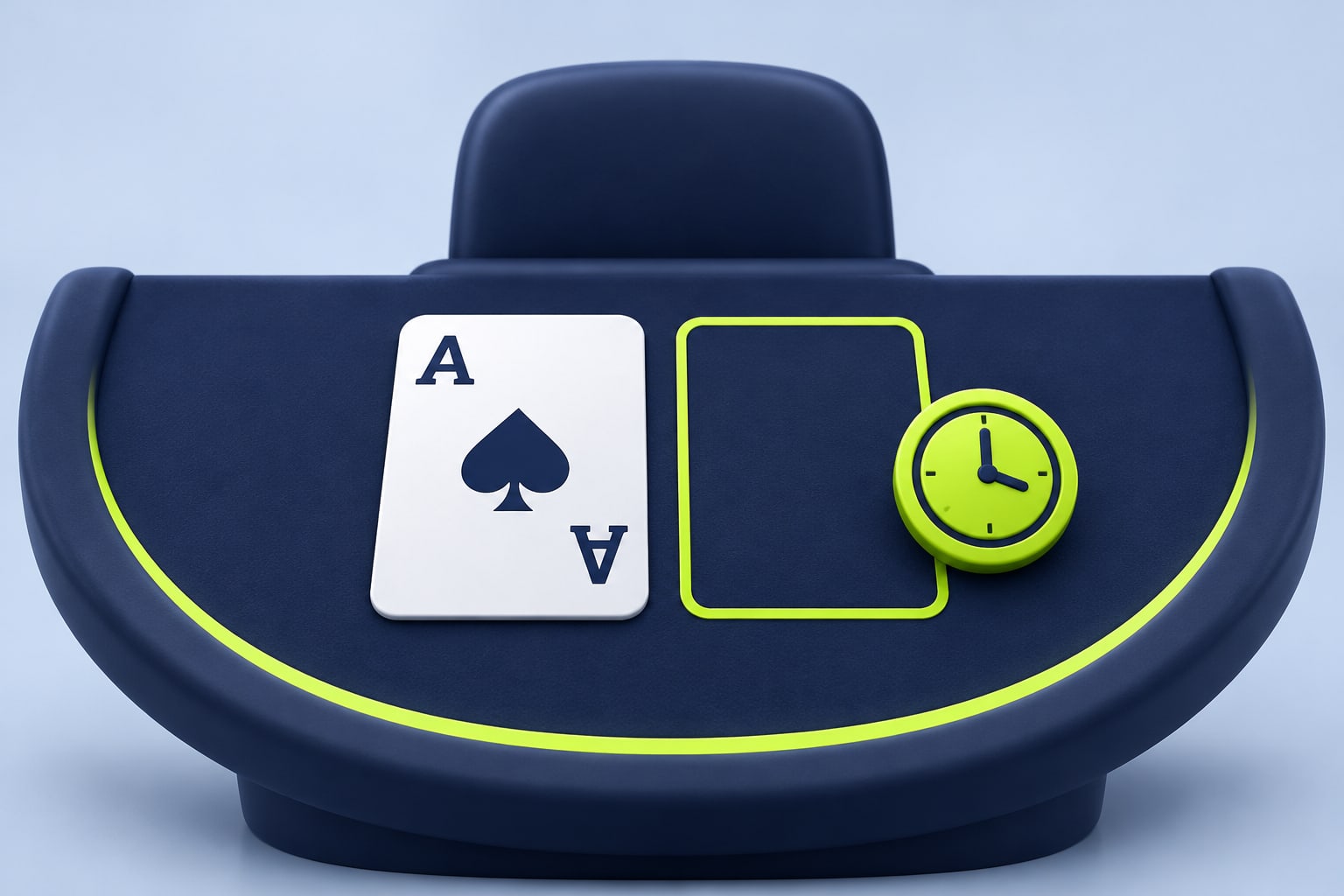
Visual explainer
When the second dealer card arrives
In a no-hole-card game, players finish their decisions before the dealer receives the second card.
1 · Initial deal
One dealer card
The exposed upcard is visible; the dealer has no second card yet.
2 · Player decisions
Hit, split or double
Permitted actions may add stakes before a possible dealer blackjack is resolved.
3 · Dealer second card
Resolve the hand
If this completes blackjack, the game’s settlement rule determines which stakes lose.
Example: 10-unit original bet + 10-unit double, with no player bust. If dealer blackjack collects all stakes, 20 units lose. If the rule protects that added double stake, 10 units lose and the other 10 return.
These are alternative settlement rules, not interchangeable names for no-hole-card blackjack. Check the exact treatment of added wagers and busted hands. Related: DAS · Blackjack.
What is a no-hole-card game?
No-hole-card describes a blackjack procedure in which the dealer initially has only one card, normally exposed as the upcard. The second dealer card is dealt after the players complete their permitted actions. This differs from a game where the dealer already holds a face-down hole card during player decisions. The absence of an early second card means a potential dealer natural may remain unresolved while players hit, split or double. The expression is often associated with European blackjack, but regional labels are not a complete rules description. Confirm the dealing sequence in the specific game's help panel. Also distinguish a true no-hole-card game from a game that deals a hole card but does not check it early; the physical procedure differs even when some financial consequences can be similar.
The key question is which stakes lose
Suppose the dealer shows an ace and you place a $10 original wager. You later double, adding another $10. When the dealer finally receives the second card, it is a ten-value card and completes blackjack. One possible rule collects the entire $20. Another protects the additional doubling stake in that situation and collects only the original $10, subject to its precise conditions. Splits can create the same issue across several hands and added wagers. This is why knowing only that a game has no hole card is insufficient. Look for the settlement language covering dealer blackjack, original bets, additional bets and busted hands. Do not assume that a rule protecting some added stakes refunds every wager regardless of what happened during the player's turn.
How this differs from an early check
In a conventional hole-card game with an early blackjack check, a possible dealer natural can be identified before players add split or double stakes. When the dealer has blackjack, the round is resolved at that earlier point under the applicable rules. In a no-hole-card game, players may commit additional money without that certainty. The relevant strategic effect depends on whether the extra money is exposed to dealer blackjack. A basic strategy chart must match that settlement rule as well as the number of decks and other conditions. A chart assuming an early check can recommend a split or double that is unsuitable under an all-bets-lost rule. The visible player cards alone do not tell you which chart applies; the dealer procedure is part of the decision.
Surrender, insurance and natural hands
Other options require their own reading. A surrender button offered before the dealer's second card is dealt is not automatically early surrender that is valid against a subsequent dealer blackjack. Some games condition the result on the dealer's eventual hand. Insurance, if offered, is a separate wager on dealer blackjack and has its own stake limit and payout. A player's two-card natural is also different from a three-card 21 or a 21 formed after splitting. The game must specify how each is settled against dealer blackjack. Avoid combining these separate rules into a vague claim that every 21 ties or that surrender always saves half. Read the exact conditions and use worked examples with original and additional stakes separated when comparing two games or asking support for clarification.
A practical rules check before playing
Record the exact table or game name, when the dealer receives the second card, whether any blackjack check occurs, and what happens to extra stakes. Then check blackjack payout, S17 or H17, split limits, doubling permissions and surrender availability. A short rules summary may omit the settlement detail that matters most, so consult the full help text when needed. If the wording remains unclear, stop before wagering and ask support for an example involving a split and a double against dealer blackjack. Keep the reply with the game version or date for reference rather than assuming it covers every table. Understanding these conditions helps prevent surprises, but it does not guarantee a favourable result. Choose affordable limits and do not increase stakes merely because a game has a familiar regional name.