A near miss is a losing or nonqualifying result that visually resembles a winning combination. On a random slot, an almost-complete pattern is not evidence that a win is becoming due.
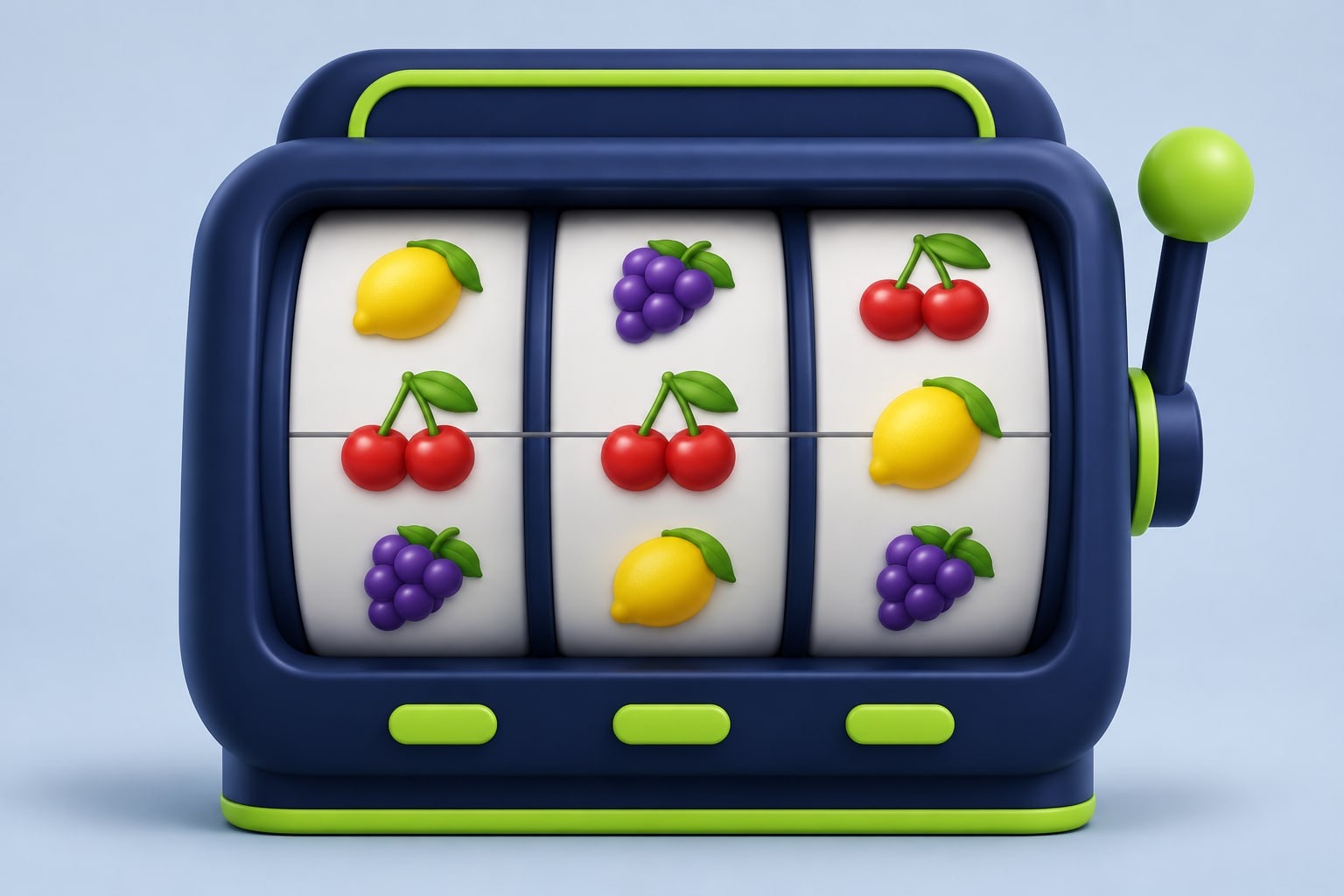
Visual explainer
Close on the screen is not a win
Hypothetical three-reel game: the jackpot needs three ★ symbols on the active middle line.
A near-miss result
★ · ★ · ●
The middle line contains only two stars. A star above or below that line does not complete it.
The required result
★ · ★ · ★
All three symbols meet the example’s stated line condition.
For independent spins, the first result does not increase the chance of the second result on the next spin.
Actual awards follow the game’s paytable, including any separate scatter prizes. This example does not assign odds to the symbols. Related: Short Run · Multi-Line Slot.
A result that looks close
Near miss describes a result that appears close to a win without meeting the required conditions. A familiar slot example is two matching jackpot symbols on the active line with the third symbol just above or below it. Another example is receiving two required feature symbols when the rules demand three. The visual impression can be striking, but the actual award is determined by the completed result and paytable. A symbol close to the line is not on the line. A nearly triggered feature is not the feature itself, unless the game explicitly provides a separate award for that precise outcome.
Visual distance is not a probability forecast
The distance between a displayed symbol and a winning position does not tell the player how likely the next spin is to win. In an independent random game, the previous outcome does not make the missing symbol more likely to arrive next time. A sequence of near misses also does not establish that the machine is warming up or approaching a scheduled payment. Reel artwork and animation present the result in a visible form; they are not a meter showing how much luck remains. Probabilities must be understood from the game's actual model and rules, not from how close the graphics appear.
A hypothetical example
Imagine a three-reel game whose paytable requires three bells on the middle line. The result shows a bell on the first two middle positions and a lemon on the third, with a bell visible immediately above that lemon. If no other rule pays this arrangement, the wager loses. It has the same net financial result as another nonpaying combination at that stake, even though it may feel more promising. If the next spin costs one currency unit, choosing to spin again is a new one-unit wager. The previous visual pattern has not paid part of that cost or created a credit toward the bells.
Separate genuine features from the impression
Some games have documented persistent meters, collected symbols, held positions or other stateful features. Those mechanisms need to be read according to their specific rules. They should not be confused with an ordinary near miss that leaves no continuing state. A meter that visibly retains progress may matter within its defined feature, but it still does not justify assuming that every almost-win changes the next outcome. Check whether progress actually persists, what can reset it, and whether changing stakes or leaving the game affects it. The existence of one stateful feature does not turn unrelated reel patterns into predictive signals.
Presentation rules depend on the regulated product
The Gambling Commission's remote technical requirements address false displays of near misses, including substituting one losing outcome with a different losing outcome. That is a rule about how results are generated and presented within the relevant regulated framework. It does not mean that every naturally occurring near-miss pattern is prohibited, nor should it be treated as proof that every game on every website follows the same requirements. A player's practical starting point is the actual provider, game rules and applicable oversight. A convincing animation by itself cannot demonstrate either compliance or manipulation, and a single screenshot is insufficient to reconstruct the game's mathematics.
Respond to the outcome that actually occurred
When reviewing a session, record the amount staked and returned rather than counting almost-wins as successes. A near miss does not reduce the loss already incurred. If such results create an urge to continue beyond a planned limit, pause instead of increasing the stake to capitalise on a feeling of closeness. A decision to stop remains available even after several visually dramatic spins. The useful distinction is between what the game actually awarded and what its appearance suggested might have happened. Understanding near misses helps keep that distinction clear without requiring a prediction about the next result.