In traditional slot terminology, a multiplier version scales a combination’s award with the number of credits wagered. Straight multipliers scale proportionally; bonus multipliers can give specified combinations a disproportionate increase at a stated stake. Modern bonus multipliers are a separate usage.
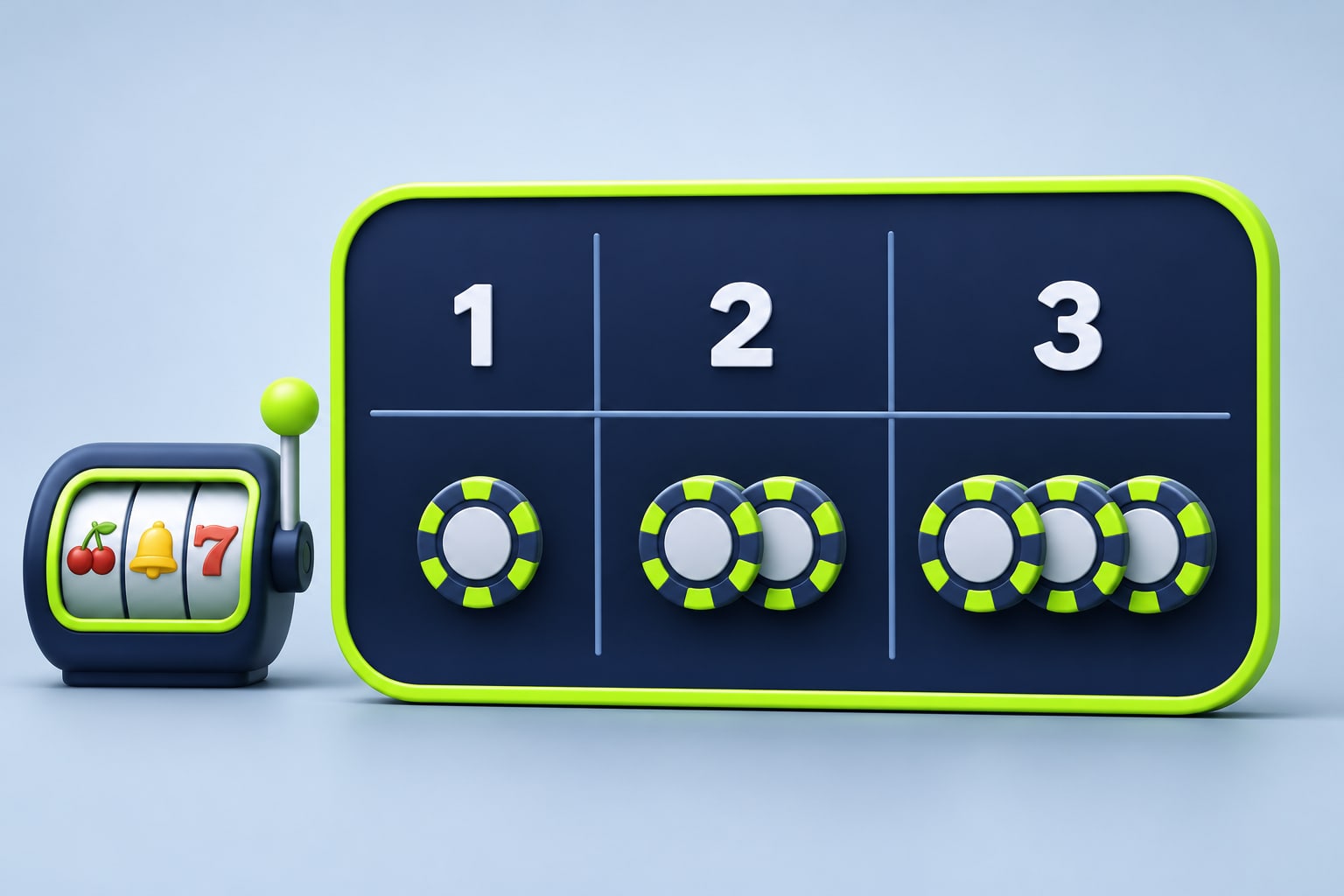
A traditional paytable description
Multiplier slot version is a traditional description of how awards change when more credits are wagered. A paytable may show one column for each permitted credit level and one row for each paying combination. The player reads across the row to see the award at the chosen stake. This usage is different from a modern bonus feature that applies a randomly awarded multiplier to a win. Both involve multiplication, but they describe different mechanics. Before interpreting the term, establish whether the subject is the ordinary stake-to-award schedule or an additional feature that operates during a particular round.
Straight proportional scaling
A straight multiplier scales the award in direct proportion to the credits wagered. Suppose an illustrative combination pays ten credits at a one-credit stake, twenty at two credits and thirty at three credits. The award per credit wagered is unchanged across those columns. The larger total payout at three credits therefore comes with a larger cost, not an automatic improvement in value per unit. This simple comparison is often missed when a paytable displays the biggest amount most prominently. Divide the award by the corresponding stake when checking whether the schedule is genuinely proportional rather than relying on the size of the final number alone.
Bonus multiplier exceptions
A bonus multiplier schedule can depart from proportional scaling for a specified combination or stake level. For example, a particular top award might increase by more than the increase in credits wagered at the maximum setting. That is a paytable-specific condition, not a universal property of every multiplier slot. Check which row changes, which stake qualifies and whether other awards still scale normally. Do not infer a benefit from a Max Bet label without reading the actual values. Even where a relative return changes, the larger stake increases money exposed per round and does not guarantee that the qualifying combination will occur.
Credit count and denomination
The number of credits and the value of each credit are separate controls or concepts. Three credits at a value of 0.20 each cost 0.60, while three credits at a value of one unit cost three units. A paytable stated in credits must be converted using the active denomination before comparing it with a cash balance. Some products use a total-bet amount instead, so read the interface's own explanation. Confusing credits with currency can make both the wager and the potential award appear smaller or larger than they really are. Confirm the total amount that will be deducted before starting the round.
Different from modern win multipliers
A modern slot may award a 2x, 5x or another multiplier within a bonus, through a symbol or as part of a sequence. That feature's rules define what amount is multiplied, whether multipliers combine and which awards are excluded. It does not necessarily change the ordinary paytable's proportional relationship to the base stake. Similarly, a buy-your-pay arrangement can unlock additional paying combinations rather than merely multiply the same schedule. These distinctions prevent different slot types from being grouped under one vague promise of bigger wins. Read the specific trigger and calculation rather than carrying assumptions from a familiar name into another game.
Comparing value without chasing the maximum
Review the paytable row by row, identify the cost at each setting and distinguish proportional scaling from any stated exception. Check whether the published RTP already reflects the chosen setting and feature rules. A larger possible award is not a reason to exceed a spending limit, and choosing the maximum stake does not make the next result predictable. If the qualifying setting is outside the budget, the appropriate conclusion is that it is outside the budget. Understanding multiplier versions helps explain how the game prices and pays its combinations; it does not turn a maximum-bet requirement into a recommendation or establish that losses will eventually be recovered.