Center field, or center-field nine, is craps slang associated with a total of nine. It is not a sufficient description of a wager: a Field bet, a Place Nine and a one-roll bet on nine have different rules.
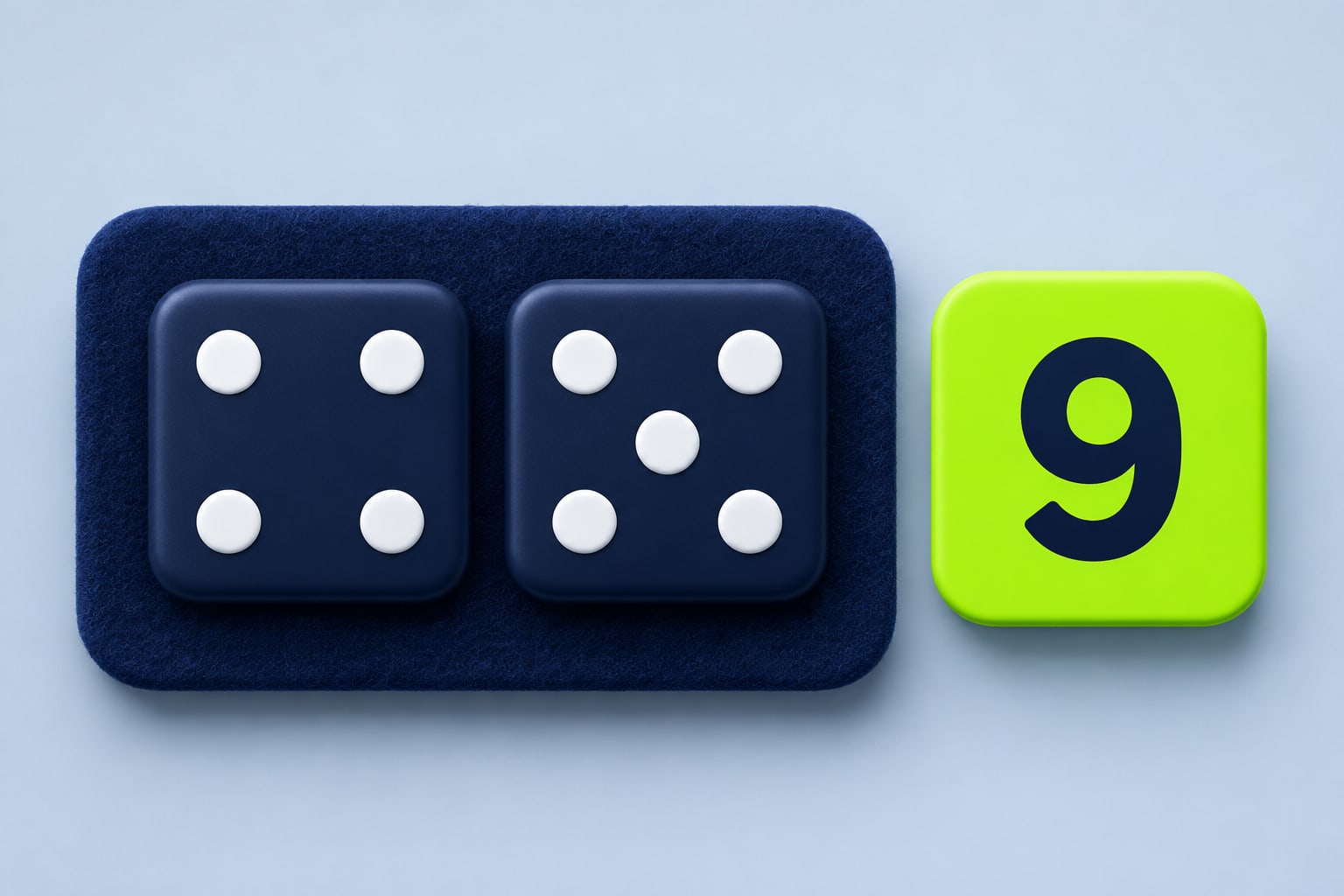
A nickname needs a clear betting instruction
Center field is a nickname associated with nine in craps, often heard as center-field nine when the dice result is announced. It can be useful for understanding table chatter, but it should not replace a precise betting instruction. Casino terminology is not perfectly uniform, and some specialised games or layouts use similar wording for their own wagers. A player saying only center field may not have made clear whether they mean a Field bet, a wager on nine or merely the result just rolled. State the exact bet and amount, then check that the dealer has placed it correctly before the next roll.
Why nine is associated with the Field
The standard Field wager covers several totals on the next roll, commonly two, three, four, nine, ten, eleven and twelve. Nine appears in the middle of that ordered group, which helps explain the familiar nickname. A Field bet is therefore not simply a bet on nine. It can win on other listed totals and loses on totals outside the Field. The payouts for the endpoints, especially two and twelve, can vary by table. Read the printed layout and rules. Knowing the nickname does not tell you the whole coverage or the expected value of the actual Field wager.
A one-roll nine is a different wager
A wager that requires nine on the very next roll is narrower than the Field. With two fair six-sided dice, nine can be formed by three-six, four-five, five-four or six-three. That gives four ordered outcomes out of thirty-six, or one ninth of the possibilities. There are eight losing outcomes in probability terms for every one winning outcome, so a fair net-profit payout would be eight to one. This is a probability calculation, not a statement that every casino offers such a wager or pays that price. Check the available bet and its actual settlement before using the calculation.
Placing nine involves a different stopping rule
A standard Place Nine bet is usually resolved by nine or seven rather than by every possible result on the next roll. Other totals generally leave a working Place Nine bet unresolved. This makes it different from a one-roll proposition even though both mention the same target number. Standard Place Nine pays seven units of profit for five units wagered, but the precise operating rules and whether bets are working should still be confirmed. The comparison is between nine and seven before either appears, not between nine and every other total on one roll. Changing the stopping rule changes the probability model.
Avoid confusing calls with proprietary labels
A dealer's spoken call identifies a result; a printed betting area defines where and how a wager is made. Those are different functions. There are also approved proprietary dice games that use Field-related names for their own combinations. Their rules should be read independently rather than inferred from ordinary craps slang. If a layout explicitly labels an area Center Field, ask what numbers it covers, whether it is a one-roll wager and whether the payout is stated as profit or total return. Do not assume a familiar phrase guarantees a familiar bet, especially when moving between physical tables and online interfaces.
Use the term to understand the table
The practical value of learning center-field nine is clearer communication, not an advantage over the dice. A nine that has appeared frequently does not become more likely on the next independent fair roll, and a long absence does not make it overdue. Keep the amount at risk visible and distinguish active bets from chips merely held in your rack. If you are unsure what has been accepted, resolve that uncertainty before the roll rather than after the outcome. A precise description of the wager protects against misunderstandings far better than relying on a colourful nickname alone. Confirm instructions before chips are committed.