The place numbers in craps are four, five, six, eight, nine and ten. A standard place bet on one of them wins if that number is rolled before seven while the bet is working.
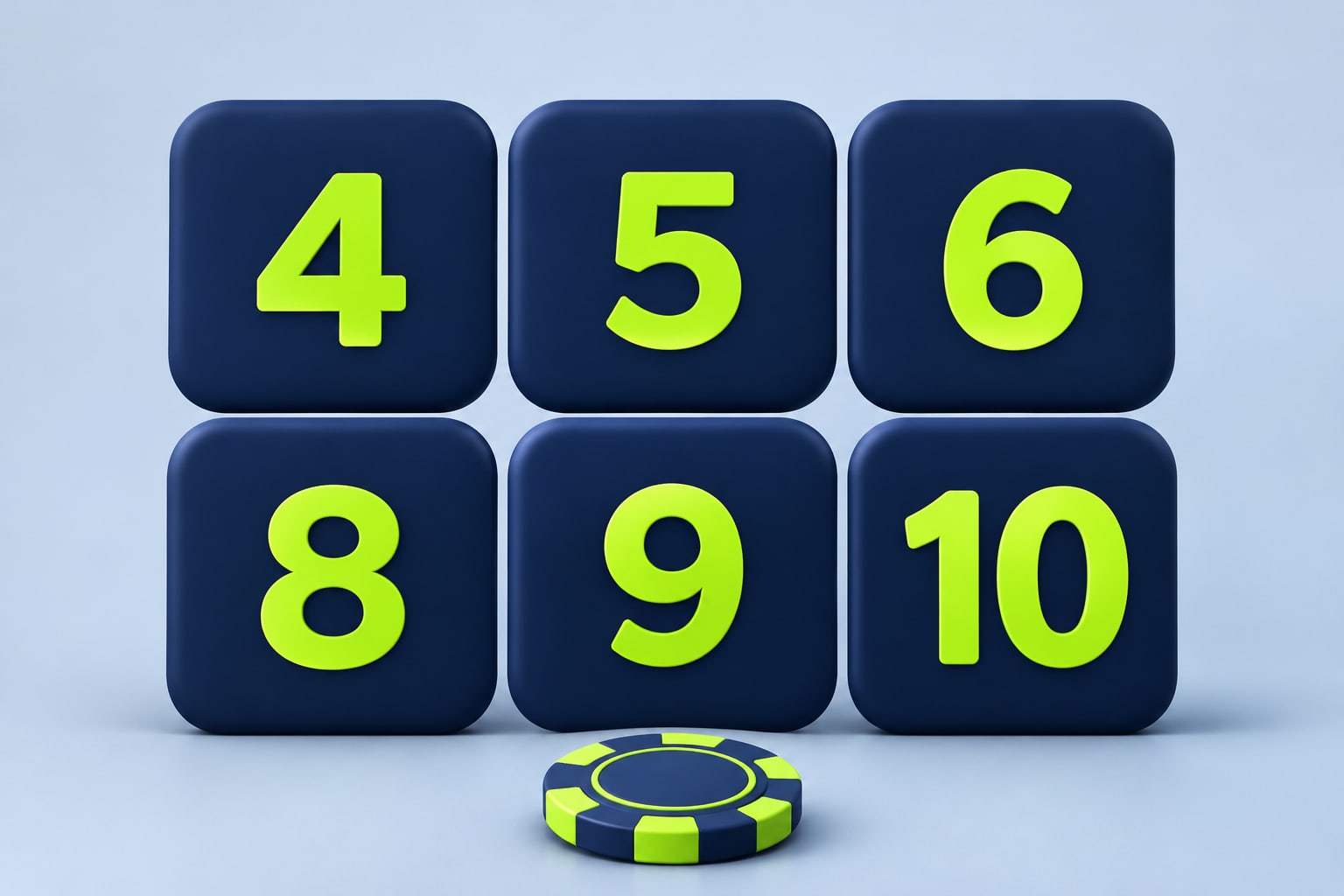
The six numbers available to place
A standard craps layout offers place bets on four, five, six, eight, nine and ten. The player chooses a number and asks the dealer to position the wager appropriately. A working place bet wins when its selected number appears and loses on seven. Other totals normally leave it unresolved. The wager does not require the selected number to appear first in order to establish its own point, which distinguishes it from a come bet. You are paying for an already specified number to beat seven under the place-bet rules, rather than starting the come bet's initial-roll decision.
Standard payouts differ by number
Common place payouts are nine to five on four or ten, seven to five on five or nine, and seven to six on six or eight. These are profit ratios, with the original stake handled separately. Dealers commonly ask for multiples of $5 on four, five, nine and ten, and multiples of $6 on six and eight, so the payout uses whole chips. Thus a $6 place bet on six earns $7 when six wins. Minimums, accepted amounts and unusual variants can differ. Check the actual posted rules and ask the dealer to confirm an amount before putting chips into action.
A sequence of rolls in practice
Suppose you place $6 on eight while the wager is working. A roll of five does not settle it. A roll of eleven also normally leaves it in place. When eight arrives, the winning profit is $7 under the standard seven-to-six payout. The original wager commonly stays on the number unless you ask for it to be removed or otherwise direct a permitted change. If seven appears before that eight, the working $6 wager loses. A payout on an earlier roll does not protect the original chips from a later seven if you leave them working on the table.
Working, off and taken down
A place bet can commonly be called off or taken down, subject to the table's timing and procedures. Off generally means the chips remain positioned but are not active for the relevant roll. Taken down means the wager is removed and returned. At many tables place bets are off during the come-out roll unless the player asks otherwise, but you should confirm the local default. Make instructions before the dice are thrown and check that the dealer has acknowledged them. A wish to stop after seeing the result cannot retroactively change whether the wager was working when that roll began.
The house edge behind the payouts
There are five combinations of two dice that make six and six combinations that make seven. Considering only those settling results, a place six wins five times for every six losses on average. At a seven-to-six payout, that produces a house edge of about 1.52 percent per resolved wager. The standard place five or nine has a higher edge of 4 percent, and place four or ten about 6.67 percent. These comparisons assume the standard payouts and fair dice. They describe long-run expected cost rather than the chance of losing a particular session or a guarantee that the lower-edge selection will win.
Do not confuse place bets with odds or buys
Buying a number and taking odds behind a line or come wager can involve the same target numbers but use different payout and commission rules. A lay bet takes the opposite side by backing seven before a selected number. Similar-looking chip positions therefore should not be interpreted without the dealer's identification. Covering several place numbers also increases combined exposure: one seven can remove every working place bet at once. Add the full amount at risk when deciding what is affordable. Place numbers are a convenient name for six available targets, not a system that removes seven or makes recent rolls predictive.