Any Twelve is a one-roll craps proposition bet that wins only when the next two-dice total is twelve, commonly paying 30:1 profit under standard layouts.
What the wager covers
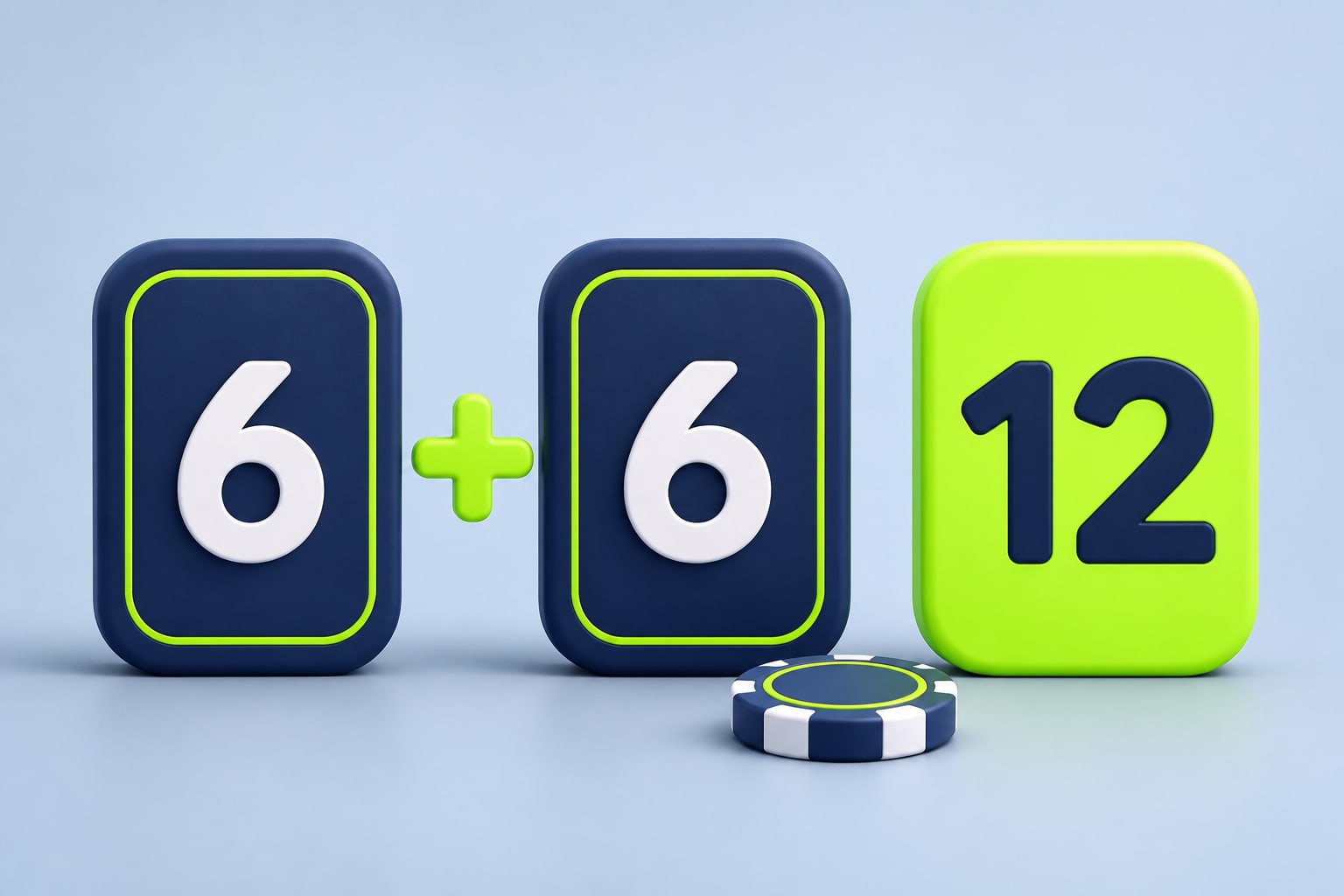
Any Twelve predicts a total of twelve on the next roll of two ordinary six-sided dice. Both dice must show six. The word any does not create several ways to make that total; there is still only the six-six combination. It distinguishes the named proposition from other parts of the layout rather than broadening its coverage. At a physical table, the dealer normally handles proposition bets in the center area. In an online game, a twelve selection may appear as a dedicated button or betting spot. Confirm the number and amount shown before the roll begins. Both dice must finish with six showing.
It resolves after one roll
The wager either wins or loses on the next valid roll. It does not establish a point, wait for a seven or stay unresolved until twelve eventually appears. A total other than twelve loses the stake even if twelve arrives on the following roll. Keeping the wager active for another roll is a new exposure with a new stake. This distinction matters because other craps bets can remain in action over several rolls. A player who describes putting a dollar on twelve should also understand whether the dealer will return a winning payment or retain a dollar for a fresh bet.
Probability and the payout
There are 36 equally likely ordered outcomes when two fair six-sided dice are rolled. Only one gives twelve, so its probability is 1/36, or about 2.78%. The true odds against the result are 35:1. A layout paying 30:1 profit pays less than those fair odds, creating a house advantage. With a $2 stake, a winning result earns $60 profit and returns the $2 stake for $62 in total. If a display uses for-one odds instead of to-one profit odds, the stated total includes the stake. Read that convention before comparing two apparent payout figures.
A transparent house-edge calculation
For a one-dollar wager paid at 30:1 profit, the single winning combination contributes thirty dollars of profit to the probability calculation. The other 35 combinations each lose one dollar. The combined result across those equally weighted possibilities is minus five dollars for 36 dollars of action. Dividing five by 36 gives an expected loss of approximately 13.89% of stakes. This is a theoretical average, not a claim that a particular session must lose that percentage. One successful roll can create a large short-term gain, while a session without twelve can lose every stake placed on this proposition.
Separate it from field and horn bets
Twelve is also included in a standard field bet and in horn combinations, but those wagers cover additional totals and have their own payout calculations. A field winner on twelve usually receives the special field payment printed on that layout, not the straight proposition payment. In a horn bet, the component on twelve can win while the stakes allocated to other horn numbers lose. A horn high twelve puts a larger share on twelve, which changes the net result again. Always calculate the complete wager instead of applying the twelve payout to money that was actually placed on other outcomes.
Repeated rolls do not create a due result
A run without twelve does not increase the probability on the next independent roll. Raising the stake after misses changes the money at risk without changing the dice combinations. Repeating a $2 bet fifty times produces $100 of turnover even if the starting bankroll was much smaller and some returns were reused. Decide the maximum exposure before beginning and avoid treating a rare win as something the table owes you. If the payment is disputed, record the posted odds, the exact stake, the dice result and whether a fresh wager was left in action. Those details are more useful than a nickname or an estimate of how long twelve had been absent.