A natural is an opening result with special significance in a casino game. In blackjack it means an original two-card ace plus a ten-value card; in baccarat it means an initial two-card total of 8 or 9; in craps it commonly means a come-out 7 or 11.
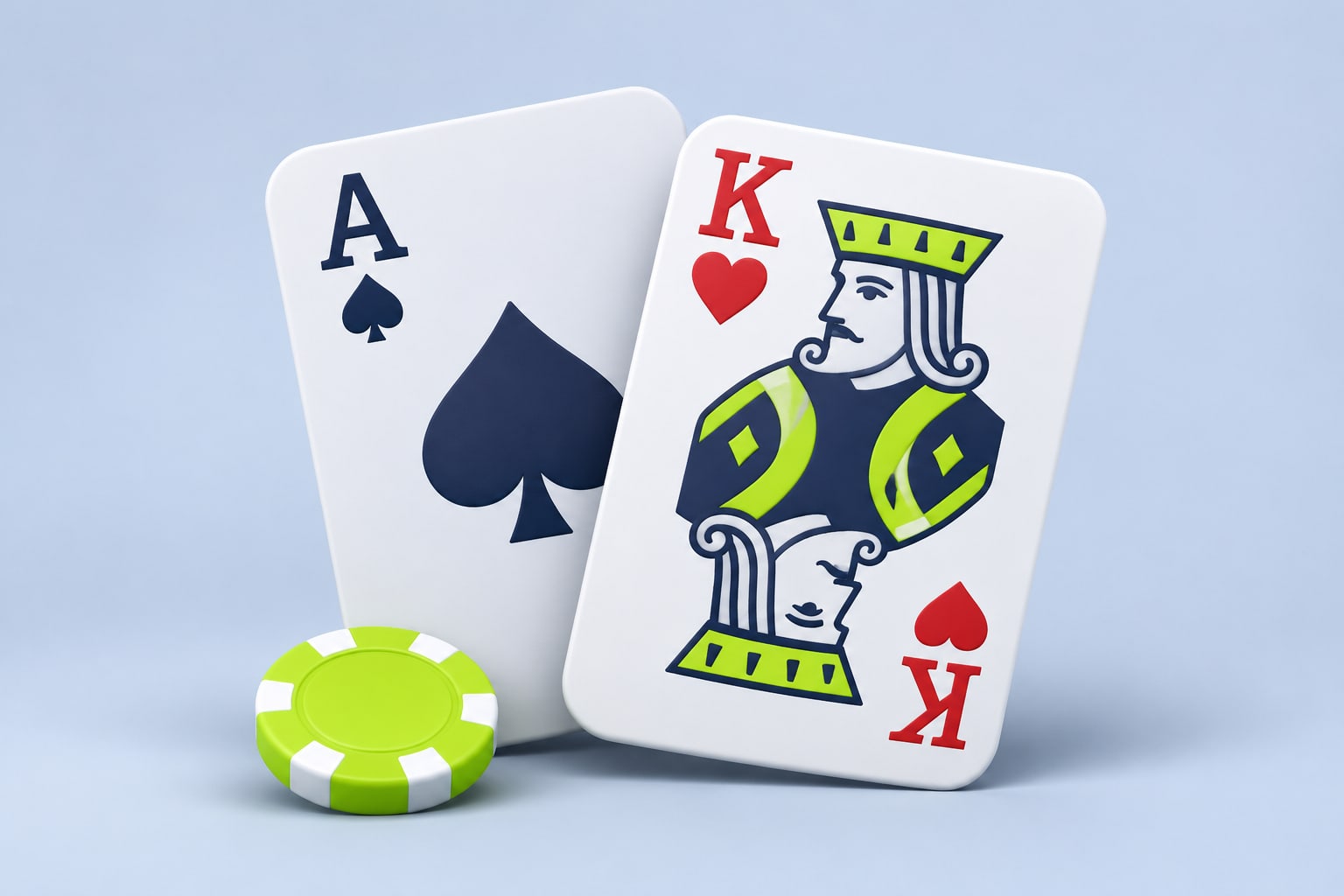
The game determines the meaning
Natural is not one universal casino hand. It describes an opening combination that receives particular treatment in the game being played. Blackjack, baccarat and craps use the word differently, so a glossary should name the game before discussing the result or payout. The common theme is that the result occurs at the initial stage rather than after an extended sequence of decisions. That does not mean it always wins every wager on the table. A blackjack natural can meet a dealer natural, baccarat has two competing hands, and a craps natural has different consequences for opposite line bets. Read the wager and game context together. The word natural by itself does not specify a monetary return or establish which participant has won.
A natural in blackjack
An original ace plus a ten, jack, queen or king forms blackjack, commonly called a natural. A three-card total such as seven-seven-seven is 21 but is not an original two-card blackjack. An ace and ten-value card formed after splitting are also commonly treated as ordinary 21 rather than a natural. This distinction affects priority and payout. Under conventional rules, an original dealer blackjack defeats a player multi-card 21, while both sides having original blackjack normally creates a push. A winning natural may pay 3 to 2 or another posted rate. On a $10 wager, 3 to 2 means $15 profit plus the returned $10 stake. A 6-to-5 schedule instead produces $12 profit on that same bet.
Why blackjack exceptions must remain visible
Special variants can change how naturals are compared or paid. Spanish 21, for example, has its own player-blackjack provisions, and other products may replace the usual premium or tie treatment. A label such as blackjack pays 3 to 2 should therefore be read with the full rules, particularly split-hand restrictions and dealer-check timing. Insurance is a separate wager on dealer blackjack, not part of the definition of the player's natural. Accepting an even-money offer can change the practical payment on a player blackjack against an ace, but it does not change which two cards were dealt. When checking a round history, identify whether the hand was original, split or drawn to 21 before deciding that the natural payout should apply.
Naturals in baccarat
In baccarat, a natural is an initial two-card total of 8 or 9. Card values are calculated differently from blackjack: tens and face cards count as zero, and only the units digit of the sum is used. A seven and an ace make natural 8; a nine and a king make natural 9. A natural normally ends further drawing for that round, with the two hands compared under the baccarat rules. Natural 8 is not an automatic winner against natural 9, and equal totals can tie. The Player and Banker names identify betting hands, not the customer's personal cards. Main-wager payments, commission and any side-bet awards remain separate questions. The presence of a natural does not by itself establish that a tie or bonus wager has won.
Naturals in craps
In conventional craps, seven or eleven on the come-out roll is commonly called a natural. It wins the pass-line bet at that stage and loses the don't-pass bet. Once a point has been established, the same totals have different consequences: seven normally ends the pass-line sequence with a loss, while eleven does not resolve the established line bet. This is why the phrase natural seven needs the come-out context. Proposition bets on individual totals are settled under their own rules regardless of the nickname. When writing about a natural, state the opening stage, exact cards or dice total, affected wager and payment convention. Those details prevent a familiar word from being carried incorrectly from one game into another or from one phase of a round into the next.