AML measures aim to detect and prevent the misuse of financial services for illicit funds. Casino checks can concern identity and money sources.
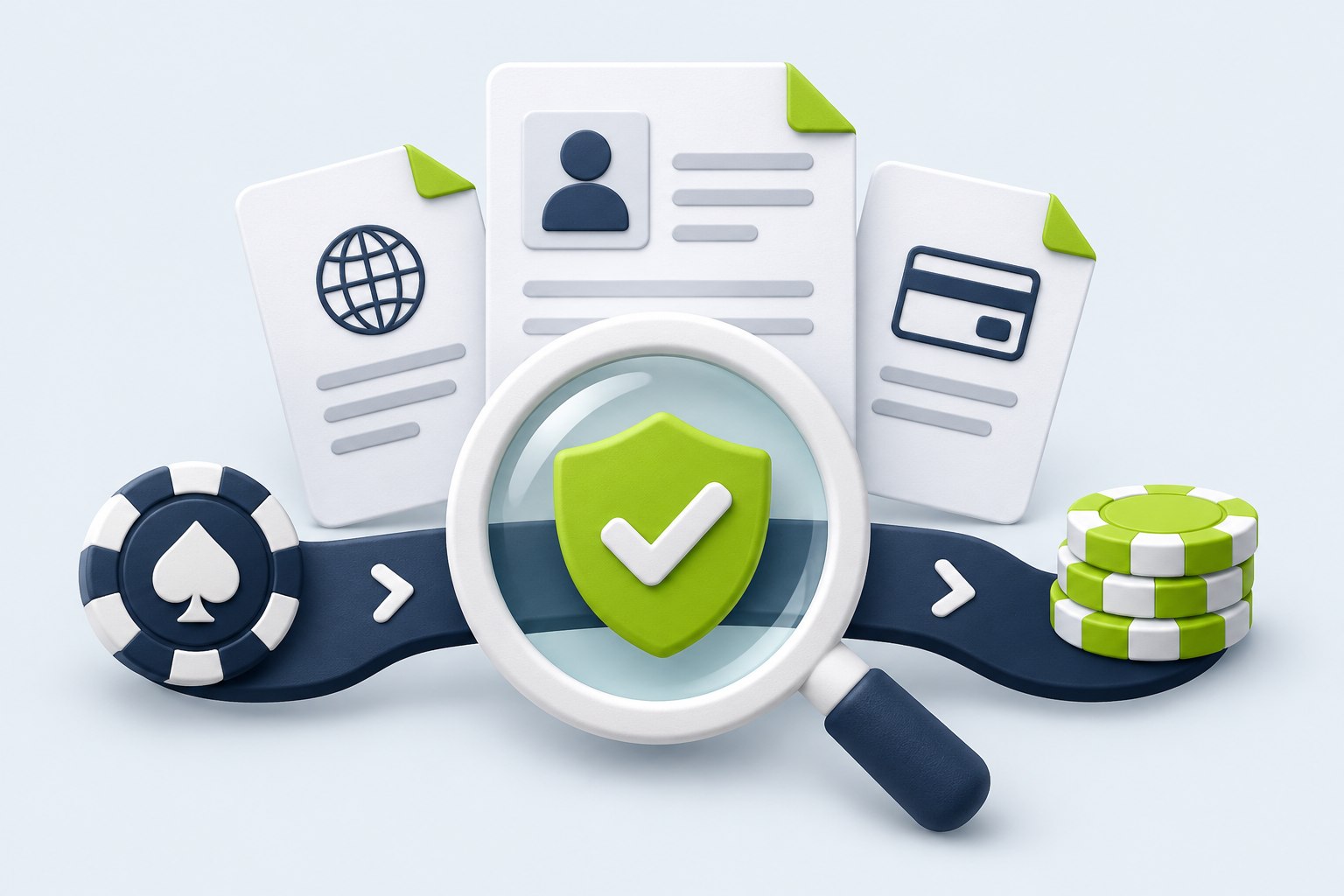
What AML means
AML stands for anti-money laundering. It describes measures intended to prevent, identify and respond to attempts to disguise the criminal origin of funds through financial or commercial activity. In casino operations, relevant controls can include customer identification, transaction monitoring, risk assessment, record keeping and reporting obligations. The exact requirements depend on the operator's jurisdiction, business model and applicable law.
AML is not simply another name for a withdrawal delay. A payment can be delayed for ordinary processing reasons, and an AML check can occur at other stages of an account's life. The term should identify a compliance purpose rather than function as an unexplained catch-all. A customer may legitimately need clarification about requested information even when the operator cannot disclose every detail of an investigation.
AML and KYC are related but different
Know Your Customer, or KYC, focuses on establishing relevant information about the customer, such as identity and account ownership. Those checks can support AML controls, but AML is broader. It also concerns how activity is assessed over time and how the business responds to identified risks. Completing an initial identity check does not necessarily satisfy every later obligation that may arise.
Other account checks can have different purposes, including preventing underage gambling, assessing safer-gambling concerns or confirming payment ownership. A document request should be understood in its actual context. Do not assume that every request proves wrongdoing, or that the same document automatically resolves every type of check. Ask which information is required and through what secure channel it should be provided.
Source of funds and source of wealth
Source of funds concerns where the money used in a particular relationship or transaction came from. Source of wealth concerns how a person's overall wealth was accumulated. The two questions can overlap but are not identical. A statement showing a current balance may not, on its own, explain the origin of the money if that is the question the operator is required to address.
The evidence requested should relate to the circumstances and applicable obligations. Examples can include records explaining employment income, a sale or another legitimate source, but the operator must specify what it needs for the case. This glossary does not establish a universal document checklist. Requirements can vary, and customers should avoid sending unrelated sensitive material simply because a generic online article lists it.
Communicating during a check
Use the operator's verified account portal or another confirmed official channel. Check the requesting domain and keep a record of what was submitted and when, without unnecessarily copying sensitive documents into ordinary chat histories. Do not disclose passwords, security codes or cryptocurrency recovery phrases. Those secrets are not normal evidence of lawful income or ownership of an account balance.
An operator may be legally restricted from revealing certain reporting or investigation details. That does not make every vague response sufficient for every practical question. Customers can still ask whether documents were received, whether a specific item is missing and what general process applies. If the explanation remains unsatisfactory, use the formal complaint route while recognizing that some information may not be available for disclosure.
How to read AML claims in reviews
A casino stating that it follows AML rules is making a compliance claim, not proving the quality of every check or guaranteeing that payments will be fast. Identify the legal entity, licensing jurisdiction and relevant official guidance. KTC's KYC and AML article provides further context. Keep identity, transaction monitoring and payment processing conceptually separate when asking the operator what remains outstanding on your account.
Do not attempt to avoid checks by splitting activity, using other people's accounts or providing false information. Apart from possible legal consequences, inaccurate records make legitimate account and payment problems harder to resolve. AML controls are intended to protect the integrity of the financial relationship. A clear explanation helps customers understand the purpose and secure handling of requests without suggesting methods to bypass them or treating every reviewed customer as suspicious.