Third base is the blackjack seat that acts last among the occupied player positions before the dealer completes the hand. On a conventional table it is at the dealer's far right, which is the players' left when facing the dealer. It is also called the anchor.
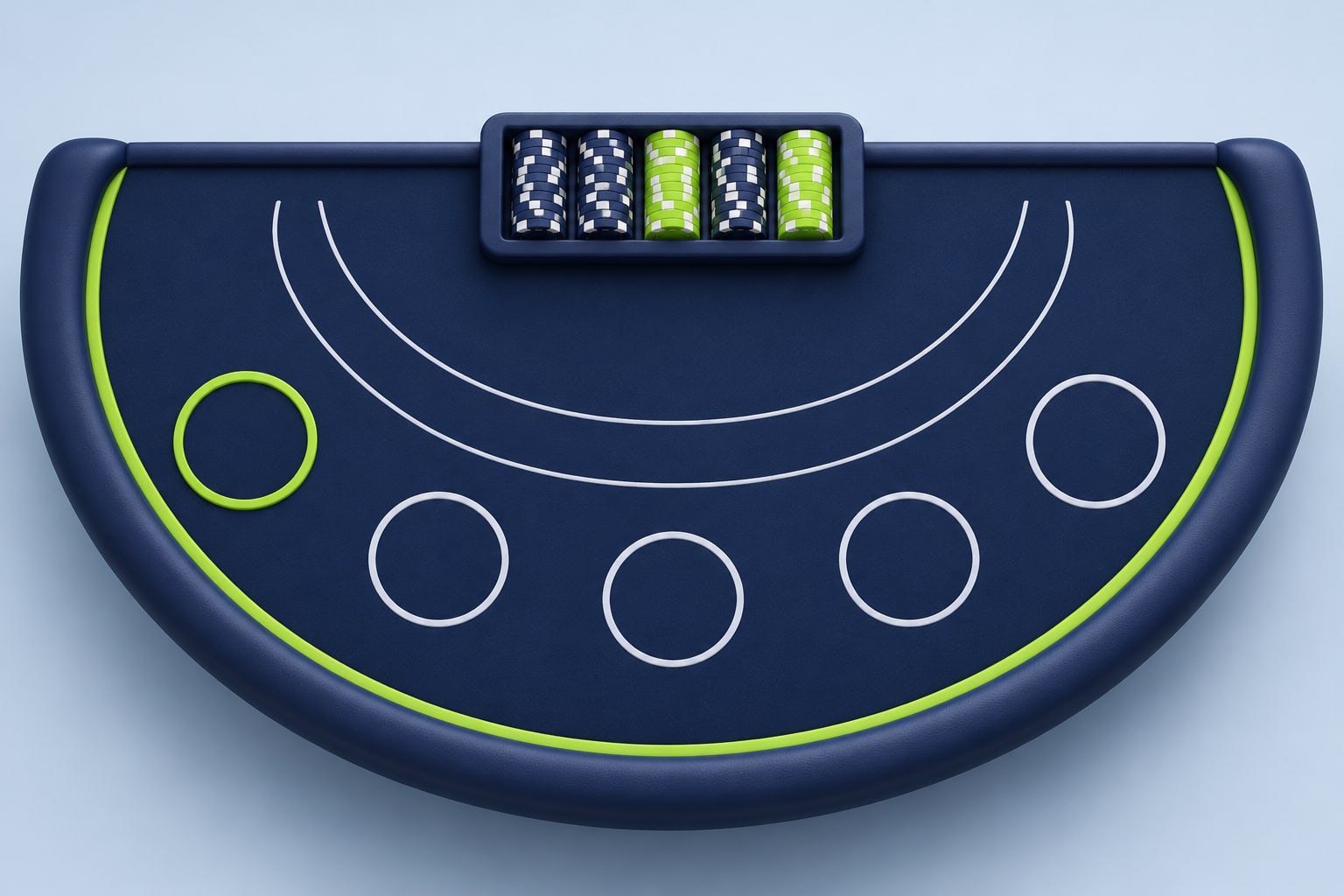
Locating the position without reversing directions
Table-position descriptions can be confusing because the dealer and players face opposite ways. Third base is conventionally the dealer's rightmost player position, or the leftmost position from the perspective of a player looking toward the dealer. The functional definition is more reliable than a diagram: it is the final occupied player hand to be acted on before the dealer finishes. Empty seats do not take turns, so the last active hand may be one position inward from the physical end. A casino may also use a different layout or electronic arrangement. Follow the actual dealing order rather than assuming that the left edge of every screen represents the same seat. The term identifies order, not a different set of blackjack rules.
What acting last changes
The player at third base usually sees the other players' completed actions before deciding on their own hand. In a face-up game, more exposed cards may therefore be visible by the time that decision is made. This can matter to specialised analysis that uses exact card composition, but it does not provide knowledge of the next unseen card. Ordinary basic strategy still begins with the player's hand, dealer upcard and table rules. Third base does not receive a bonus payout, an extra draw or permission to change an earlier wager. The seat can feel slower because the player waits through other hands. That pacing is a practical preference, not proof that the position wins more often or has a lower inherent house edge.
The myth that the last player controls the dealer
A common table complaint blames third base for taking a card that would otherwise have gone to the dealer. In a fixed sequence, a different action can indeed change which unseen cards are allocated next. But before the cards are revealed, the player does not know whether taking or leaving the next card will help the dealer or hurt it. Looking back only at rounds where a hit preceded a dealer win creates a misleading story. The reverse sequence can also occur: a player's hit may remove a card that would have helped the dealer. The relevant evaluation is the decision's expected result with the information available at the time. Hindsight about one exposed sequence does not establish a reliable method of controlling future dealer outcomes.
Playing the hand clearly and independently
Wait until the dealer or interface identifies your hand as active, then make the intended action unmistakable. A split creates several hands that must be completed in order, even at the last seat. Doubling normally ends the relevant hand after one card, while standing ends further drawing without adding a wager. Do not touch or move another player's cards, and ask the dealer about local hand signals before play begins. Other players' opinions do not change the rules or create an obligation to follow their preferred action. If pressure at the table makes it difficult to play calmly, taking a break is reasonable. Seat etiquette should help the round proceed accurately, not turn a player into someone responsible for every other person's result.
Choosing a seat for practical reasons
A seat with a clear view of the dealer upcard, comfortable access to the betting area and enough time to understand the controls can be a sensible choice. Third base may suit someone who prefers to watch the order of play before acting; first base may suit someone who prefers less waiting. Neither preference changes the posted blackjack payout or the dealer's mandatory drawing rules. Online games with shared hands or virtual seating may use the table metaphor differently, so check whether seat selection actually changes card allocation. If reviewing a session, record decisions and rule conditions rather than labelling a seat lucky or unlucky. A run of wins or losses at one position does not establish that the position caused those results or will repeat them next time.