A round is a defined unit or stage of play. It can mean a complete casino-game cycle, one betting stage in poker or a phase of a tournament, depending on the context.
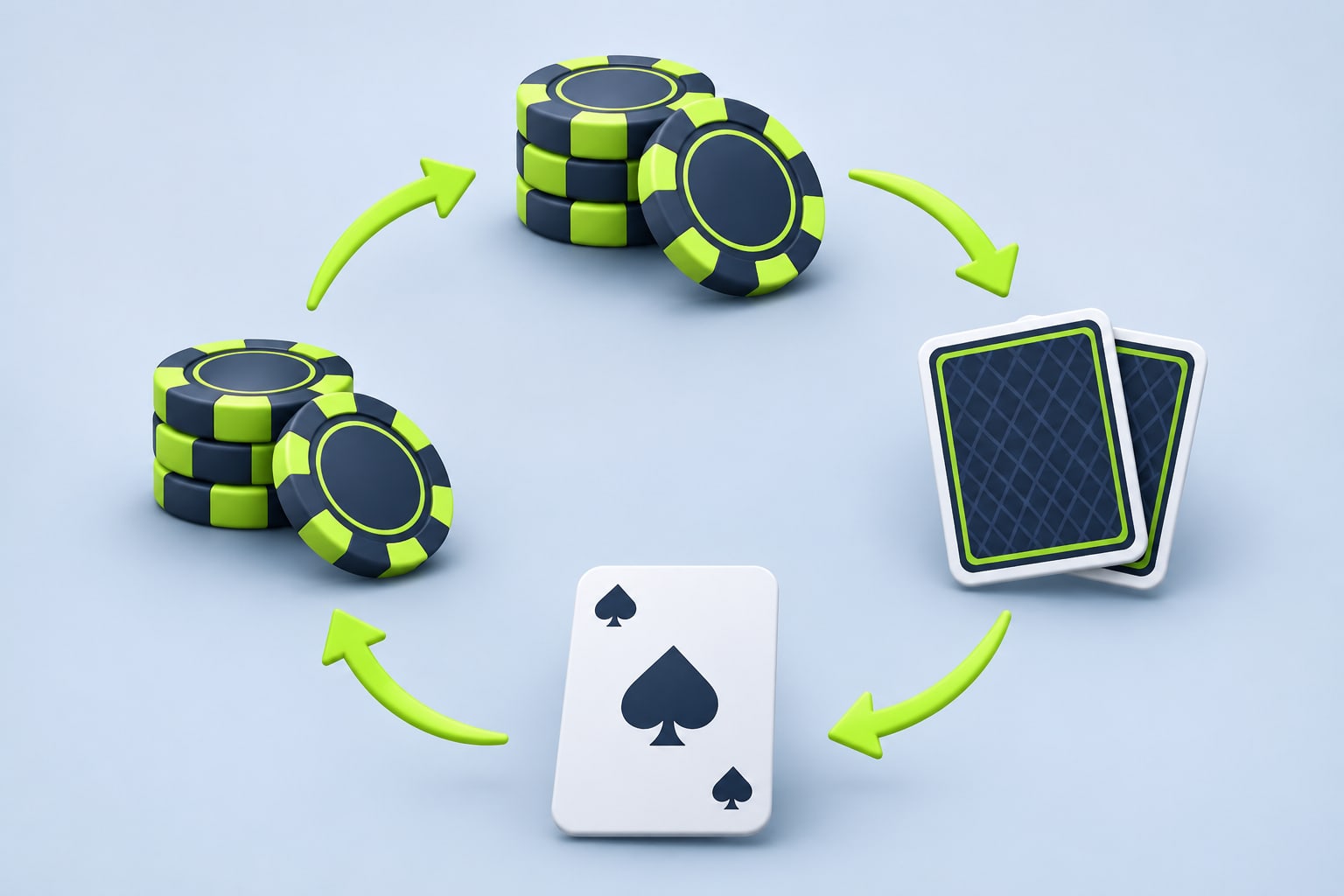
The game supplies the definition
Round is a broad term whose exact boundaries depend on the game. A roulette round usually centers on one accepted set of bets and one spin. A blackjack round includes the deal and resolution of the participating hands. In poker, betting round often means only one stage within a hand. Tournament writing can use round for a scheduled phase or group of matches. These are not interchangeable units. When a rule limits bets, prizes or actions per round, identify the start and end points it specifies. A casual understanding of the word may be insufficient for calculating an important limit.
A casino-game cycle
For a straightforward single-spin game, a round can run from acceptance of the wager through the generated result and settlement. Features can make that cycle less obvious. A slot bonus sequence may contain several free spins triggered by one paid spin, and the game rules determine how those events are recorded. A blackjack split can create multiple hands within the original dealing round. Consequently, one button press, one round and one wager are not always the same count. Use the game's help and history descriptions when checking a result instead of assuming that every animation represents an independent paid round.
Betting rounds within poker hands
Texas hold'em normally contains a preflop betting round followed by betting on the flop, turn and river, unless the hand ends earlier. These are several stages inside one hand, not four separate deals with new hole cards. Seven-card stud has its own sequence tied to the cards dealt on successive streets. A betting round finishes when the required action has been completed under the rules, such as remaining players matching the necessary contributions or all but one folding. The exact reopening and all-in rules can matter, so a simple statement that everyone acted once does not always describe a completed betting round.
Tournament rounds and levels
A tournament can divide play into rounds, sessions, stages or levels, and the organizer's terminology should be read carefully. A timed blind level changes the required stakes but does not necessarily eliminate a set number of players or mark the end of a match. A scheduled round in another format may instead assign opponents or determine advancement. If a promotion awards points per round, check whether it means a tournament stage or an individual game result. Dates, time limits and qualification rules belong to the specific event. The general glossary word alone cannot tell a player when registration closes or when advancement is decided.
Round identifiers help resolve questions
Online games commonly record a round or hand identifier that links the accepted wager to its result. If a balance or payout appears incorrect, that reference helps support locate the event without relying only on a rough time or screenshot. Keep the game name, time, stake and relevant outcome with the identifier. A withdrawal reference is different and concerns the payment process rather than the game cycle. Several records can appear around one feature or multi-hand deal, so preserve the original history rather than editing it into a simplified account that could remove useful context for the investigation.
Use consistent units when comparing play
A statement that someone played one hundred rounds is incomplete if one game resolves a single wager per round and another contains many simultaneous hands. To compare exposure, record the total stake as well as the count and elapsed time. Rules such as maximum payout per round also need their exact scope, especially if multiple seats or side bets are involved. Avoid rushing additional play because a round appears short or inexpensive. The useful purpose of the term is to identify a unit of action. Clear boundaries make game rules, session records and promotion conditions easier to understand without confusing activity counts with money won or lost.