Perfect Pairs is an optional blackjack side bet on whether the player's first two cards have the same rank. The payout category normally depends on whether the pair also matches in colour or suit. Its stake and outcome are separate from the main blackjack wager.
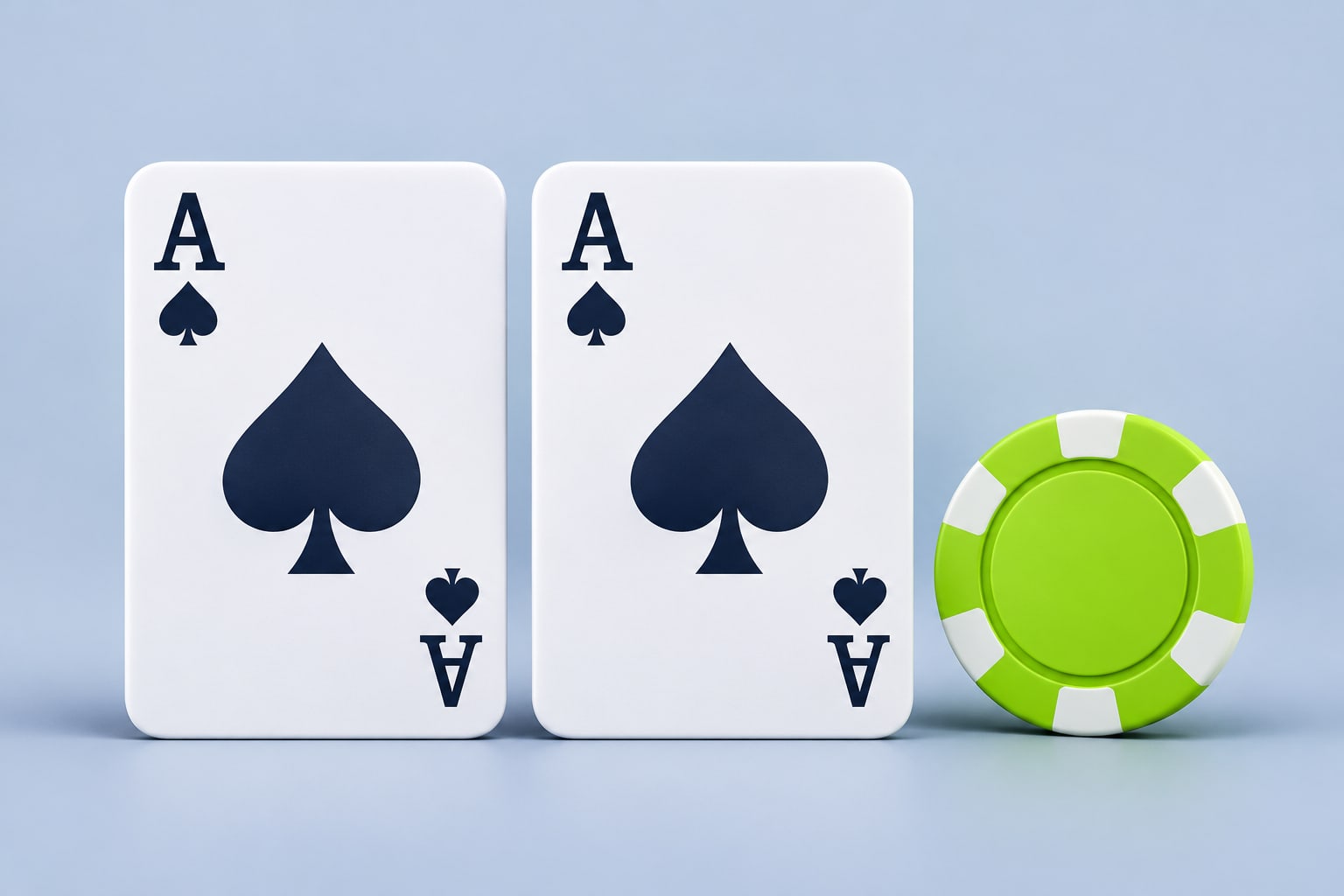
Visual explainer
Three pair categories, one separate wager
Perfect Pairs commonly classifies the player’s first two cards by rank, colour and suit.
Mixed pair
7♥ · 7♠
Same rank, opposite colours.
Coloured pair
7♥ · 7♦
Same rank and colour, different suits.
Perfect pair
7♥ · 7♥
Same rank and suit; duplicate cards require multiple decks.
Two different ten-value ranks, such as K and Q, are not a rank pair. The side bet settles separately from the main blackjack wager.
Check the offered paytable and deck count; these examples show categories rather than universal payout rates. Related: Surrender · Basic Strategy.
What the wager measures
The side bet examines the first two cards dealt to the player rather than the eventual blackjack total. Two sevens qualify as a rank pair; a seven and an eight do not. A king and queen are both worth ten in blackjack but are different ranks, so they are not a pair for this purpose. The main hand then continues under its own rules. A pair of low cards might win the side bet while leaving an awkward main hand, and an excellent main hand can lose the side bet because its ranks differ. Place the optional wager only in its designated area and within the permitted betting window. Adding money after seeing the first card is not part of the ordinary wager.
Three levels of matching
The familiar categories are a mixed pair, a coloured pair and a perfect pair. A mixed pair has matching ranks in different colours, such as a red seven and a black seven. A coloured pair matches rank and colour but uses different suits, such as the seven of hearts and seven of diamonds. A perfect pair matches both rank and suit, such as two sevens of hearts. That last combination requires duplicate cards from multiple standard decks. These categories are mutually exclusive for settlement: a perfect pair is paid according to its designated category, not normally as three separate wins added together. Always read the actual paytable, since the advertised product name alone does not establish which payout schedule the operator has selected.
Separating profit from returned stake
Suppose an illustrative table pays a qualifying category at 5 to 1 and the side bet is $2. The profit is $10, with the $2 stake also returned, producing $12 in total. This example explains the notation; it is not a claim that every Perfect Pairs table uses that schedule. A payout written as 6 for 1 would describe the same total return in this example. Meanwhile, a separate $10 blackjack wager might win, lose or push. If it loses while the side bet produces $10 profit, the combined round breaks even before any other wagers. Keep each transaction separate when checking a casino history. The attractive side-bet return is not automatically the net profit from the whole round.
How deck count changes the possibilities
With one standard deck, the identical rank-and-suit card cannot appear twice. With multiple decks it can, and the number of available matches depends on how many copies are in play. For a freshly shuffled six-deck shoe, after one card is dealt there are 311 cards left. Of those, 23 share its rank: five match its suit, six share its colour in the other suit, and twelve are the opposite colour. Those counts illustrate the structure without claiming that an actual partially dealt shoe has the same composition. They also show why the highest-paying category is less common than any rank pair. To calculate expected return, combine each category's probability with its actual payout and include every losing outcome.
Assessing it separately from blackjack
The main game's advertised return does not describe the side bet. Different payoff schedules can produce different expected losses even when the main blackjack rules are identical. Decisions made after the first two cards, such as hitting or splitting, do not retrospectively change which starting pair was dealt. Likewise, winning the side bet does not make a later main-hand bust harmless. Check the permitted side-bet amount, deck configuration, payout wording and whether the product has any additional progressive feature with separate conditions. Budget the optional stake as extra exposure on every round in which it is placed. A run without pairs does not by itself establish that a pair is due, and a previous perfect pair does not guarantee another on the next deal.